Top 10 Best Hardscape Design Ideas for Your Dream Yard in 2026
Hardscaping, the patios, pathways, retaining walls, and decks that form the backbone of your landscape, is where functional design meets stunning aesthetics. The right hardscape not only boosts curb appeal and property value but also creates inviting outdoor living spaces for relaxation and entertainment. A well-executed project delivers structure, defines functional zones, and reduces long-term maintenance needs, making it a cornerstone of a successful outdoor environment.
However, translating a vision from a simple sketch or a collection of inspiration photos into a tangible backyard reality can be incredibly challenging. It's difficult to know how a specific paver pattern, retaining wall height, or fire pit placement will truly look and feel within the context of your own home and existing greenery. This uncertainty often leads to hesitation or costly mistakes. That's where technology steps in to bridge the gap between imagination and execution.
In this comprehensive roundup, we will explore 10 of the best hardscape design concepts trending this year, from permeable paver patios to integrated fire pits. To truly unlock your yard's potential, considering the aesthetic possibilities of residential decorative concrete can elevate your overall design. More importantly, we'll demonstrate how you can apply AI Landscape Design to visualize each of these ideas instantly. By simply uploading a photo of your yard, you can see these designs come to life, helping you make confident, informed decisions and create a beautiful, functional space you'll love for years to come.
1. Permeable Paver Patios
Permeable paver patios are a cornerstone of modern, sustainable hardscape design, offering an elegant solution to environmental challenges like stormwater runoff. Unlike traditional solid surfaces that shed water, these innovative systems allow rainwater to filter through the surface and into the ground below. This is achieved either through porous paver materials or, more commonly, through wider joints between solid pavers filled with small, clean gravel.
This approach not only reduces the strain on municipal storm drains but also helps recharge groundwater, combat erosion, and filter pollutants. The aesthetic is versatile, ranging from rustic cobblestone looks to sleek, contemporary geometric patterns, making it one of the best hardscape design choices for eco-conscious homeowners. You can see this technology applied in water-wise California coastal homes and green-certified developments across the Pacific Northwest.
Implementation and Visualization
Successful installation hinges on a properly prepared base of layered aggregates, which creates a reservoir to hold water as it slowly soaks into the subsoil. This multi-layer system is critical for both drainage and structural integrity.
Before committing to a style, you can apply AI Landscape Design to visualize your ideas using photos of your own yard. Apps like DreamzAR allow you to upload a photo of your space and instantly visualize various permeable paver patterns and colors, ensuring your final choice perfectly complements your home's architecture.
Actionable Tips for Success
Ensure Proper Base: A deep, multi-layered gravel base is non-negotiable for effective drainage and to prevent pavers from shifting.
Plan the Slope: A subtle gradient of 1-2% is still recommended to direct excess water flow during heavy downpours, even with a permeable system.
Pair with Native Plants: Incorporate rain gardens or native plantings adjacent to the patio to maximize water absorption and create a cohesive, sustainable landscape.
Visualize First: Use AI Landscape Design to preview permeable paver designs on a photo of your yard and get instant cost estimates to align your vision with your budget.
To explore more patio concepts and materials, you can discover a wide range of inspiring patio ideas to enhance your outdoor living space.
2. Raised Bed Hardscaping with Retaining Walls
Raised bed hardscaping with retaining walls is a brilliant strategy for adding dimension, structure, and functionality to any landscape. This technique uses walls made of stone, block, or timber to create elevated garden areas. It's an ideal solution for sloped yards, transforming a challenging grade into a series of beautiful, accessible terraces. These structures are more than just planters; they are integral architectural elements that define spaces and provide visual appeal.
This approach is highly effective for improving drainage and controlling soil quality, as you can fill the beds with custom soil mixes perfect for vegetables or ornamental plants. The aesthetic is incredibly versatile, fitting everything from the rustic, natural stone walls seen on Colorado hillsides to the sleek, modern block walls used in contemporary Southern California gardens. This blend of form and function makes it one of the best hardscape design solutions for maximizing usable space.
Implementation and Visualization
Proper engineering is key to a lasting retaining wall. A solid, compacted gravel footing and effective backfill drainage are necessary to manage hydrostatic pressure and prevent the wall from bowing or collapsing. The height and material of the wall will dictate the specific structural requirements.
Visualizing how these multi-level structures will impact your yard's sightlines and flow is crucial. You can apply AI Landscape Design to visualize your ideas using photos of your own yard. With an app like DreamzAR, you can upload a photo of your sloped backyard and instantly generate designs showing different retaining wall materials and tiered layouts, helping you see the final result before breaking ground.
Actionable Tips for Success
Ensure Proper Drainage: Install a perforated drain pipe and gravel backfill behind the wall to prevent water pressure buildup, which is the primary cause of wall failure.
Choose Complementary Materials: Select wall materials like stacked stone, concrete blocks, or wood that match your home’s architectural style and the surrounding landscape.
Plan for Accessibility: Design bed heights between 18 and 24 inches for comfortable gardening without excessive bending or kneeling.
Visualize First: Use AI Landscape Design on a photo of your property to experiment with different wall heights, materials, and plant combinations.
3. Decorative Gravel and Rock Landscaping
Decorative gravel and rock landscaping offers a dramatic and water-wise alternative to traditional turf, making it a cornerstone of modern, low-maintenance hardscape design. This versatile approach utilizes materials like river rock, decomposed granite, pea gravel, and lava rock to create textured, multi-tonal groundcover. It suppresses weeds, improves drainage, and drastically reduces water consumption, making it an ideal choice for xeriscaping.
This method is more than just a substitute for mulch; it's a powerful design element. It establishes clean lines, creates visual contrast, and highlights specimen plants or architectural features. Its aesthetic flexibility is a key reason it ranks as one of the best hardscape design solutions, seen in everything from arid Arizona front yards and serene Japanese-inspired gardens to the minimalist landscapes of contemporary homes.
Implementation and Visualization
Proper installation is crucial for a lasting, weed-free finish. It begins with clearing and leveling the area, followed by laying down a high-quality landscape fabric. This geotextile barrier prevents weeds from sprouting through the rocks while still allowing water and air to reach the soil below. Edging made of steel, stone, or composite material is then installed to contain the gravel and maintain crisp, defined borders.
You can take the guesswork out of this process when you apply AI Landscape Design to visualize your ideas using photos of your own yard. Apps like DreamzAR let you upload a photo and experiment with different types of rock and gravel. See how the warm tones of decomposed granite compare to the cool grays of river rock against your home’s facade before purchasing any materials.
Actionable Tips for Success
Install Landscape Fabric: Always lay down a professional-grade weed barrier underneath the rocks to minimize maintenance significantly.
Vary Size and Texture: Combine larger river rocks with finer pea gravel or decomposed granite to create visual depth and a more natural, layered look.
Define with Edging: Use durable edging to keep gravel contained within its designated beds and prevent it from spilling into lawns or onto pathways.
Visualize First: Use AI Landscape Design to test various rock colors and textures on a photo of your yard, ensuring the final look complements your home's exterior.
To see how these materials can be combined into stunning, cohesive designs, explore these beautiful rock garden ideas for more inspiration.
4. Composite Decking and Multi-Level Patios
Composite decking and multi-level patios are a powerful combination for transforming sloped or monotonous backyards into dynamic, functional outdoor living areas. Composite materials, made from a blend of wood fibers and recycled plastics, offer the beauty of wood without the demanding upkeep. When designed in tiered levels, these structures create distinct zones for dining, lounging, and entertaining, adding architectural interest and maximizing usable space.
This approach is one of the best hardscape design solutions for properties with challenging grades, turning a difficult slope into a stunning feature. You’ll see this concept in award-winning suburban landscapes, where different levels might host an outdoor kitchen, a fire pit lounge, and a play area, all seamlessly connected. Brands like Trex and TimberTech have popularized this durable, sustainable option, making it a go-to for modern outdoor living.
Implementation and Visualization
Creating a successful multi-level design requires careful planning of traffic flow, elevation changes, and structural support. Each level serves a purpose, and the transitions between them, such as wide, inviting steps, are critical to the design's overall success. The composite material itself ensures longevity and resistance to rot, fading, and pests with minimal maintenance.
Before breaking ground, it's essential to visualize how these different elevations will interact with your home and yard. You can apply AI Landscape Design to visualize your ideas using photos of your own yard. Using an app like DreamzAR, you can upload a picture of your backyard and use its features to place and configure different multi-level deck and patio layouts, helping you perfect the flow and functionality of your design.
Actionable Tips for Success
Define Zones: Design each level with a specific purpose in mind, such as a dining area on the upper tier and a cozy seating area on the lower one.
Plan Traffic Flow: Ensure there are clear, comfortable pathways between levels. Wide steps can double as informal seating.
Incorporate Built-Ins: Maximize functionality by adding built-in benches, planters, or storage to the structure.
Visualize First: Use AI Landscape Design to preview how different levels and composite colors will look against your home on a photo of your own yard, ensuring the scale and style are just right.
5. Integrated Fire Pit and Outdoor Kitchen Hardscaping
Integrating a fire pit and outdoor kitchen into a single, cohesive hardscape is the ultimate expression of outdoor living, creating a complete entertainment hub. This design approach moves beyond isolated features by unifying cooking, dining, and relaxation zones within a singular, flowing space. Materials like natural stone, pavers, and concrete are used to build everything from countertops and seating walls to the fire pit itself, ensuring a seamless aesthetic.
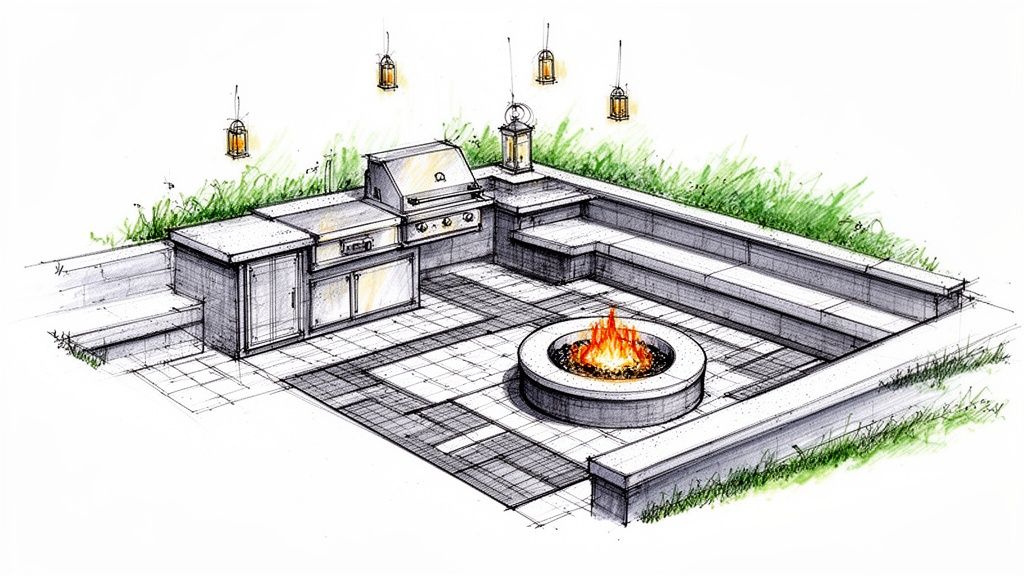
This comprehensive strategy transforms a simple backyard into a luxurious extension of the home, perfect for hosting gatherings or enjoying quiet family nights. You often see these sophisticated setups in high-end residential communities and resort-style homes, where the goal is to maximize outdoor functionality and comfort. It stands as one of the best hardscape design solutions for those who love to entertain.
Implementation and Visualization
Successful execution requires meticulous planning of utilities like gas, water, and electricity before any construction begins. The design must also create distinct functional zones while maintaining a unified feel, often achieved by using complementary paver patterns or subtle level changes.
Before breaking ground, it’s crucial to visualize the entire layout. You can easily apply AI Landscape Design to visualize your ideas using photos of your own yard. An app like DreamzAR lets you upload a photo and virtually place various outdoor kitchen modules, fire pit styles, and seating walls to find the perfect arrangement and ensure the scale and flow are just right.
Actionable Tips for Success
Create Clear Zones: Use different paver patterns or materials to visually separate the cooking area from the lounging and fire pit zones.
Plan for Utilities: Ensure all gas, water, and electrical lines are planned and installed before the hardscape foundation is laid.
Prioritize Safety: Maintain a safe clearance of at least 10 feet between the fire pit and any combustible structures, including your home or deck.
Consider Wind Direction: Position the fire pit and grill so that prevailing winds direct smoke away from seating and dining areas for guest comfort.
Visualize and Budget: Use AI Landscape Design to experiment with layouts on a photo of your yard and get instant cost estimates, helping you align your ambitious design with a realistic budget.
For more inspiration on creating the perfect cooking space, you can explore a variety of outdoor kitchen designs to find what works for you.
6. Pergolas and Shade Structure Hardscaping
Pergolas and other shade structures are integral to the best hardscape design, creating architectural focal points that define outdoor rooms while offering practical sun relief. These versatile elements transform exposed patios or decks into comfortable, inviting living spaces. Far more than just a cover, a well-designed pergola adds vertical dimension, visual interest, and a sense of enclosure, bridging the gap between home and garden.
From classic wood structures adorned with climbing vines in Mediterranean landscapes to modern aluminum pergolas with motorized louvers in contemporary settings, these structures are highly adaptable. They provide a framework for lighting, fans, or hanging plants, significantly enhancing the functionality and ambiance of any outdoor area. This blend of form and function makes them a top-tier choice for elevating an outdoor entertainment zone.
Implementation and Visualization
Proper implementation requires careful consideration of placement, scale, and materials. The structure should be proportional to the house and the outdoor space it occupies, providing adequate shade without overwhelming the area. Material choice, whether it's warm cedar, low-maintenance vinyl, or sleek metal, should complement the home's existing architectural style.
Before construction, visualizing the impact of a pergola is crucial. You can eliminate guesswork when you apply AI Landscape Design to visualize your ideas using photos of your own yard. Apps like DreamzAR let you upload a photo of your patio and place different pergola styles and sizes directly into the scene. This allows you to check proportions, assess shadow patterns, and ensure the design integrates seamlessly with your existing hardscape.
Actionable Tips for Success
Orient for Shade: Plan the pergola’s orientation and the direction of its rafters to maximize shade during the hottest parts of the day.
Match Architectural Style: Choose materials and a design that echo your home’s aesthetic, whether it's rustic, modern, or traditional.
Integrate Greenery: Plant climbing vines like wisteria or jasmine to create a living canopy that offers natural shade and beauty.
Visualize Placement: Use AI Landscape Design to virtually place a pergola on a photo of your patio to get the size and location perfect before you commit.
To find the right style for your home, you can explore various inspiring pergola ideas and see how they can define your outdoor space.
7. Stone Pathway and Stepping Stone Designs
Stone pathways and stepping stones are fundamental hardscape elements that guide movement through a landscape while adding organic texture and visual intrigue. These designs use materials like natural flagstone, slate, or dimensional pavers to create functional walkways that connect different outdoor zones. They are essential for boosting both front yard curb appeal and backyard usability, enhancing the overall flow and accessibility of your property.
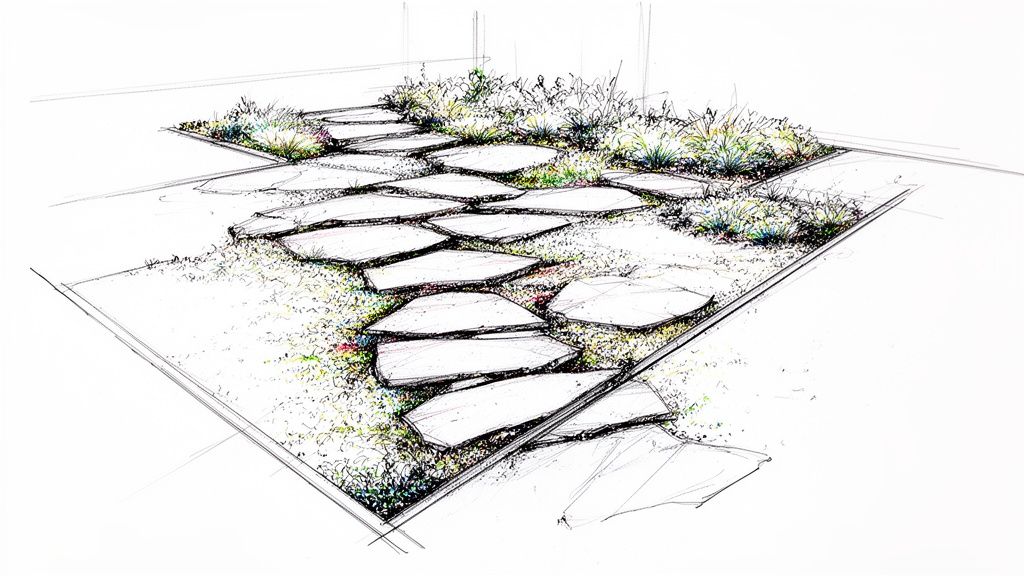
This approach is incredibly versatile, making it one of the best hardscape design solutions for any style. Examples range from formal, symmetrical stone paths in traditional English gardens to irregular flagstone trails winding through contemporary native plantings. In Japanese-inspired gardens, carefully placed stepping stones across decorative gravel encourage mindful movement, while a classic herringbone pattern can add a touch of formal elegance to a modern home's entrance.
Implementation and Visualization
Proper installation focuses on creating a stable, well-drained base for each stone. For a continuous pathway, this involves excavating and laying a compacted gravel base. For individual stepping stones, each one requires its own leveled foundation to prevent wobbling or sinking over time. The spacing is also crucial for a comfortable walking experience.
To avoid costly mistakes, you can apply AI Landscape Design to visualize your ideas using photos of your own yard. With an app like DreamzAR, you can upload a photo of your garden and instantly overlay various stone styles, from rustic flagstone to sleek bluestone. This allows you to see how the pathway interacts with your home and existing plantings before any work begins.
Actionable Tips for Success
Complement Your Home: Choose a stone color and texture that harmonizes with your home's exterior siding, trim, and roof colors.
Natural Spacing: For stepping stones, space them approximately 24 to 30 inches apart (center to center) to match a natural walking stride.
Define the Edges: Use a clean edge of steel, stone, or brick to define your pathway's borders, preventing lawn encroachment and creating a polished look.
Visualize First: Use AI Landscape Design to virtually place different stone patterns in a photo of your yard and get instant material cost estimates to stay within your budget.
8. Retaining Walls and Terraced Hardscaping
Retaining walls and terraced hardscaping are powerful tools for transforming challenging slopes into stunning, functional outdoor architecture. These structural elements are engineered to hold back soil, prevent erosion, and create level tiers on properties that would otherwise be unusable. This approach adds dramatic dimension and visual interest, turning a difficult landscape into one of the best hardscape design solutions for hillside homes.
This technique is essential for sloped properties, commonly seen in the mountainous regions of Colorado or the coastal hills of California. By carving out multiple levels, homeowners can create distinct zones for patios, gardens, and play areas. The walls themselves, whether made from natural stone, concrete blocks, or wood, become a major design feature, defining the aesthetic of the entire yard.
Implementation and Visualization
Proper engineering is paramount, especially for walls over four feet high, which often require professional design and permits. A critical component is incorporating drainage systems, such as perforated pipes and gravel backfill, behind the wall to relieve hydrostatic pressure and ensure long-term stability.
Visualizing how multiple tiers will look on your property can be difficult. With AI Landscape Design, this challenge is easily solved. You can apply this technology to visualize your ideas by uploading a photo of your sloped yard to an app like DreamzAR. This allows you to instantly overlay different retaining wall materials and terraced layouts, experimenting with various heights and configurations to see how they impact your space before breaking ground.
Actionable Tips for Success
Prioritize Drainage: Install a perforated pipe at the base of the wall, surrounded by gravel and covered with landscape fabric, to prevent water buildup.
Choose Complementary Materials: Select stone or block colors that harmonize with your home’s exterior for a cohesive look.
Soften with Greenery: Plant cascading flowers or trailing vines along the top edges of the walls to soften their appearance and integrate them into the landscape.
Consult a Professional: For walls exceeding four feet in height, always consult a structural engineer to ensure they are built safely and to code.
Visualize the Tiers: Use AI Landscape Design to model different terrace heights and planting schemes on a photo of your actual property, helping you make informed design decisions.
9. Pool and Water feature Hardscaping
Pool and water feature hardscaping is the art of creating a luxurious, cohesive backyard oasis where water elements and solid surfaces are seamlessly integrated. This approach goes beyond simply placing a pool in the yard; it involves thoughtfully designing the surrounding decking, coping, patios, and even built-in waterfalls or fountains to form a unified, resort-style environment. The goal is to create a functional and visually stunning focal point for relaxation and entertainment.
This design philosophy elevates a simple swimming area into a complete outdoor experience, blending the soothing sounds of water with beautiful, durable materials. It is one of the best hardscape design strategies for maximizing property value and creating a high-end retreat. You can see this concept masterfully executed in luxury homes throughout Florida and California, where outdoor living is a central part of the lifestyle.
Implementation and Visualization
Effective pool hardscaping requires careful planning of both aesthetics and functionality. Key considerations include material selection for slip resistance and heat absorption, as well as the strategic placement of utilities for pumps, filters, and lighting. The design should create distinct "zones" for swimming, lounging, and dining to optimize the flow and use of the space.
Before breaking ground, it's crucial to visualize the entire layout. You can take the guesswork out of this significant investment when you apply AI Landscape Design to visualize your ideas using photos of your own yard. Apps like DreamzAR allow you to instantly render a new pool, experiment with different decking materials like travertine or concrete pavers, and see how a waterfall feature would look, ensuring the final design is perfect.
Actionable Tips for Success
Choose Slip-Resistant Materials: Prioritize safety by selecting materials like textured concrete pavers, travertine, or non-slip porcelain tiles for pool decking.
Create Functional Zones: Designate separate areas for lounging, dining, and entry/exit points to create an organized and user-friendly space.
Integrate Ambient Lighting: Plan for underwater and landscape lighting to enhance safety and create a dramatic, inviting atmosphere for evening use.
Visualize Before Building: Use AI Landscape Design to see how different pool shapes, deck materials, and water features will look in a photo of your actual yard and get instant cost estimates to manage your budget.
10. Native Plant Borders with Hardscape Edging
Integrating native plant borders with clean hardscape edging is a sophisticated design strategy that merges ecological benefits with aesthetic precision. This approach creates a defined, polished look by using materials like steel, stone, or precast concrete pavers to frame garden beds filled with regional flora. The edging acts as a crisp line, separating softscape elements like mulch and plants from hardscape surfaces such as lawns, patios, or walkways.
This combination is a hallmark of the best hardscape design because it supports local ecosystems while maintaining a structured, intentional appearance. It’s highly effective in diverse settings, from Midwestern front yards showcasing native perennials to sustainable Texas landscapes that thrive in the heat. The clear separation prevents grass from encroaching into garden beds and keeps mulch contained, reducing maintenance and preserving the visual integrity of the design.
Implementation and Visualization
The key to a successful border is choosing an edging material that complements both your home's architecture and the textures of your native plants. Installation requires digging a clean trench along the desired border, setting the edging material firmly in place, and backfilling to ensure it remains stable. The visual impact is immediate, creating a powerful contrast between the wild beauty of the plants and the clean lines of the hardscape.
To perfect this balance before breaking ground, you can apply AI Landscape Design to visualize your ideas using photos of your own yard. Apps like DreamzAR let you upload a photo and experiment with various edging materials and native plant arrangements, helping you visualize the final look and ensure it aligns with your overall landscape vision.
Actionable Tips for Success
Choose Complementary Materials: Select edging like Corten steel for a modern look or natural stone for a rustic feel that enhances your home's style.
Research Regional Plants: Select native plants that are well-suited to your local climate, soil, and light conditions for a thriving, low-maintenance garden.
Layer for Depth: Arrange plants by height, placing taller species in the back and shorter ones in the front to create visual interest and a fuller look.
Visualize the Border: Use AI Landscape Design to see how different edging materials like black steel, stone, or brick will define your native plant beds in a photo of your actual yard.
To dive deeper into plant selection, you can explore a variety of native plant landscaping ideas and find the perfect species for your region.
Top 10 Hardscape Design Comparison
Item | 🔄 Implementation Complexity | ⚡ Resource & Time | 📊 Expected Outcomes | 💡 Ideal Use Cases | ⭐ Key Advantages |
|---|---|---|---|---|---|
Permeable Paver Patios | 🔄 Moderate–High; engineered base & professional install | ⚡ Higher initial cost; moderate install time; periodic maintenance | 📊 Excellent stormwater reduction; durable and attractive | 💡 Rain-prone regions; sustainable homes; patios/driveways | ⭐ Reduces runoff; qualifies for green building; aesthetic |
Raised Bed Hardscaping with Retaining Walls | 🔄 High; may require engineering on slopes | ⚡ High material & labor; possible permit delays | 📊 Strong erosion control; usable planting zones; visual height | 💡 Sloped/hillside yards; vegetable beds; small urban lots | ⭐ Improves drainage; easier planting; increases curb appeal |
Decorative Gravel and Rock Landscaping | 🔄 Low; simple installation with edging | ⚡ Low cost and quick to install; occasional raking | 📊 Low-maintenance; excellent drainage; water-saving | 💡 Drought-prone regions; budget-conscious front yards | ⭐ Economical; minimal upkeep; modern aesthetic |
Composite Decking and Multi-Level Patios | 🔄 Moderate; structural framing and ventilation required | ⚡ Higher upfront cost; long lifespan; low upkeep | 📊 Durable multi-zone living space; 25–30 year life | 💡 Luxury/backyard oasis; sloped properties; entertaining zones | ⭐ Low maintenance; highly customizable; long-lasting |
Integrated Fire Pit and Outdoor Kitchen Hardscaping | 🔄 Very High; complex utilities and safety considerations | ⚡ Substantial investment and build time; ongoing upkeep | 📊 Premium entertainment space; significant property value lift | 💡 Frequent entertainers; large yards; luxury upgrades | ⭐ Comprehensive outdoor living; highly customizable |
Pergolas and Shade Structure Hardscaping | 🔄 Low–Moderate; structural siting and permits possible | ⚡ Moderate cost; faster install than full roofs | 📊 Defined shaded zones; increased seasonal usability | 💡 Hot climates; patio dining; garden focal points | ⭐ Architectural appeal; partial shade; supports vegetation |
Stone Pathway and Stepping Stone Designs | 🔄 Moderate; labor-intensive for proper setting | ⚡ Moderate cost; careful installation for longevity | 📊 Improved circulation and curb appeal; durable | 💡 Wayfinding; front yards; garden connections | ⭐ Durable; versatile aesthetics; improves accessibility |
Retaining Walls and Terraced Hardscaping | 🔄 Very High; professional engineering and permits often required | ⚡ Very high material & labor costs; long project timeline | 📊 Erosion control; multiple usable terraces; strong visual impact | 💡 Steep/hillside properties; erosion/stabilization projects | ⭐ Stabilizes slopes; creates level planting areas; high impact |
Pool and Water Feature Hardscaping | 🔄 Very High; complex codes, utilities, and structural work | ⚡ Extremely high cost and ongoing maintenance; seasonal use | 📊 Resort-style oasis; major property value and visual impact | 💡 Large properties; frequent entertainers; hot climates | ⭐ High recreational/aesthetic value; customizable features |
Native Plant Borders with Hardscape Edging | 🔄 Low–Moderate; requires plant selection knowledge | ⚡ Moderate initial effort; low long-term maintenance | 📊 Sustainable, low-maintenance beds; supports wildlife | 💡 Eco-conscious homeowners; front yards; low-maintenance designs | ⭐ Supports native ecosystems; clean, economical finish |
From Inspiration to Installation: Your Next Steps
We've journeyed through a diverse collection of the best hardscape design ideas, from the eco-conscious functionality of permeable pavers to the dramatic elegance of terraced retaining walls. You've seen how integrating fire pits, multi-level decks, and water features can transform a simple yard into a dynamic outdoor living space. Each concept, whether it's the rustic charm of stone pathways or the modern appeal of composite decking, serves as a powerful building block for your dream landscape.
The central theme connecting all these ideas is intentionality. A successful hardscape is more than a collection of materials; it's a well-planned extension of your home that solves problems, creates functional zones, and reflects your personal style. It’s about understanding how a raised garden bed can add vertical interest or how a strategically placed pergola provides both shade and architectural flair.
Bridging the Gap Between Vision and Reality
The most significant challenge in any design project is translating an abstract idea into a tangible, well-executed plan. It's easy to admire a photo of a stunning patio, but how will those specific pavers look against your home's siding? Where is the optimal placement for a retaining wall to manage that slope in your backyard? This is where modern technology fundamentally changes the game.
Historically, this phase involved sketches, mood boards, and a lot of imagination. Today, the guesswork is gone. The single most impactful step you can take right now is to visualize these designs directly on your property. This is no longer a tool reserved for professional designers; it's accessible to every homeowner.
Key Insight: The ability to see a design in its actual context, with your home as the backdrop, is the most critical factor in making confident, successful hardscape decisions. It eliminates costly mistakes and ensures the final result aligns perfectly with your initial vision.
Your Actionable Blueprint for Success
Instead of feeling overwhelmed by the possibilities, channel your inspiration into a clear, actionable process. Here are the immediate steps you can take to move from dreaming to doing:
Prioritize Your Goals: Revisit the ideas in this article. Which ones solve your biggest landscape challenges or fulfill your primary desires? Are you seeking more entertainment space, better garden management, or enhanced curb appeal? Select your top two or three concepts.
Capture Your Canvas: Take a clear, well-lit photo of the area you want to transform. This photo is not just a reference; it's the foundation for your virtual design. Whether it’s your front yard, backyard, or a neglected side area, this image becomes your digital sandbox.
Start Your AI-Powered Visualization: This is where the magic happens. To apply AI Landscape Design to visualize your ideas, simply upload your photo to an app like DreamzAR. You can instantly apply different hardscape materials and structures. See how a bluestone patio looks, experiment with a composite deck, or place a virtual pergola to check its scale and location.
Iterate and Refine: The best hardscape design for your home will emerge through experimentation. Test different paver patterns, adjust the size of a proposed deck, or see how native plant borders soften the edges of a new stone wall. The power of AI is in its ability to generate multiple variations in minutes, allowing you to explore and refine your ideas without any physical commitment.
Experience in Augmented Reality (AR): Before breaking ground, use features like an AR Preview to virtually "walk through" your new design. Stand in your yard and see the new hardscape elements overlaid in the real world. This immersive experience provides an unparalleled sense of scale and spatial relationship, confirming that your design not only looks good but feels right.
By embracing this modern approach, you are not just planning a project; you are crafting a precise, personalized, and pre-validated blueprint. You’re building confidence, saving time, and ensuring that your investment results in a stunning, functional, and enduring outdoor space you will enjoy for years to come.
Ready to stop imagining and start seeing? The DreamzAR AI Landscape Design app allows you to apply these incredible hardscape ideas to a photo of your own yard, delivering realistic visualizations in seconds. Download it today and take the first real step toward building the outdoor oasis you've always wanted. DreamzAR AI Landscape Design