Stunning Do It Yourself Landscape Designs for Your Dream Yard
Staring at a bare yard can feel a little paralyzing. You see the potential, but turning that vision into a real, beautiful outdoor space seems like a monumental task. The good news? With a solid plan and the right tools, a do it yourself landscape design is more achievable than you’ve ever imagined.
This guide is your practical starting point for transforming any yard—whether it's the front, back, a tiny patch, or a tricky slope—into a personal oasis you’ll actually want to spend time in.
Your Starting Point for DIY Landscape Design
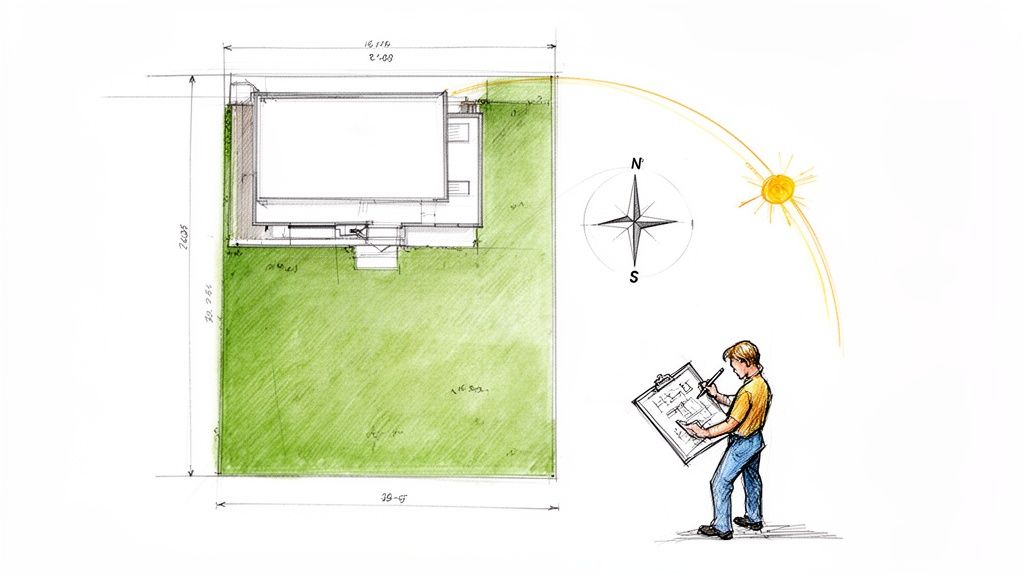
Kicking off a landscape project is about more than just picking pretty plants; it’s about extending your living space into the outdoors. This is where you move past pinning random inspiration photos and start creating a functional plan that truly fits your property, your family’s needs, and your budget. It’s that shift from dreaming to doing that makes all the difference.
The secret is to start by really understanding your yard. Get to know its unique quirks. Where does the sun hit in the afternoon? Is your soil sandy or clay-heavy? What existing trees or structures do you have to work around? Once you have a handle on these details, you can get clear on what you actually want from the space—a quiet spot for coffee, a durable play area for the kids, or a patio built for entertaining.
The Rise of Digital DIY Tools
This hands-on, DIY approach is exploding in popularity. In fact, the global Landscape and Garden Design Software market hit an incredible USD 5,261.5 million in 2024. That number tells a story: more and more homeowners are grabbing digital tools to design their own dream yards, skipping the hefty price tag of a professional designer.
What’s fueling this? Simple, intuitive apps that empower anyone to generate professional-looking designs with just a photo from their phone. This new wave of technology completely removes the biggest barrier that used to stop people—visualization. You no longer have to be an artist to see your ideas come to life.
The most powerful tool in your DIY arsenal is the ability to visualize the end result before you start digging. It prevents costly mistakes and builds the confidence needed to tackle the project yourself.
How AI Can Visualize Your Ideas
Modern tools like the DreamzAR app have been a total game-changer for homeowners. The process couldn't be simpler, but the results are incredibly powerful:
Snap a Photo: Just take a picture of your yard with your phone. This photo becomes the canvas for your design.
Get Instant Concepts: Apply AI landscape design to visualize your ideas. The AI gets to work, creating professional-quality landscape designs laid out right over your actual space.
See it in 3D: You can see exactly how different plants, pavers, and features will look in your own yard. No more guesswork.
This lets you play with different styles and layouts without any risk. As you start your design journey, it's also a great idea to check out various resources for DIY landscaping projects to get more inspiration and practical tips.
And if you’re not even sure where to begin with a style, you can take this quick landscape style quiz to find your perfect match: https://www.dreamzar.app/free-tools/landscape-style-quiz
How to Assess Your Yard Like a Pro
Before you even think about sketching out your grand do it yourself landscape designs, you have to become an expert on your own property. I've seen it time and time again: the most successful projects don't start with a shovel, they start with careful observation.
Think of this as getting to know your yard's unique personality—its habits, its strengths, and its little quirks. This deep understanding is what ensures your final design won't just look good for a season, but will actually thrive for years.
First things first, you need to map the sun. This isn't a quick glance out the window. Spend a full day, or even a weekend if you can, just watching where the light falls. Where does the intense afternoon sun bake the ground? Which spots stay in deep shade all day long?
These observations are critical. They dictate everything from what you can plant to where you might place a patio to either soak up the sun or escape its heat. This isn't just about general sunniness; you're looking for specific microclimates. For example, that south-facing brick wall is going to create a much hotter, drier zone than the damp, shaded corner behind your garage.
Define Your Vision and Goals
Okay, now that you have a handle on the physical realities of your yard, it's time for the fun part: defining your vision. What do you really want to do out there? Answering this question honestly will be your North Star for every decision that follows.
Entertainment Hub: Do you see yourself hosting summer barbecues and late-night get-togethers? If so, your design needs to prioritize things like a spacious patio, good outdoor lighting, and a natural flow from the house.
Family-Friendly Zone: If you've got kids or pets running around, your focus will probably be on durable turf, dedicated play areas, and—importantly—non-toxic plants.
Low-Maintenance Retreat: Maybe you just want a peaceful escape without all the weekend work. The goal here is simplicity. Think native plants that take care of themselves, maybe some automated irrigation, and more hardscaping instead of a big lawn.
To get a jumpstart on low-maintenance plants, it helps to know what will grow best in your specific region. You can easily find your planting zone by using a USDA Plant Hardiness Zone map.
Visualize Your Ideas with AI
This is where planning gets really exciting. In the old days, you were stuck with rough sketches that rarely captured what you were imagining. The final result was always a bit of a surprise.
Now, you can use AI landscape design to completely bridge that gap between your imagination and reality. It's pretty amazing. You just take a photo of your yard, and an app like DreamzAR can instantly generate visual concepts right onto your actual space.
This technology lets you see exactly how different layouts, plant combinations, and hardscape materials will look before you spend a dime or lift a finger. You can apply AI landscape design to visualize your ideas using photos of your own yard, taking the guesswork out of the equation and giving you the confidence to move forward with a clear, realistic vision.
The most critical mistake I see in DIY landscaping is designing for a yard you wish you had instead of the one you actually have. A thorough assessment grounds your vision in reality, setting the foundation for a sustainable and functional outdoor space that you'll love.
Bringing Your Vision to Life with AI Design
After walking your property and dreaming up a wishlist, it's time to connect the dots between what's in your head and what could actually be in your yard. Honestly, this used to be the hardest part of any DIY landscape design. You were stuck with rough sketches on graph paper or trying to wrestle with complicated software that felt like it required an engineering degree.
Thankfully, that barrier has pretty much disappeared. AI design tools have totally changed the game for homeowners, making professional-level visualization something anyone can do with a smartphone. The process is surprisingly simple but incredibly powerful.
Visualize Ideas on Your Actual Property
The core idea is brilliant: you just snap a photo of your yard, and an AI-powered app like DreamzAR uses it as a blank canvas. From there, the technology can generate countless design concepts tailored specifically to your space. We're not talking about browsing generic inspiration photos—this is about seeing a lush cottage garden or a sleek, modern patio right where you plan to build it. You can apply AI landscape design to visualize your ideas using photos of your own yard, making the process personal and accurate.
This whole approach lets you experiment freely without any risk or commitment. You can instantly see what different layouts for a patio might look like, test out materials like flagstone versus brick pavers, and virtually place everything from big-ticket items like pergolas and pools down to the individual shrubs and flower beds.
The initial yard assessment you did lays the perfect foundation for this creative stage.
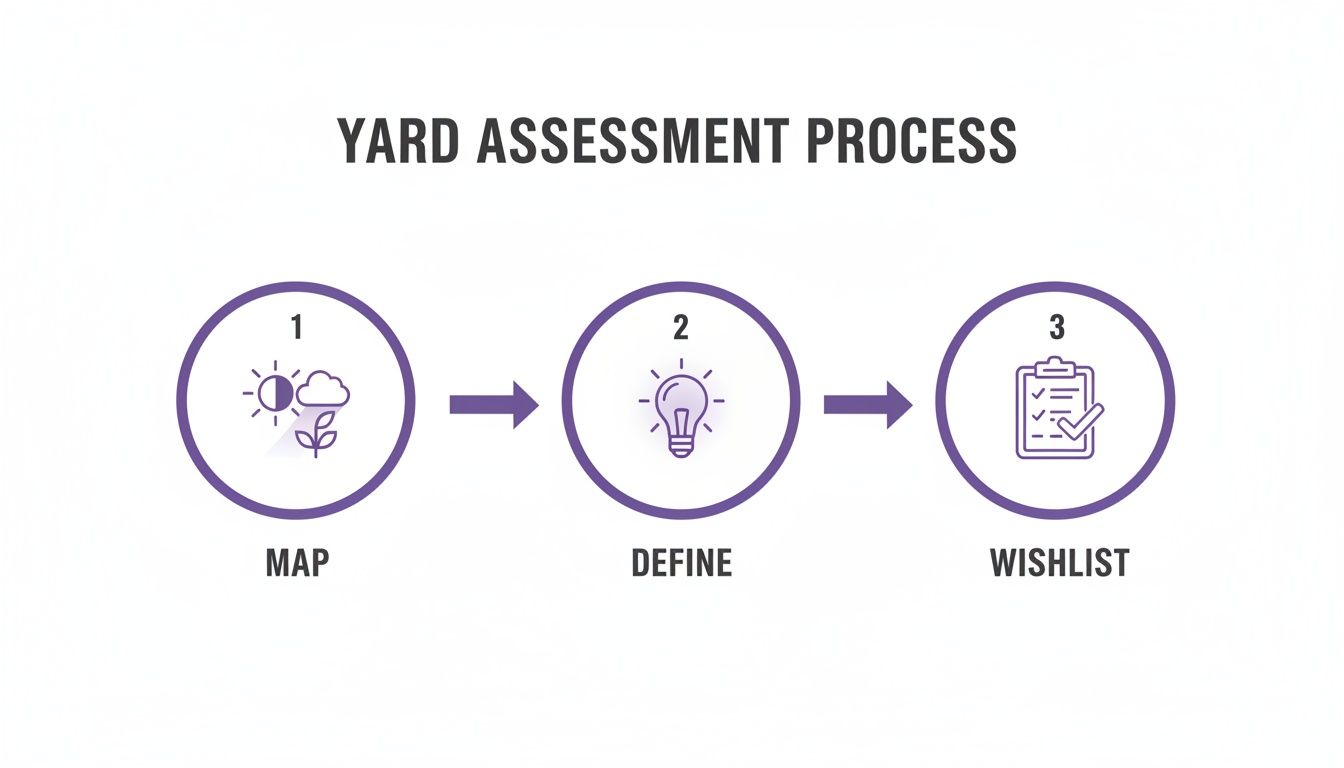
This simple map-define-wishlist process makes sure your creative explorations with AI are grounded in the real-world conditions of your yard and what you truly want to achieve.
This move toward easy-to-use digital tools is part of a huge trend. The entire DIY home improvement market is projected to hit a staggering USD 0.93 trillion globally by 2026 and jump to USD 1.29 trillion by 2031. A lot of that growth is being driven by homeowners who are grabbing these tools to create their own custom outdoor spaces. You can check out more stats on the DIY home improvement market on Mordor Intelligence.
Before we dive deeper into the new AI-powered workflow, let's take a moment to see just how much things have changed. This table breaks down the old-school approach versus what's possible with a tool like DreamzAR.
Comparing Traditional vs AI-Powered DIY Design Methods
Feature | Traditional DIY Method | AI-Powered Method (e.g., DreamzAR) |
|---|---|---|
Visualization | 2D paper sketches, mood boards | Realistic 3D/AR previews on your actual yard photo |
Idea Generation | Manual search on Pinterest, magazines | Instant generation of hundreds of unique designs |
Ease of Use | Requires drawing skills or complex software | Intuitive app interface; upload a photo and go |
Speed | Days or weeks of planning and sketching | Minutes to generate initial concepts |
Experimentation | Difficult and time-consuming to revise | Effortless; test endless styles and materials instantly |
Cost | Free (if sketching) to hundreds for software | Low-cost subscription or per-design model |
As you can see, the difference is night and day. The new tools remove the guesswork and make the creative process fun and accessible, rather than a chore.
Experience Your Design in Augmented Reality
One of the coolest features of modern design apps is the ability to see your creation in Augmented Reality (AR). This is way more than just looking at a pretty picture on your screen. With AR, you can use your phone’s camera to literally "walk through" your new landscape design as if you were already standing in it.
This immersive experience gives you a true sense of scale and flow. You can stand where your future patio will be, see how tall a proposed tree will feel next to your house, and check sightlines from your kitchen window.
This step is a game-changer. It takes the guesswork out of the equation and helps prevent those expensive "oops" moments, like building a fire pit area that ends up feeling cramped or planting a privacy hedge that isn't quite tall enough. It gives you the confidence to know your plan is solid.
You can explore the full range of features like these AR previews that really set you up for success. This power to visualize ensures the design you create on a screen is the one you’ll absolutely love in real life.
Choosing the Right Plants and Materials
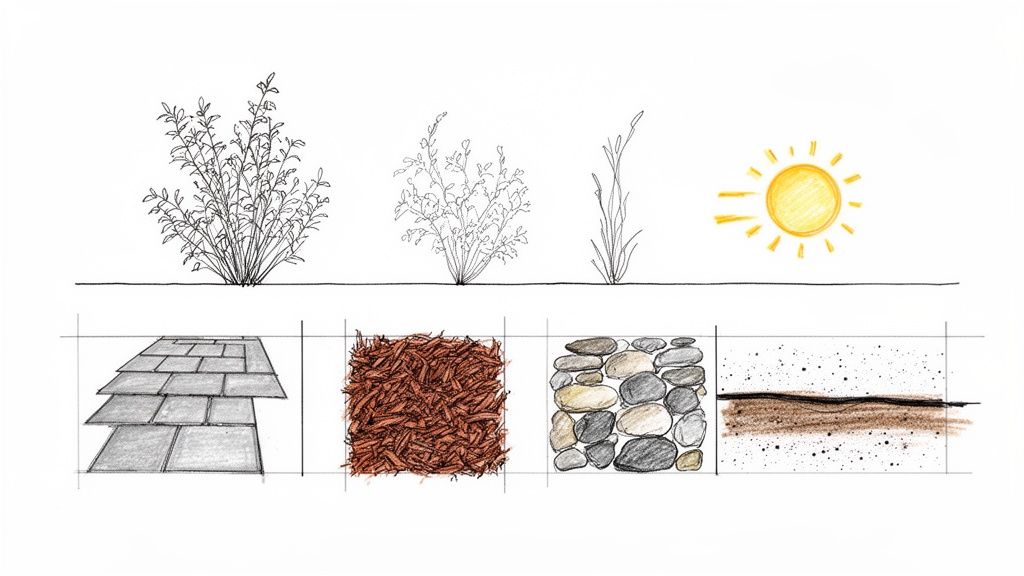
With a stunning AI-generated design in hand, your vision is no longer just a vague idea; it's a tangible plan. Now comes the really fun part: picking out the real-world building blocks that will bring it all to life.
This is all about selecting the right plants and hardscape materials that not only look fantastic but will also thrive and last in your specific yard. After all, the success of your new living landscape hinges on putting the right plant in the right place. A beautiful design on paper can quickly fall apart if the plants aren't happy.
Selecting Plants That Will Thrive
Your plant selection should be guided by a few core factors: your climate zone, the sun exposure in different spots, and how much maintenance you’re truly willing to do.
A good way to start is with the foundational pieces, like trees and shrubs that provide structure and privacy. From there, you can layer in perennials for seasonal color and interest, then finish with groundcovers to fill in gaps and keep weeds at bay.
Climate Zone: This one's non-negotiable. Make sure every plant you consider is rated for your USDA Hardiness Zone. This guarantees your plants can survive your local winter.
Sun Exposure: Pull out that sun map you made earlier. You need to match plants to their light requirements. Full-sun lovers will languish in the shade, and shade plants will get scorched in direct sun.
Maintenance Level: Be honest with yourself. If you'd rather enjoy your yard than work in it, look for low-maintenance options. This is where you might want to learn more about the benefits of using https://www.dreamzar.app/landscaping-ideas/styles/native-plants, as they are naturally adapted to your climate and often need less water and care.
Choosing Hardscape Materials
Hardscaping is the backbone of your landscape—it’s the patios, walkways, and walls that define the spaces. The materials you choose here have a massive impact on both the style and the longevity of your project.
For a patio, pavers are a classic, durable option with endless patterns, while natural flagstone gives you a more organic, rustic feel. When you're thinking about materials, don't forget feature elements. It’s worth checking out some inspiring backyard fire pit design ideas to see how a focal point can transform a space. The material for a fire pit surround, whether it's stone or brick, should tie back to your patio and your home's exterior.
Don't just think about how materials look today; consider how they will age. Natural stone develops a beautiful patina over time, while some concrete pavers can fade. This long-term view is key to creating a design that lasts.
The growth in this hands-on approach is really showing in the market. The Garden Planning App market hit USD 1.21 billion in 2024, and the landscaping products market is projected to reach USD 129.98 billion by 2030, as more DIYers purchase materials for their app-inspired projects. You can discover more insights about this trend in the full market report from Growth Market Reports.
Visualize Selections with AI Landscape Design
This is where an AI tool becomes your best friend all over again. Instead of just guessing how a certain plant or paver style will look, you can use an app like DreamzAR to visualize your choices right on a photo of your own yard.
You can swap between dozens of paver styles, test different mulch colors, and see how thousands of real plants will look next to your home. Applying AI landscape design to visualize your ideas using photos of your own yard ensures every element works together harmoniously before you spend a dime, taking the costly guesswork out of the equation.
Creating a Realistic Budget and Phased Plan
Let's be honest, a dream yard can quickly turn into a financial headache without a solid budget. After visualizing your perfect outdoor space, the next critical step in any successful do it yourself landscape design is to ground that vision in financial reality.
It all starts by breaking down your design into individual pieces. I recommend making a detailed list of everything you'll need: plants, soil, mulch, pavers, edging, and any bigger features like a pergola or fire pit. This itemized list is the foundation for getting a realistic cost estimate.
Estimating Your Project Costs
With your list in hand, it’s time to do some digging. Visit local nurseries and big-box home improvement stores to get a feel for the cost of plants and materials in your specific area. Don't forget to look online for bulk suppliers of soil or stone, as this can sometimes offer huge savings, especially for larger projects.
Beyond the obvious material costs, you absolutely have to account for the hidden expenses. I've seen these trip up many homeowners, quickly inflating a budget if they aren't planned for.
Tool Rentals: Will you need a sod cutter for tearing out old lawn? A plate compactor for a new patio? Or maybe a power auger for fence posts? These rental fees can add up.
Delivery Fees: Bagged soil is convenient for small jobs, but a bulk delivery is way more cost-effective for large projects. Just remember there’s always a delivery charge to factor in.
Waste Disposal: Removing old concrete, dead shrubs, or construction debris might require renting a dumpster or paying for disposal services.
Permits: Depending on where you live and the scale of your project (like building a deck or a tall fence), you may need to pay for a municipal permit.
A truly effective budget isn't just a single number; it's a detailed spreadsheet that tracks every potential cost. This brings clarity, prevents sticker shock, and helps you make smart trade-offs between different materials or project scopes.
Breaking It Down with a Phased Plan
The total cost can sometimes feel overwhelming, but here's the good news: you don’t have to do it all at once. Phasing your project is a smart strategy that makes everything more manageable, both for your back and your bank account.
Look at your master plan and divide it into logical, standalone projects that can be completed over time. For instance, your plan could look something like this:
Phase 1: Install the new paver patio and walkways this summer.
Phase 2: Plant the big foundational trees and privacy shrubs in the fall (the best time for planting!).
Phase 3: Add the perennial flower beds and groundcover next spring.
This approach lets you spread the cost over several seasons or even years. Plus, it gives you the satisfaction of completing and enjoying one part of your yard while you save up for the next stage. Using a tool like a landscaping cost estimator can also help you prioritize which phases to tackle first based on their projected expense. Phasing transforms a daunting project into a series of achievable goals.
Your Top DIY Landscape Design Questions, Answered
Jumping into a landscape project yourself can feel a little daunting. It's totally normal to have a bunch of questions swirling around. Let's tackle some of the most common ones homeowners ask when they're ready to create their own do it yourself landscape designs, especially now that we have some amazing new tools at our fingertips.
"Can I Really Do This Without Experience?"
Yes, you absolutely can. While a seasoned pro brings years of knowledge to the table, the tools available today have leveled the playing field, making great design accessible to everyone. The most critical part of any successful project isn't years of experience—it's having a clear, well-thought-out plan before you ever pick up a shovel.
It all starts with the fundamentals we've covered: getting to know your yard's unique quirks, like sun patterns and soil type, and then nailing down what you actually want from the space. This is where modern tech, particularly AI landscape design apps, really shines by filling in the gaps where experience used to be non-negotiable.
The biggest hurdle for most DIYers has always been visualizing the final result. Technology has cracked this code. The ability to see a design on your actual property before you start is the single most powerful advantage in the modern DIY process.
With a tool like DreamzAR, you just need a photo of your yard. The AI gets to work, generating professional-level design concepts that are custom-fit to your space. You can apply AI landscape design to visualize your ideas using photos of your own yard, tweaking everything until it's perfect—no drawing skills or complicated software needed.
"How Does AI Help Me Visualize Ideas Accurately?"
The real magic of AI is its ability to turn those fuzzy ideas in your head into concrete visuals, using your own yard as the canvas. Forget trying to adapt a generic photo from Pinterest to your space; now you can see exactly how that new flagstone patio or row of boxwoods will look right in your backyard. You just apply AI landscape design to visualize your ideas using photos of your own yard.
AI intelligently places design elements to create balanced, cohesive layouts that just make sense for your property. But the feature that truly changes the game is Augmented Reality (AR). This tech takes the 2D design and overlays it onto your phone's live camera view.
This means you can literally walk around your yard and see the virtual design from every angle, as if it were already there. It gives you an incredible sense of scale and proportion that you could never get from a simple sketch.
"What Are the Most Common Mistakes to Avoid?"
Even with the best tools, a few classic pitfalls can derail a project. Just being aware of them from the get-go can save you a ton of headaches and money down the road.
Ignoring Scale: This is a big one. We've all seen a tiny tree planted too close to a house that eventually becomes a monster, or a patio that's just too small to be useful. Use AR visualization to get the scale right before you buy anything.
Forgetting Maintenance: It's so easy to fall for beautiful, high-maintenance plants without thinking about the weekly work they require. Be brutally honest with yourself about how much time you're really willing to spend on upkeep.
Poor Planning: Just winging it often leads to a messy, disjointed look. Always start with a complete master plan, even if you only plan to build it out in phases over the next few years.
"How Can I Create a Design That’s Budget-Friendly?"
A stunning yard doesn't have to cost a fortune. Smart planning is everything when it comes to keeping costs in check. One of the best strategies is to phase your project, which lets you spread the expense over time without going into debt.
When it comes to materials, think smaller. Younger, smaller plants are significantly cheaper and often establish themselves better and grow faster than large, mature ones. You can also look into cost-effective hardscape materials like gravel or decomposed granite for paths instead of pricey pavers. Using AI landscape design tools to play around with these different options helps you find an affordable mix you love before spending a dime.
Ready to stop guessing and start seeing? With DreamzAR AI Landscape Design, your dream yard is just one photo away. Generate unlimited professional designs, see them in stunning AR, and build the outdoor space you’ve always wanted. Download DreamzAR for free on the App Store and bring your ideas to life.