Plan Backyard Landscaping: Quick Guide to plan backyard landscaping Viz
Dreaming of a perfect backyard—maybe with a beautiful new patio and a garden overflowing with flowers? That kind of outdoor space doesn't just happen by magic. It starts with a solid, thoughtful plan.
Honestly, taking the time to plan is your best defense against the most common landscaping headaches, like budgets that spiral out of control or ending up with a design that just doesn't feel right for your family. As more of us start seeing our yards as a true extension of our homes, getting that initial planning phase right has become more critical than ever. If you're looking for a deep dive, this practical guide to garden landscape design is a great place to start.
The Core of a Successful Plan
When you boil it down, a successful backyard project really comes down to a few key phases. Long before you even think about buying a single plant or paver, you have to get a handle on what you're working with, how much you can realistically spend, and what you really want to achieve. Getting this groundwork right saves an incredible amount of time and money down the road.
This simple flow shows the foundational steps for pretty much any backyard project.
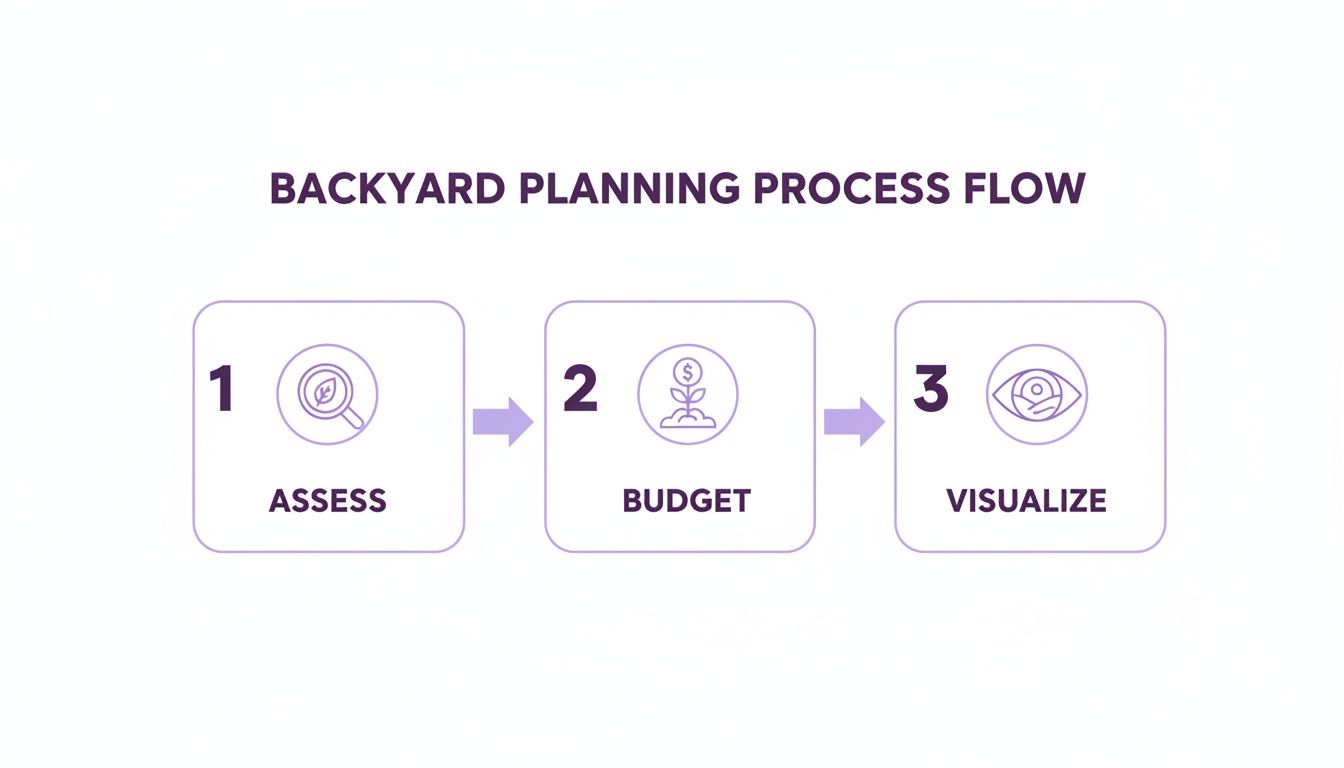
As you can see, a great landscape plan kicks off with assessment and budgeting before you get to the fun part of creative visualization.
This guide will walk you through these essential steps, making sure your landscaping journey is a success from the ground up. We’ll cover everything from sizing up your space and setting a budget to actually bringing your vision to life with some powerful tools.
Visualizing Your Ideas with AI
One of the biggest hurdles I see homeowners face is translating the ideas in their head into something tangible they can actually look at. This is where modern tech has been a complete game-changer. You can now apply AI Landscape Design to visualize your ideas using photos of your own yard.
Instead of just trying to imagine how a new patio or garden bed might look, AI-powered apps like DreamzAR let you upload a simple photo and instantly generate dozens of professional-quality designs. It completely eliminates the guesswork and helps you see what's truly possible for your space.
This visualization step is powerful because it bridges the gap between a vague idea and a concrete plan. You can play around with a huge variety of styles and layouts before you ever commit to a single direction or shovel hits the dirt.
A great way to get started is by exploring different landscaping ideas to get your creative juices flowing. This whole process helps ensure the final design is something you'll absolutely love for years to come.
Defining Your Vision And Realistic Goals
Before a single shovel hits the dirt, the most crucial part of any landscape plan is pinning down a clear vision. This is where your dreams for an outdoor oasis have a sit-down with the practical realities of your space. A successful project starts not with buying plants, but with a thorough 'backyard audit' to understand what you're really working with.
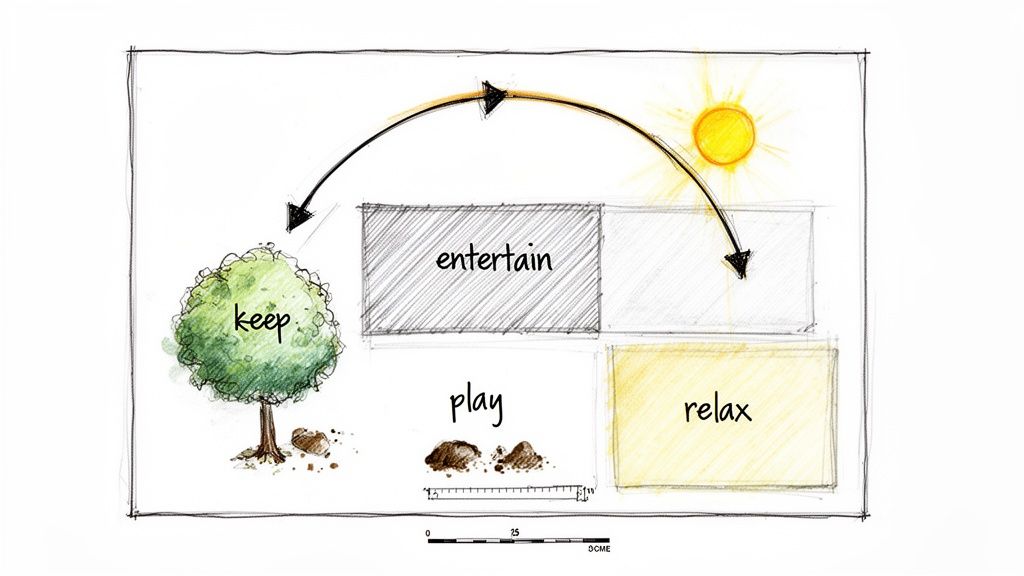
Think of yourself as a detective investigating your own property. You're gathering clues that will inform every decision down the line. This process helps you set goals that aren't just inspiring but are also a perfect fit for your yard's unique character.
Start With A Backyard Audit
First things first: get intimately familiar with your yard's conditions. This is more than just measuring dimensions; it's about observing how your space lives and breathes throughout the day and across the seasons.
Start by mapping the sun's path. Where do you get that blistering afternoon sun, and which spots stay in cool shade? This one piece of information will heavily influence where you put a patio for evening dinners versus a vegetable garden that needs 6-8 hours of direct light.
Next, take stock of the existing elements. Are there mature trees you want to keep for their shade and beauty? Is there a slope that presents a drainage challenge or maybe a cool design opportunity? Grab a notebook, make a simple sketch, and mark these features. Create zones you want to keep, get rid of, or improve.
A critical mistake I see people make is designing a yard without first understanding its natural tendencies. Fighting against your yard's sun patterns, soil type, and existing landscape is a recipe for frustration and extra costs. Work with your space, not against it.
What Do You Truly Need From Your Yard?
With a better handle on your space, you can start defining its purpose. This part is less about aesthetics and more about pure function. How do you and your family actually want to use this outdoor area? The answer is different for everyone.
To get the ball rolling, ask yourself a few key questions:
Who is this space for? Is it mainly for the kids to play, for adults to entertain guests, or a private retreat for quiet mornings?
What activities will happen here? Get specific. Think about hosting barbecues, growing herbs, playing catch, or just reading in a hammock.
How much maintenance are you willing to do? Be honest with yourself. A sprawling English garden requires a totally different commitment than a low-maintenance patio with a few container plants.
Answering these helps you prioritize what matters most. A family focused on entertaining, for instance, might dedicate a big chunk of their budget and space to a large patio and outdoor kitchen. If that's your vision, exploring guides on outdoor kitchen installations can give you a ton of great ideas on design, budgeting, and materials. In contrast, someone seeking tranquility might prioritize a secluded seating area surrounded by calming greenery.
Visualize Your Goals With AI Landscape Design
Okay, this is where the magic happens. Turning a list of functional needs into a cohesive, beautiful design can feel intimidating. Vague ideas like "a cozy seating area" or "more colorful plants" are tough to act on. And this is exactly where technology can bridge the gap between your imagination and a concrete plan.
You can apply AI Landscape Design to visualize your ideas using photos of your own yard. Modern tools like the DreamzAR app completely change how you plan backyard landscaping. The process is incredibly simple yet unbelievably powerful.
Just snap a photo of your existing backyard with your phone. Upload it to the app, and the AI will generate dozens of unique, professional-quality landscape designs right on top of your picture. You can instantly see how a modern paver patio would look, experiment with a Japanese-inspired rock garden, or visualize a vibrant flower bed along your fence line.
This kind of visual feedback is invaluable for refining your goals. You might stumble upon a style you hadn't even considered or realize a feature you thought you wanted just doesn't feel right in the space. If you're not sure where to even start with styles, taking a quick landscape style quiz can provide a fantastic jumping-off point. Using AI takes the guesswork out of the equation, transforming abstract goals into tangible visuals and empowering you to make confident decisions for your dream backyard.
Budgeting Your Backyard Project Without Surprises
Let's talk about the least glamorous but most critical part of any landscaping project: the budget. A realistic budget isn't about crushing your dreams; it's the very thing that makes them possible. Think of it as your roadmap—it guides your decisions, prevents those heart-stopping financial surprises, and ensures your vision actually comes to life without breaking the bank.
You're not alone in this. People are investing more in their outdoor spaces than ever before. The global landscaping services market is booming, expected to jump from $668.97 billion in 2025 to an incredible $741.53 billion in 2026. That surge is all about homeowners like you creating amazing outdoor living areas. The National Law Review has some great insights on this trend if you want to dig deeper.
Breaking Down Typical Landscaping Costs
So, where does all that money go? Understanding the main cost categories is the first step to building a budget that works.
Hardscaping: The Bones of Your Design This is the big one. Hardscaping covers all the non-living, structural stuff in your yard and usually eats up the largest chunk of the budget.
Patios and Decks: A simple gravel patio is easy on the wallet, but a custom paver patio or composite deck is a serious investment.
Walkways and Paths: You can go budget-friendly with mulch or simple stepping stones, or you can opt for more permanent and pricier materials like flagstone or brick.
Retaining Walls and Fences: These are often non-negotiable for privacy or dealing with sloped yards, but the costs can vary wildly depending on the material and height you choose.
Softscaping: Bringing Your Yard to Life This is the fun part—the plants, colors, and textures that make your space feel alive.
Plants, Trees, and Shrubs: Size matters here. You can save a lot of money by buying smaller, younger plants and giving them time to grow. A little patience goes a long way.
Soil, Mulch, and Amendments: Don't sleep on these costs! Great soil is everything for a healthy garden, and a good layer of mulch is your best friend for fighting weeds and keeping moisture in.
Lawn or Turf: Your choice between seed, sod, or even artificial turf will have a huge impact on both your initial outlay and your long-term maintenance costs.
To give you a clearer picture, here's a sample budget breakdown for a typical mid-range backyard project.
Sample Backyard Landscaping Budget Breakdown
This table provides a general guideline for how you might allocate your funds. Remember, these percentages can shift based on your specific priorities—if a high-end stone patio is your must-have, you might need to adjust your plant budget accordingly.
Category | Percentage of Budget | Example Elements |
|---|---|---|
Hardscaping | 30% - 40% | Patio, walkways, retaining walls, fencing |
Softscaping | 20% - 30% | Trees, shrubs, perennials, annuals, soil, mulch |
Site Prep & Labor | 20% - 25% | Grading, excavation, drainage, professional installation |
Special Features | 10% - 15% | Lighting, irrigation, water features, fire pit |
Contingency | 5% - 10% | Unexpected costs, design changes, overages |
Treat that contingency fund as a non-negotiable part of your plan. Trust me, you'll be glad you have it when unexpected issues pop up.
Visualizing Costs with AI Landscape Design
This is where planning gets a whole lot smarter. One of the biggest hurdles in budgeting has always been guessing how different materials will actually affect the final cost. It's one thing to know pavers are more expensive than gravel, but it’s another thing entirely to see that price difference applied to your yard.
That’s a problem you can now solve instantly when you apply AI Landscape Design to visualize your ideas using photos of your own yard.
An app like DreamzAR doesn't just show you what a new bluestone paver patio might look like. With a single tap, it lets you swap to a decomposed granite design and instantly see the new cost estimate.
This kind of real-time feedback is a total game-changer for budgeting. It demystifies the process, making it interactive and transparent. You can play around with different looks and materials, making smart trade-offs between your dream design and your budget without any of the usual guesswork. Our landscaping cost estimator tool is a great place to start exploring these numbers.
Smart Strategies for Budget Management
Having a solid plan doesn't mean you have to do everything at once. In fact, one of the best ways to tackle a big project is to break it into phases. This makes a huge transformation feel much more manageable and affordable.
Think about tackling your project in logical stages. For instance, maybe you focus on installing the foundational hardscaping—the patio and walkways—in year one. Then, the following spring, you can circle back to build out the garden beds and fill them with plants. This approach spreads the cost out and lets you enjoy the progress without feeling financially overwhelmed.
Laying It All Out: Your Design and Materials
Okay, you've got your big-picture vision and a realistic budget. Now for the fun part: translating those dreams into an actual, physical layout. This is where we get down to the nitty-gritty, making the tangible decisions that will define the entire look, feel, and flow of your new backyard. We're moving from ideas on paper to the practical details of zones, paths, patios, and plants.
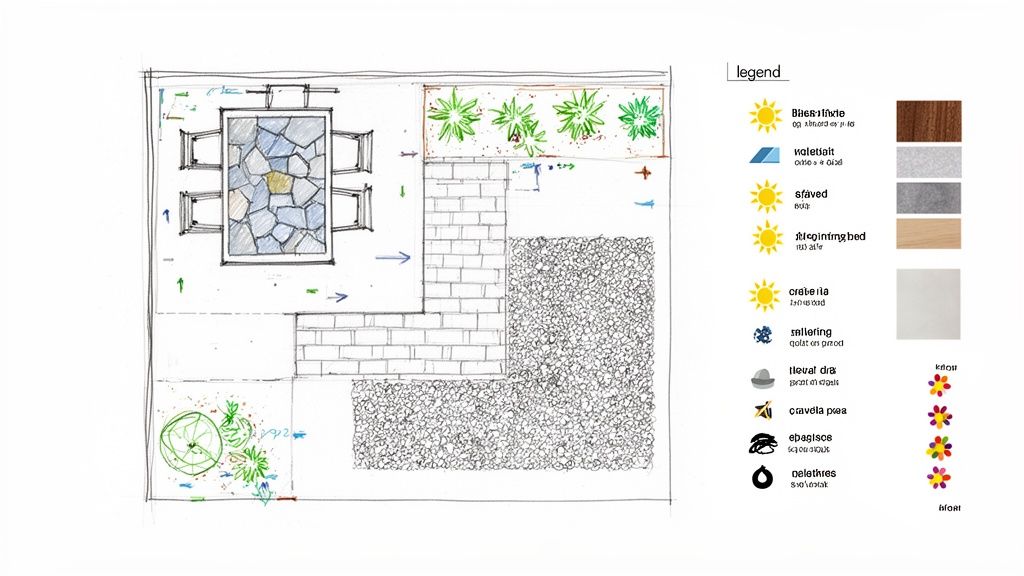
Honestly, this is the most critical step in any backyard landscaping plan. You're essentially creating the skeleton of your outdoor living space. Get this right, and everything else—from the hardscaped patios to the soft garden beds—will fall into place beautifully.
Designing Functional Zones
Think of your backyard layout like the floor plan for your house. You wouldn't put the dining table in the middle of the hallway, right? The same logic applies outdoors. Your yard needs designated "zones" for different activities to give it a sense of order and make it intuitive to use.
A few common zones you might plan for:
A Dining Zone: This is usually a patio or deck right off the house, making it easy to carry food out from the kitchen. Make sure it’s big enough for your table, chairs, and room to walk around them.
A Relaxation Zone: Maybe it's a quiet corner with a comfy bench, a couple of lounge chairs circling a small fire pit, or the perfect spot for a hammock between two sturdy trees.
A Play Zone: If you have kids or pets, this could be a dedicated patch of grass for running around, a spot for a swing set, or a sandbox tucked away in a corner.
A Utility Zone: Don't forget the practical stuff! You'll need a discreet area for trash cans, a compost bin, or a small shed for your tools and mower.
The real trick is arranging these zones so they make sense. You want to create natural, flowing pathways that guide people from one area to another. A gently curving flagstone path, for instance, always feels more organic and inviting than a ruler-straight concrete sidewalk.
The Power of AI in Visualizing Your Layout
This is often where homeowners get stuck. The process can feel so abstract. How can you really know if that patio is big enough or if a path in that spot will feel right? Guesswork here can lead to expensive mistakes down the line.
This is the perfect moment to apply AI Landscape Design to see your ideas in your own yard.
Instead of just trying to imagine how a 12x12 paver patio will look, an app like DreamzAR lets you virtually place it using your phone's camera. You see the exact scale, you can toggle between different paver styles, and you immediately know if the placement works with your home and existing landscape.
Seeing it visually is a game-changer. It removes all the uncertainty, letting you test different layouts and material combinations on the spot. You can see how that Japanese Maple will look next to a bluestone patio before you ever break ground, ensuring the final result is exactly what you envisioned.
Choosing The Right Plants And Materials
Once your layout is locked in, it’s time to select the materials and plants that will bring it to life. This is a balancing act between your personal style, your local climate, and how much maintenance you're willing to do. Making smart choices here is what separates a good yard from a great one.
Backyard landscaping has blown up beyond a simple weekend hobby. The U.S. landscape design industry is on track to hit $9.7 billion by 2026, largely because a strong housing market has homeowners ready to invest in creating incredible outdoor spaces. You can dig into the numbers from IBISWorld. This just goes to show how much people value making smart, high-quality choices for their yards.
Hardscape Material Selection
Your hardscape materials—the pavers, stones, wood, and gravel—are the bones of your design. They set the tone for everything else.
Patios and Walkways: Natural stone like flagstone gives a beautiful, rustic look but can be pricey. Concrete pavers are the workhorse—durable, versatile, and available in a million styles. For a more casual, budget-friendly option, decomposed granite or gravel is a great permeable choice.
Decks and Pergolas: Pressure-treated wood is the standard, affordable option. Woods like cedar and redwood have natural resistance to rot and bugs but will need more upkeep. Composite decking is the low-maintenance (but more expensive) champion that gives you the look of wood without the sanding and staining.
Softscape and Plant Selection
Choosing plants isn't just about picking what's pretty at the garden center. A thriving, low-stress garden comes from matching the right plant to the right place.
First, figure out your USDA Plant Hardiness Zone. This tells you what can actually survive the winter in your area. Next, pull out that sun map you made during your initial assessment. Sun-worshippers like lavender and coneflowers go in the spots that get six-plus hours of direct sun. Shade-tolerant plants like hostas and ferns are perfect for those darker corners.
Finally, and this is a big one, always consider a plant's mature size. That adorable little shrub might seem perfect now, but if it grows to block a window or take over a pathway in five years, you've just created a major maintenance headache. The plant tag is your best friend—read it carefully to avoid this classic mistake.
Visualize Your Design With AI And AR
This is where all your planning starts to feel real. It's the moment your ideas jump off the page and you get to see what your yard could actually become. We're moving beyond flat sketches and pure guesswork. Now, we can bring a design to life with stunning realism before a single shovel ever hits the dirt, all thanks to the power of AI and AR in modern landscape planning.
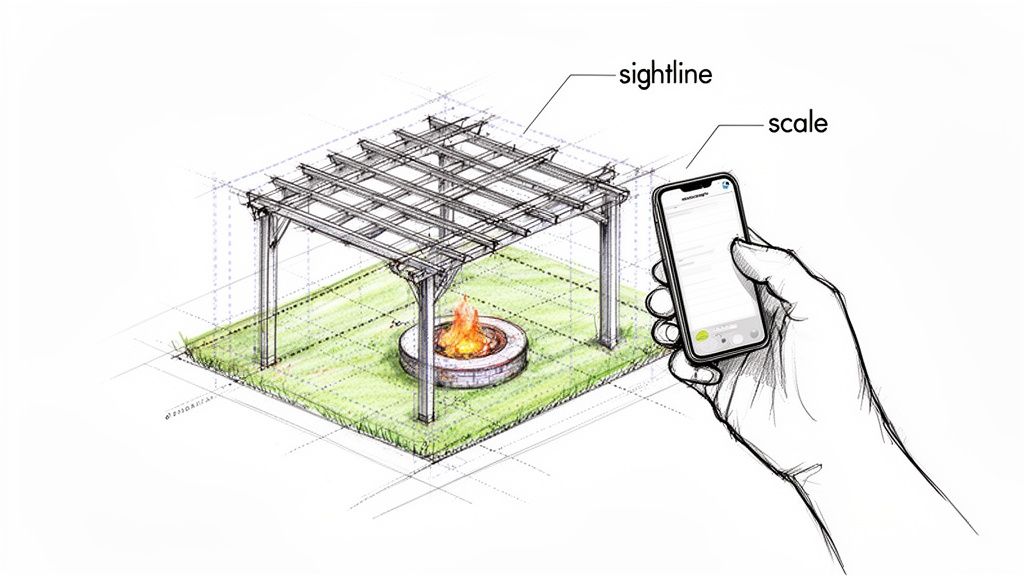
This ability to see the future of your yard is no longer some high-tech luxury reserved for professional designers. It’s an accessible tool for every homeowner. With an app like DreamzAR, you can finally see exactly what that new patio or garden will look like, which is the best way to avoid expensive mistakes and make sure the final result is exactly what you were hoping for.
From A Simple Photo To Dozens Of Designs
It all starts with something surprisingly simple: a photo. You just apply AI Landscape Design to visualize ideas using photos of your own yard. Snap a clear picture of the area you want to tackle—that patch of tired grass, the empty corner by the fence, or your blank-slate patio—and upload it.
In moments, the AI gets to work. It’s not just slapping a generic template over your picture; it analyzes your specific space, noting the architecture of your house and any existing features. Then, it generates dozens of professional-quality designs rendered right onto your photo, giving you an immediate, real-world vision of what’s possible.
This process is a lifesaver for a few reasons:
It smashes creative blocks. Not sure what style you even like? The sheer variety of AI-generated options can introduce you to concepts you never would have considered, from a rustic cottage garden to a sleek, modern oasis.
It helps you refine your taste. Seeing multiple layouts in your own space makes it incredibly easy to spot what you love and what you don't. Those vague ideas quickly sharpen into a concrete visual preference.
It saves you time and money. You can cycle through countless possibilities without spending the time and money it would take to get initial concepts from multiple designers.
Seeing an idea in your actual yard is completely different from seeing it on a mood board. It's the difference between "I think I want a fire pit" and "I know that a square, stone fire pit looks perfect in that corner." This clarity is the single biggest advantage of using AI in the early planning stages.
Walk Through Your Future Yard With Augmented Reality
Once you’ve found a few AI designs that get you excited, the next step is even more immersive. This is where Augmented Reality (AR) technology really changes the game. Instead of just looking at a flat image, AR lets you virtually place and walk around your favorite design elements in real-time and at full scale.
Picture this: you're standing on your lawn, holding up your phone, and a fully rendered pergola and fire pit appear on your screen, positioned exactly where you planned. You can physically walk around them, check sightlines from your kitchen window, or see just how much space that new patio will actually take up. You can learn more about the specific features of AI and AR design tools that make this magic happen.
This hands-on experience helps you confidently answer critical questions before you commit a dime to construction:
Is the scale right? Does that oversized outdoor sofa feel too cramped in reality, or is the dining table you picked out too small for the patio?
How does it affect the flow? Does the path you designed feel natural to walk, or does it create an awkward bottleneck near the back door?
What will the view be like? How will those new privacy shrubs look when you're gazing out from your living room?
By virtually "test-driving" your design in the real world, you can make smart adjustments and finalize your plan with total confidence. It’s the crucial step that bridges the gap between vision and reality, ensuring there are no costly surprises when the build finally begins.
Bringing Your Plan To Life
Okay, you’ve got a design you love and a budget that actually feels doable. Now for the fun part: making it all real. This is where all that careful planning starts to pay off, guiding you as the real work of building your dream backyard begins.
You’re not alone in this excitement. Creating beautiful, functional outdoor spaces is a huge trend right now. In fact, consumer enthusiasm is completely changing how people plan backyard landscaping. It's a real movement—by 2026, 63.6% of gardeners are planning to plant more and expand their yards.
This isn’t just wishful thinking; people are putting their money and time where their dreams are. A solid 42.8% are increasing their spending, and 50.2% are dedicating more hours to their projects. You can dig into this gardening boom to see just how big this market is getting.
DIY Or Hire A Pro?
This is one of the first major forks in the road. Do you roll up your sleeves and do it all yourself, or call in a professional? Honestly, a hybrid approach often hits the sweet spot. You can save a good chunk of change by handling the tasks you're comfortable with, while leaving the heavy lifting and technical jobs to the experts.
Here’s a simple way to think about it:
Good for DIY: Spreading mulch, planting annuals and smaller perennials, laying a simple gravel path, and assembling raised garden beds. Basic cleanup is all you, too.
Better to Hire a Pro: Building retaining walls over a few feet high, complex paver patio installations, major grading or excavation work, running electrical for lighting, and installing irrigation systems.
The key here is to be brutally honest with yourself about your skills, the time you really have, and your physical limits. Biting off more than you can chew is a fast track to burnout and a yard that’s stuck in a half-finished state.
Creating A Realistic Project Timeline
A successful project is all about sequence. You don't want to be undoing work you just did. This becomes even more critical if you're phasing the project over a few seasons to spread out the cost. You have to start with the foundational work first.
The golden rule of landscaping is to work from the ground up and the back out. Get the messy, foundational stuff like hardscaping done before you even think about bringing in delicate plants or laying down new sod.
A timeline that makes sense usually looks something like this:
Prep the Site: First things first, clear the area. That means removing any unwanted plants or old structures and handling any major grading.
Install the Hardscape: Now for the messy part. This is when you build patios, retaining walls, walkways, and decks.
Run Utilities: Before you add topsoil, get any irrigation lines or electrical wiring for lighting in the ground.
Soil and Planting: Bring in fresh soil, amend your garden beds, and then finally, install your trees, shrubs, and other plants.
Add Finishing Touches: The final step! Spread mulch, lay sod, and place your furniture, pots, and other decorative pieces.
Your AI Design Is Your Best Communication Tool
This is where all that time spent playing with designs on your phone becomes incredibly valuable. When you apply AI Landscape Design to visualize your ideas using photos of your own yard, you’re not just making a mood board—you’re creating a blueprint.
Your saved designs from an app like DreamzAR become a powerful way to talk to contractors. Instead of waving your hands and trying to describe your vision, you can just show them a precise visual. It cuts through any ambiguity about materials, placement, and scale, which helps prevent expensive mistakes and ensures the final result is exactly what you pictured.
Your Backyard Landscaping Questions, Answered
Jumping into a backyard remodel from scratch can feel overwhelming. I get it. Over the years, I've heard the same questions from homeowners time and time again. Let's tackle a few of the big ones right now to get you pointed in the right direction.
Okay, So Where Do I Even Begin With a Landscape Plan?
This is the number one question, and the answer is simpler than you think: start by looking at what you already have and dreaming about what you want. Before you think about a single plant or paver, you need to understand your own space and define what you want to do in it.
Is this going to be your go-to spot for weekend barbecues? A quiet retreat for your morning coffee? A play zone for the kids and dog? Get specific.
Next, become a detective in your own yard. Watch where the sun hits and when. Notice where the shady spots are. Are there big trees, a weird slope, or a soggy area you need to work around? This initial audit is the bedrock of your entire plan—skip it, and you'll be fighting your yard instead of working with it.
How Can I Actually See What My Ideas Will Look Like?
This is where things get fun and where so many people used to get stuck. The most powerful way to bring your vision to life is to apply AI Landscape Design to visualize your ideas using photos of your own yard.
Honestly, this changes everything. Tools like DreamzAR let you snap a quick photo and instantly generate dozens of professional-looking design concepts. You're not just guessing anymore. You can see how different plants, patio styles, and layouts look in your actual space. It removes all the guesswork.
Visualizing your plan with AI prevents costly mistakes. It’s the difference between hoping a design will work and knowing it will before you ever break ground.
Got more questions? We've probably answered them. You can check out our complete list of frequently asked questions about landscape design.
Ready to stop guessing and start visualizing? With DreamzAR, your dream yard is just one photo away. Download the app and see the magic for yourself!