How to Landscape a Slope Without It Washing Away
Landscaping a slope isn't just about planting pretty flowers. It's a thoughtful mix of strategic planting, smart erosion control, and often, some heavy lifting with structures like terraces or retaining walls. The goal is simple: turn a challenging incline into a stable, beautiful, and usable part of your yard. It all starts with getting water runoff under control and then layering in the plants and hardscaping.
Turning Your Hillside From a Problem into a Feature
That steep slope in your yard? I know it's a nightmare to mow, but it's also a blank canvas for a stunning, multi-level garden. So many homeowners see a hillside and just see the headaches—soil washing away, water pooling in the wrong places, and just general awkwardness. With the right game plan, you can flip that perspective and see it as a unique opportunity.
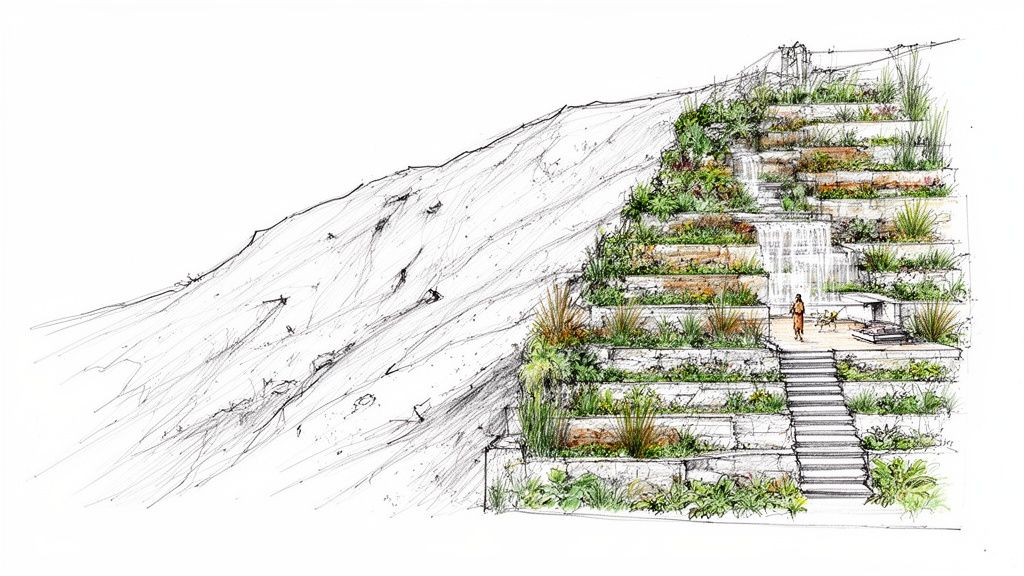
From Inconvenience to Inspiration
This guide is designed to walk you through the real-world steps for landscaping a slope, turning those common problems into your favorite design features. We'll get into everything from checking out your site to picking the perfect plants and structures to hold everything in place. The aim here is to build a landscape that not only looks incredible but is also resilient and low-maintenance in the long run.
We're going to dig into some key elements you can use:
Terraced Gardens: Creating level planting beds and little patio spots.
Cascading Plants: Using trailing plants to soften hard lines and anchor the soil.
Functional Hardscapes: Adding steps, paths, and walls that provide both access and structure.
See Your Slope's Potential with AI
Let's be honest, one of the toughest parts of a slope project is just picturing the final result. It’s hard to imagine how a big retaining wall will actually look, or how a new garden bed will change the feel of the whole space. This is where AI Landscape Design can completely change how you plan by letting you visualize ideas using photos of your own yard.
The secret to a great project is seeing your ideas in context before you spend a dime or lift a shovel. When you can visualize the design on your own property, it takes all the guesswork out of it and gives you the confidence to move forward.
AI landscape design apps like DreamzAR are getting rid of that guesswork. You can snap a photo of your yard and instantly see what professional designs could look like right there on your property. This makes it so easy to play around with ideas—compare a stone retaining wall to a timber one, or see how a mix of ornamental grasses and groundcovers will look through the seasons. It makes a complicated project feel exciting and totally doable from day one.
And once you've carved out those new, level spaces, you can really start to think about enjoying them. You might even find some inspiration from these weather-ready backyard sitting area ideas to incorporate into your design.
Understanding Your Slope Before You Dig
Jumping into a slope landscaping project without a solid plan is like building a house without a blueprint. Before you even think about picking up a shovel, taking the time to really get to know your site is the single most important thing you can do. It'll save you from costly, frustrating mistakes down the road.
This initial analysis is going to dictate every single decision you make from here on out—from how you'll stop erosion to which plants will actually grow and thrive.
Gauging Your Slope's Steepness and Scale
First things first: you need to understand the steepness, or grade, of your slope. This is the big one. A gentle slope with less than a 10% grade might just need some smart planting and a good layer of mulch. But if you're dealing with a steep hill over 20%, you’re almost certainly going to need engineered solutions like retaining walls to make it safe and usable.
You don't need fancy equipment to get a ballpark idea. A simple method uses two stakes, a string, and a line level. Pound one stake in at the top of the hill and another at the bottom. Run a level string between them, then measure the vertical drop and the horizontal distance to figure out the rise over run.
Of course, for any serious structural work, you'll want precise measurements. For a deeper dive on getting it right, you can learn more about how to measure a yard. It’s a great guide that covers the kind of area calculation you’ll need for a big project.
Visualizing Your Project with AI Landscape Design
This planning phase is also the perfect time to start seeing what your ideas actually look like. It's one thing to measure a slope; it's another thing entirely to see how a three-foot-high terrace will really feel next to your house. This is where AI Landscape Design tools are incredibly powerful because they allow you to visualize your ideas directly on a photo of your own yard.
Before you commit to thousands of dollars in materials and labor, using an app to visualize the final design on a photo of your actual yard is a game-changer. It transforms abstract ideas into a concrete plan, helping you avoid designs that look good on paper but feel wrong in reality.
With an app like DreamzAR, you can just upload a photo of your sloped yard and start playing. Want to see how a stone retaining wall would look? You can place one virtually. Curious how a new garden bed would fit? Lay it out and get a real sense of its scale. This kind of digital preview helps you make informed decisions and ensures the final result actually matches what you had in your head.
Mapping Sun, Soil, and Water
Beyond the grade, it's time to put on your detective hat and observe how nature interacts with your yard. These three factors are non-negotiable for a design that will last.
Sun Exposure: Spend a full day tracking the sun's path across your slope. Make notes of which spots get blasted with full sun, which get gentle partial shade, and which are in deep shade all day. This "sun map" is your bible for picking plants that will thrive, not just survive.
Soil Type: The classic "jar test" is a super easy DIY trick. Fill a mason jar about halfway with soil from your slope, top it off with water, shake it like crazy, and then let it settle for 24 hours. Sand sinks first, then silt, and finally clay, giving you a clear look at your soil’s makeup and how well it drains.
Water Flow: The next time it rains, grab an umbrella and watch your slope. See where the water runs, where it rushes in a torrent, and where it pools up. Understanding these natural drainage paths is absolutely essential for planning erosion control that works and preventing water from ending up in your basement.
And one last thing, but it's a big one: always, always call 811 to have underground utilities marked before you dig. Hitting a gas line or water pipe can turn your dream project into a dangerous, expensive nightmare. It’s a simple, free service that is a mandatory first step.
Once you’ve got a good read on your slope, it's time to get ahead of the two biggest challenges: erosion and drainage. This is non-negotiable. It's the groundwork that makes sure your landscaping investment doesn’t just wash down the hill with the first big storm. If you skip this, all the beautiful plants and features you add later are at risk.
The game plan is pretty straightforward. First, slow the water down. Second, give it a clear, controlled path to follow. When you manage the runoff, you keep your precious topsoil where it belongs, protect your home’s foundation, and create a stable environment for your new landscape to really take root.
Getting a Visual on Drainage Solutions
Before you grab a shovel or start pricing out materials, it really helps to see what these solutions will actually look like on your property. This is where you can apply AI Landscape Design to visualize your ideas using photos of your own yard. You can’t just wing it when placing a dry creek bed; you want it to look like it naturally belongs there while doing its job effectively.
I've found that using a tool like DreamzAR can be a game-changer. Just snap a photo of your slope and start playing around. You can overlay different drainage features to see how they fit. Wondering how a swale might curve around a garden bed? Or how a dry creek bed filled with river rock would meander down the hill? This lets you nail the look and placement before you commit to all the heavy lifting, ensuring the end result is both functional and beautiful.
The diagram below really breaks down the core factors you need to consider—steepness, soil type, and sun exposure—which will guide every decision you make from here.
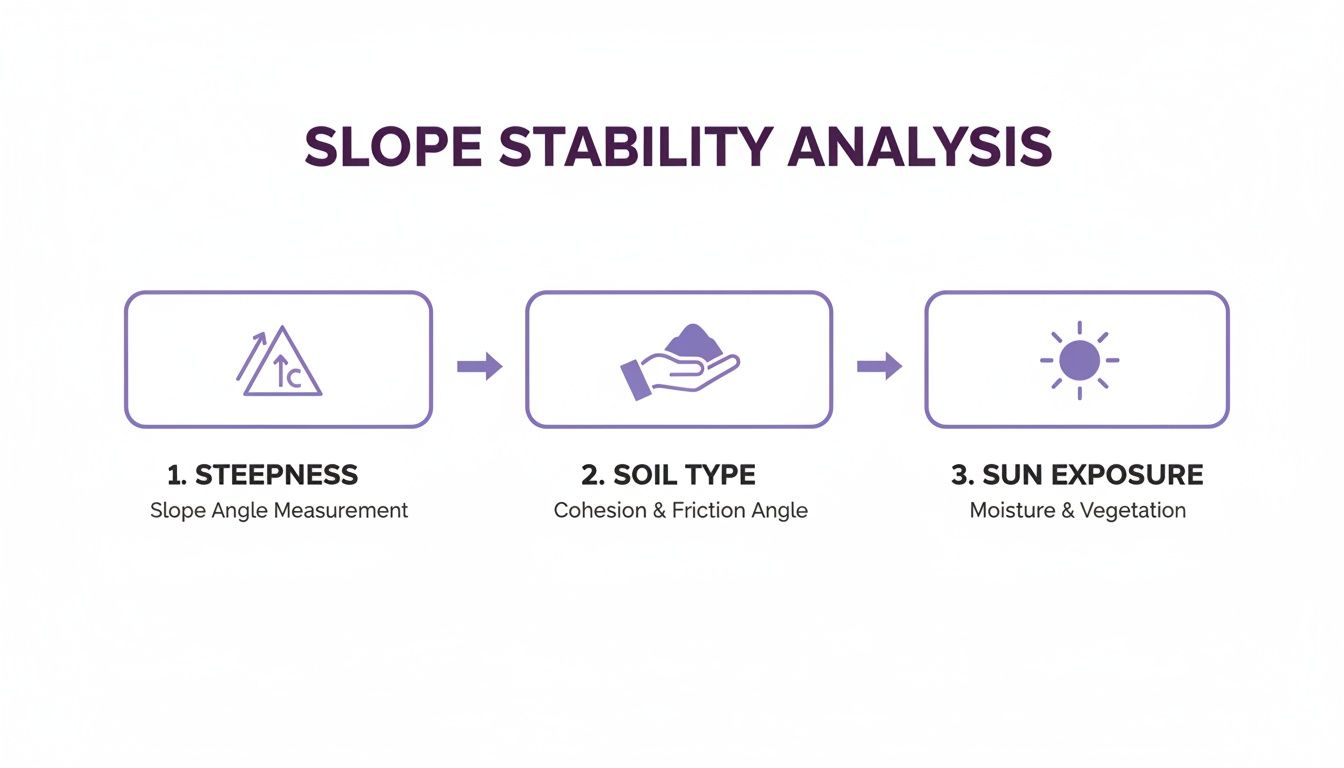
This just reinforces that good erosion control isn’t about a single magic bullet; it’s about responding to what your specific piece of land is telling you.
Start with Plants and Organic Matter
Honestly, the best long-term fixes for a sloped yard usually involve working with nature. These methods are often easier on the wallet and do wonders for your soil health over time.
Lay Down Thick Mulch: A 3-4 inch layer of organic mulch like shredded bark or wood chips is like a sponge. It cushions the impact of raindrops, slows down runoff, and lets water soak into the ground gently instead of rushing off the surface.
Use Erosion Control Blankets: For any areas you've just graded or seeded, biodegradable jute or coir matting is a true lifesaver. It physically holds the soil and seeds in place while your new plants get established, preventing a washout when they're most vulnerable.
Plant Groundcovers with Fibrous Roots: Think of these plants as the living glue for your slope. Groundcovers with dense, fibrous root systems—like creeping juniper, various sedges, or vinca—are fantastic at grabbing onto the soil and holding everything together.
When you combine these strategies, you create a really strong, layered defense against erosion. If you're interested in diving deeper, we've got a whole guide on creating a sustainable and drought-resistant landscape that’s packed with more ideas.
The goal isn't to stop water completely, but to manage its energy. By slowing it down with plants and mulch, you transform a destructive force into a beneficial resource that nourishes your landscape.
When You Need to Bring in the Structures
For steeper grades or slopes that handle a serious amount of water, plants alone might not be enough. You’ll probably need to add some structural solutions to capture and redirect the excess flow away from sensitive areas.
A French drain is a classic for a reason. It's basically a perforated pipe tucked into a gravel-filled trench that works underground to collect and channel water away from your foundation or soggy parts of the yard.
Another option that I love for its looks is a dry creek bed. It's a shallow, winding channel lined with landscape fabric and filled with a mix of river rocks and boulders. Most of the time, it's a great-looking feature, but when it rains, it becomes a functional channel that directs runoff safely to a rain garden or street drain.
It's pretty amazing to see how much this space has grown. The global market for slope stabilization and erosion control products was valued at USD 2.11 billion in 2023 and is expected to hit USD 4.21 billion by 2032. That kind of growth means homeowners like us now have access to pro-grade materials that used to be reserved for major engineering projects. You can check out more on this trend over at Zion Market Research.
Before you make any final decisions, it's a good idea to weigh the pros and cons of each method. Here’s a quick table to help you compare your options.
Erosion Control Methods at a Glance
Method | Best For | Typical Cost | Maintenance Level |
|---|---|---|---|
Mulching | Gentle to moderate slopes; moisture retention | $ | Low (reapply annually) |
Groundcover Plants | All slope types; long-term stabilization | $$ | Medium (initial watering/weeding) |
Erosion Blankets | Newly seeded or steep, bare slopes | $$ | Low (biodegrades over time) |
French Drains | Areas with subsurface water issues; protecting foundations | $$$ | Low |
Dry Creek Beds | Slopes with significant surface runoff | $$$ | Low (occasional debris removal) |
Choosing the right mix of these techniques will give you a stable, resilient slope that not only looks great but is built to last.
Building Structure with Terraces and Retaining Walls
Now that you've got a handle on the immediate threat of erosion, it’s time to bring in the heavy hitters—the structures that create lasting stability and turn that difficult incline into a series of beautiful, usable spaces. This is where hardscaping becomes your best friend, transforming a steep hill into a stunning layered landscape.
The secret to unlocking a slope’s potential is creating terraces, which are basically a staircase of flat levels perfect for gardens, patios, or even a small play area. These terraces rely on retaining walls to hold back the soil, giving you the stable, level ground you need to work with.
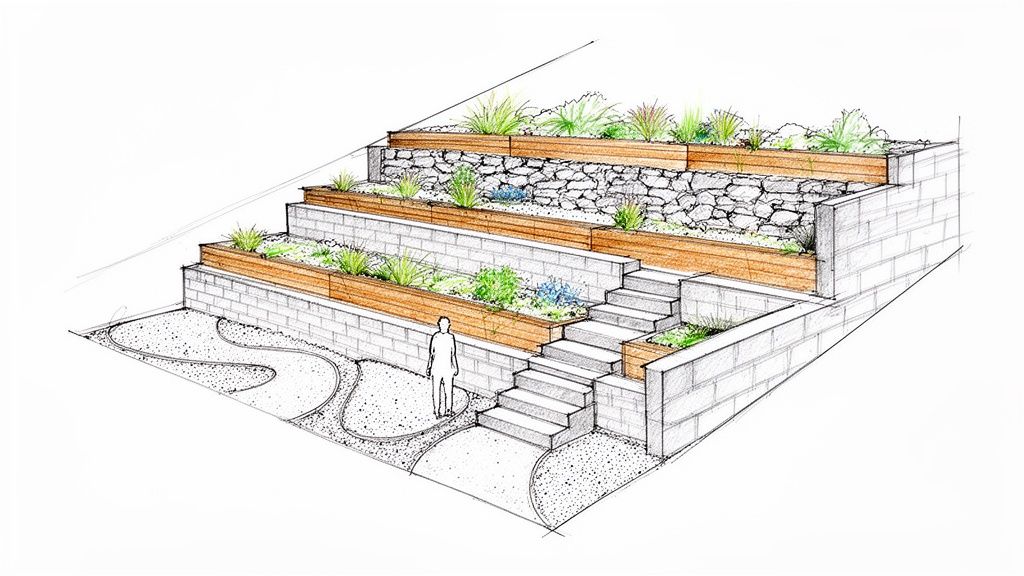
Visualizing Your Hardscape with AI Landscape Design
Before you even think about ordering tons of stone or timber, you have to visualize what you're building. A retaining wall is a massive commitment of both money and muscle, and it's nearly impossible to guess how different materials will actually look against your house and the rest of your yard. This is the perfect time to apply AI Landscape Design, which lets you visualize these big ideas using photos of your own yard.
With an app like DreamzAR, you can just upload a photo of your slope and start experimenting with hardscape designs right away. You can see what a rustic, natural stone wall looks like compared to modern concrete blocks. Wondering which pavers would look best for the pathway connecting the tiers? You can test that, too. This digital preview lets you find the perfect combo and feel confident before a single stone gets laid.
Choosing Your Retaining Wall Materials
The material you pick for your retaining walls will set the entire mood for your sloped landscape. Every option has its own look, price tag, and lifespan.
Here’s a rundown of the most common choices homeowners make:
Natural Stone: This gives you a timeless, organic vibe that blends right into the landscape. It can be more expensive and definitely requires a skilled hand to install, but materials like fieldstone offer incredible durability and character.
Timber: If you’re going for a more rustic and affordable look, pressure-treated wood or railroad ties are a solid choice. Timber walls are much easier to tackle as a DIY project but have a shorter lifespan of about 15-20 years before rot becomes an issue.
Concrete Blocks: Interlocking concrete blocks are a hugely popular DIY-friendly option. They're cost-effective, perfectly uniform, and designed to fit together easily, making them a practical choice for most walls under four feet tall.
A well-built retaining wall does so much more than just hold back dirt. It becomes the architectural backbone of your garden, defining spaces and providing the solid foundation for everything you want to grow and enjoy.
Safety First: When Do You Need a Professional?
Listen up, because this is the one area where you absolutely cannot cut corners. Building a short, two-foot decorative wall is a perfectly manageable DIY project for a weekend. But taller walls are holding back an immense amount of pressure from soil and water. An improperly built wall can, and often does, fail catastrophically.
Stick to these critical safety guidelines:
DIY Zone (Under 4 Feet): In most cases, a retaining wall under four feet high that isn't supporting something critical (like a driveway or your house's foundation) can be a DIY job. Just make sure you use the right materials and follow installation guides to the letter.
Professional Required (Over 4 Feet): Any wall taller than four feet—or any wall on a very steep slope or supporting a heavy load—absolutely requires a professional engineer. Local building codes almost always mandate permits and engineered plans for these structures to ensure they have the proper footings, drainage, and reinforcement to be safe.
Creating Safe and Inviting Pathways
Once you have your beautiful new terraces, you need a safe and attractive way to get between them. Well-designed steps and pathways are just as important for function as they are for looks.
For gentler slopes, winding gravel trails can create a soft, naturalistic feel that encourages a leisurely stroll. When you're dealing with steeper drops between terraces, stone steps are a durable and classic solution. They provide secure footing and can be built from the same material as your retaining walls for a seamless, cohesive design. If you're thinking about tackling this yourself, our guide on how to build steps into a hillside is a great resource that breaks down the whole process.
Choosing the Right Plants to Anchor Your Slope
Once your retaining walls, terraces, or grading work is done, it's time for the fun part: bringing the slope to life. Plants are the living, breathing glue that will hold your entire project together. They're what transforms bare dirt and rock into a lush, stable feature of your yard.
But smart plant selection for a slope goes far beyond just picking what looks pretty. The real strategy is choosing plants with deep, fibrous root systems. Think of them as a natural rebar, weaving through the soil and locking it down tight.
Think Function First, Then Form
Every single plant on a slope needs to have a job. You’re aiming to build a multi-layered defense against erosion, and the best way to do that is to think about your plants in terms of their function. This approach gives you maximum soil stabilization while still letting you create a design that’s full of texture and visual appeal.
Here are the key players you'll want on your team:
Low-Growing Groundcovers: These are your front-line soldiers. Plants like creeping juniper, vinca minor, or hardy ice plant spread out to create a dense mat of foliage. This mat shields the soil from the direct impact of rain, while their tangled root systems are incredibly effective at stopping surface runoff in its tracks.
Drought-Tolerant Ornamental Grasses: Think of switchgrass or little bluestem. Their deep, fibrous roots are absolute champions at holding soil in place. As a bonus, they add beautiful texture and movement to your design, swaying in the breeze and changing colors with the seasons.
Sturdy Shrubs and Small Trees: These are the heavy-duty anchors for your project. Species like sumac, dogwood, or viburnum have extensive root systems that provide serious structural integrity to the entire slope. Plant them strategically to create focal points and give your design a strong backbone.
Why Native Plants Are Your Best Bet
If there's one piece of advice I can give for landscaping a slope, it's this: lean heavily on native plants. These are species that have spent thousands of years adapting to your specific local climate, soil, and rainfall patterns.
This built-in adaptation means they are uniquely equipped to thrive with minimal hand-holding. Once established, they typically need less water, are more resistant to local pests and diseases, and provide essential food and habitat for pollinators and wildlife. Most importantly, their root systems are perfectly suited to your soil type, making them powerhouses for erosion control.
By choosing native plants, you're not just planting a garden; you're helping to restore a small piece of the local ecosystem. The result is a landscape that is not only beautiful and stable but also resilient and largely self-sufficient.
This isn't just a niche gardening trend; it's a critical approach to land management. Erosion on slopes costs billions annually, but the market for effective solutions is growing fast. The Slope Stabilization & Erosion Control Product Market, valued at USD 2.44 billion in 2024, is projected to hit USD 4.92 billion by 2033. With over 25% of the U.S. population living in erosion-prone areas, simple techniques like contour planting—which can trap 80% more soil than bare ground—are essential tools for homeowners. You can discover more insights on this trend at Business Research Insights.
Visualize Your Planting Plan with AI Landscape Design
Choosing the right plants is one thing; picturing how they’ll actually look together on your slope is a whole other challenge. It’s tough to imagine how big that shrub will get in five years or how a mix of grasses and groundcovers will look in the middle of summer versus the fall. This is where you can apply AI Landscape Design to visualize your ideas using photos of your own yard.
Instead of guessing, you can just snap a photo of your slope. From there, you can use an app’s huge plant library to virtually place different combinations of trees, shrubs, and flowers. See how a cluster of native grasses looks next to a rock outcropping, or how a flowering groundcover will cascade over your new retaining wall. It lets you experiment with textures, colors, and seasonal interest, ensuring your final design is both functionally sound and beautiful all year long.
To get a better idea of how groundcovers can transform a space, check out our guide on laying ground covers with DreamzAR.
Planting Techniques for Slopes
On an incline, you can't just dig a hole and drop a plant in. You need to use techniques that give your plants the best chance of survival by helping them capture every precious drop of water.
The most effective method is to create a small basin, or a mini-terrace, for each plant. As you dig the hole, pile the excavated soil on the downhill side to build a small, crescent-shaped berm. This little wall acts like a dam, catching rainwater and irrigation and allowing it to soak slowly into the root zone instead of just washing away down the hill.
It’s a simple trick, but it encourages the deep, strong root growth that you need to anchor your slope for the long term.
Answering Your Questions About Sloped Landscapes
Taking on a sloped yard feels like a massive project, and it's completely normal to have questions swirling before you even think about picking up a shovel. From budget worries to picking the right plants, getting solid answers is what turns anxiety into a confident action plan.
Let's tackle some of the most common hurdles homeowners face when figuring out what to do with a hillside property. I'll give you some straightforward, practical advice to help you make smart choices for your unique space.
What Is the Cheapest Way to Landscape a Slope
The most budget-friendly path is always, always to work with the natural shape of your yard instead of fighting it. Before you even price out expensive retaining walls, think about "softscaping" solutions that are both beautiful and easy on the wallet.
Go with Native Groundcovers: These plants are already adapted to your climate, meaning they'll need less water once they're established. More importantly, their root systems are nature's rebar, perfect for holding soil in place.
Lay Down Thick Mulch: A generous 3- to 4-inch layer of wood chip mulch is one of the cheapest and most powerful tools you have. It stops erosion, locks in moisture, and keeps weeds down.
Embrace Rock Gardens or Xeriscapes: These designs lean on rocks, gravel, and drought-tolerant plants to create a stunning, low-maintenance landscape that absolutely thrives on a slope.
The real key here is to see these ideas in your space before you commit. This is where you can apply AI Landscape Design to visualize your ideas using photos of your own yard. A tool like DreamzAR is a game-changer because you can snap a photo and instantly see what a sprawling rock garden or a swath of ornamental grasses would look like. It lets you experiment with all the budget-friendly options until you find a design you truly love, all before spending a dime on materials.
Can I Build a Retaining Wall on a Slope Myself
This is a huge safety question, and the answer comes down to one thing: height. For shorter walls, going the DIY route is often totally fine. But when you start getting into taller walls, you're entering professional territory.
As a general rule, walls under 3 to 4 feet that aren't holding back a critical load (like the edge of a driveway) can be a great DIY project. You can find plenty of user-friendly, stackable block systems at any home improvement store.
But anything taller than that is a different beast entirely. It's holding back an immense amount of pressure from soil and water.
A retaining wall over four feet tall absolutely requires professional engineering. It needs proper footings, drainage, and reinforcement to be safe. A failure isn't just a mess; it can be catastrophic. This is one area where you never, ever cut corners to save a few bucks.
What Plants Should I Avoid Putting on a Slope
Knowing what not to plant is just as important as knowing what to plant. The wrong choice can offer zero erosion control or, even worse, contribute to the problem.
Stay away from anything with a shallow, weak root system; a heavy downpour can wash them right out. You should also avoid plants that are exceptionally thirsty. Over-irrigating a slope saturates the soil, which makes it heavier and much more likely to slump or slide.
Finally, be really careful about planting large, top-heavy trees right at the crest of a steep hill. Over time, their weight could destabilize the soil beneath them.
How Do I Water Plants on a Steep Slope
Watering on a slope is all about the "low and slow" method. You want every drop to soak in, not just sheet off the surface and take your topsoil with it.
Your best friends here are drip irrigation and soaker hoses. They deliver water right to the root zone with almost no waste or erosion.
Here's a great tip for when you're first planting: create a small, level basin or "terrace" around each plant. Just build up a little rim of soil on the downhill side. This simple trick creates a mini-reservoir that catches water and gives it time to absorb deeply, encouraging the strong, stabilizing roots you need for long-term success.
For more answers to common landscaping questions, you can also explore the detailed DreamzAR frequently asked questions page.
Ready to stop guessing and start visualizing? With DreamzAR, you can see exactly how new terraces, plants, and pathways will look on your sloped yard. Just take a photo and let our AI generate stunning, realistic designs in seconds. Download DreamzAR on the App Store today and turn your challenging slope into your favorite feature.