How to Create Privacy in Backyard: A Practical Guide
Creating a truly private backyard isn't about just one thing. It's usually a combination of fences, clever landscaping, and structures like pergolas or screens. The real magic happens when you layer these elements to strategically block unwanted views, turning an exposed yard into a secluded haven you can actually relax in.
Why Is Backyard Privacy Suddenly a Big Deal?
There’s nothing worse than that feeling of being watched when you’re just trying to enjoy your own backyard. That outdoor space should feel like an extension of your home—a personal sanctuary for unwinding, hosting a barbecue, or just sipping coffee in your PJs. This isn't a luxury anymore; for most of us, it feels like a necessity.
This guide goes beyond the usual advice. We're going to get into practical, real-world strategies for taking back your yard. We'll explore how to layer living screens, hardscaping, and smart structures to build a retreat that's genuinely private.
See Your Private Oasis Before You Build
Let's be honest, one of the biggest hurdles is just trying to imagine how a six-foot hedge or a new fence will really look and feel. It’s a big commitment, and this is where modern tools can save you from some seriously expensive guesswork.
The ability to see your ideas in place before committing time and money is a game-changer. It transforms a project from a hopeful guess into a confident plan.
With an AI Landscape Design app like DreamzAR, you can snap a photo of your yard and instantly see different privacy solutions in place. Wondering how a row of Arborvitae will look in five years? Or can't decide between a modern horizontal fence and a classic lattice screen? By using a photo of your own yard, you can apply AI landscape design to visualize your ideas and experiment with tons of options, making sure the final result is exactly what you pictured.
You can find more inspiration to get the wheels turning by exploring our collection of backyard landscaping ideas.
This trend toward creating private outdoor "rooms" is absolutely surging. In fact, surveys now show that 68% of U.S. households consider privacy features essential for enjoying their backyard. That's a huge jump from just 52% back in 2020. Seeing how others have successfully created their own secluded havens, like in this incredible Private Macungie Backyard Makeover project, can really show you what's possible.
Figure Out Your Sightlines and Privacy Goals
Before you even think about buying plants or pricing out fences, the very first thing you need to do is become a detective in your own backyard. Seriously. Creating real, effective privacy isn't about throwing up the biggest, tallest barrier you can find; it’s about being strategic and blocking the specific views that are bothering you.
So, grab your morning coffee and take a slow walk around your property. Stand on your deck. Linger by the back door. Plop down in a chair right in the middle of the lawn. What do you see? Even more importantly, what can see you?
Pinpoint Your Privacy Weak Spots
Most privacy headaches fall into just a few common categories. Once you know exactly what your problem is, finding the right fix becomes so much easier. Start by asking yourself a few direct questions:
Who’s looking in? Is the real issue that nosy second-story window next door that has a perfect view into your kitchen? Or is it the neighbor's patio, where you're practically a part of their conversations whether you want to be or not?
What’s the angle? Are you trying to block a straight-on, eye-level view from the sidewalk, or is it a downward gaze from a taller house? This single detail will determine how tall your privacy screen—be it a plant or a structure—needs to be.
When does privacy matter most? Are you dreaming of a secluded hot tub session in the evenings? Or is your main goal to create a safe, contained play area for the kids during the day? Knowing this helps you focus your energy and budget where it counts.
Honestly, figuring out your specific sightline vulnerabilities is the most important part of the whole process. I've seen a single, well-placed tree or a simple screen solve a problem more effectively—and for way less money—than a massive, full-perimeter fence.
See Your Solutions Come to Life with AI
This is usually the part where people get stuck. It’s one thing to talk about a 6-foot fence, but it’s another thing entirely to feel how that will change your space. Will it feel cozy or just plain boxed-in? How does it compare to a row of 10-foot Arborvitae?
Instead of just guessing, this is the perfect time to use AI Landscape Design. By starting with a photo of your own yard, you can visualize exactly how your ideas will look.
With an app like DreamzAR, you just snap a photo of your yard, honing in on a problem spot like that exposed patio. From there, you can let the AI work its magic. In seconds, you can see what a sleek modern privacy screen looks like, then compare that to a lush, living wall of evergreen trees—all in the context of your actual home. This kind of tech lets you map those sightlines visually and test out different AI-generated designs until you find the one that solves your problem perfectly. You can play with plant heights, fence styles, and different layouts to find the right balance before you commit a single dollar.
Once you’ve nailed down your problem areas and have a few visual ideas you love, it helps to define your overall style. If you’re not sure what your vibe is, taking a quick landscape style quiz can point you in the right direction. It makes it so much easier to choose solutions that not only create privacy but also make your yard a place you truly love to be.
Compare Privacy Solutions: Plants, Fences, and Structures
Okay, you’ve mapped out your yard's trouble spots. Now for the fun part: choosing your tools. When you get right down to it, creating backyard privacy boils down to three core approaches: living screens (plants), solid barriers (fences), and versatile structures (like pergolas and screens).
Each has its own unique blend of aesthetics, cost, and upkeep. The right choice isn't universal; it's the one that fits your specific goals, budget, and timeline. A dense hedge of evergreens, for instance, gives you a soft, natural barrier that muffles sound, but you have to be patient while it grows in. On the other hand, a sleek horizontal slat fence provides privacy the moment it's installed, but it comes with a bigger price tag and a much more defined, rigid look.
Then there are hybrid solutions. Think of a vine-covered pergola that defines your patio space while offering dappled shade and a bit of screening from above. It’s all about finding the right fit for your yard.
Comparing Backyard Privacy Solutions
Choosing between a living wall, a solid fence, or a stylish structure can feel overwhelming. To make it easier, I've put together a quick comparison table that breaks down the most common strategies. This should give you a good starting point for figuring out what might work best for your space and budget.
Privacy Solution | Average Cost (Per Linear Foot) | Time to Full Privacy | Maintenance Level | Best For |
|---|---|---|---|---|
Living Screen (Plants) | $20 - $150 | 1 - 5 years | Medium to High | Natural aesthetics, sound buffering, adding texture and life. |
Fence (Wood/Vinyl) | $25 - $75 | Instant | Low to Medium | Immediate privacy, security, clear property lines. |
Freestanding Screen | $50 - $200+ | Instant | Low | Targeted screening for patios, hot tubs, or specific sightlines. |
Berm/Raised Bed | $15 - $100 | Varies (plants) | Low to Medium | Adding height variation, natural barriers, and noise reduction. |
Pergola/Gazebo | Varies by size/material | Partial/Varies | Low to Medium | Creating a private "room" within the yard, overhead screening. |
This table is a great reference, but remember that the "best" option often involves mixing and matching. A fence might solve your main problem, but a few strategically placed trees can soften its hard lines and block views from a neighbor's second-story window.
Living Screens: The Natural Choice
For a softer, more organic feel, plants are almost always the answer. A living wall of green is so much more dynamic than a static fence; it changes with the seasons, adds incredible texture, and just feels alive.
Fast-growing evergreens are a popular choice for a reason. Varieties like Arborvitae 'Green Giant' or Leyland Cypress can shoot up several feet a year, creating a dense screen pretty quickly. Just remember, plants need some love—watering, pruning, and feeding are part of the deal. They also take time to fill in, so you won't get that total seclusion on day one. You can apply AI landscape design to a photo of your own yard to visualize how a new hedge will look once it's fully grown.
If you want to go deeper on choosing the right greenery, we've got a whole guide filled with privacy screen plants and landscaping ideas to explore.
Fences and Walls: Instant Gratification
When you need privacy and you need it now, nothing beats a fence. A standard 6-foot solid wood or vinyl fence will immediately block prying eyes from neighbors and the street. It’s a straightforward and highly effective solution that also clearly defines your property line and adds a layer of security.
The trade-off? A tall, solid fence can sometimes make a small yard feel a bit "boxed in." It's also a significant upfront investment and will likely require permits depending on your local building codes.
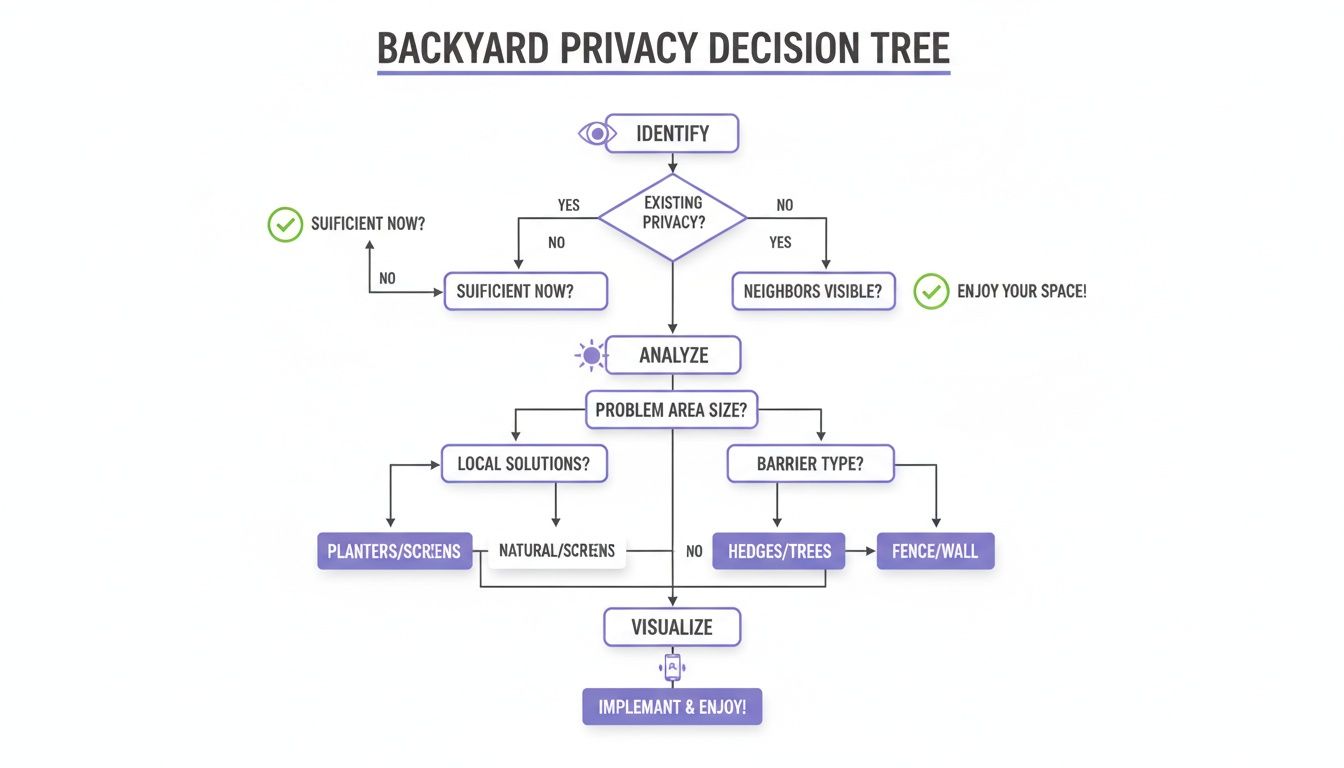
This decision tree gives you a great visual for walking through the process. It helps you zero in on what you really need and what will work with your site's conditions before you start visualizing the final look.
Structures and Hybrids: The Best of Both Worlds
Structures offer a fantastic middle ground. They let you create designated private zones without having to wall off your entire yard. Think of a pergola over your patio—you can add retractable canopies or breezy outdoor curtains to get privacy exactly when you want it.
Things like decorative privacy screens, trellises covered in climbing vines, or even a cleverly placed garden shed can work wonders to block a specific, annoying sightline. Many people decide to screen in a patio, which creates a cozy, bug-free outdoor room that truly extends their living space. These solutions are targeted, stylish, and incredibly functional.
See It Before You Build It with AI Landscape Design
Trying to compare all these ideas in your head is tough. Will that fence feel like a fortress? Are those Emerald Green Thujas really going to be tall enough to block the neighbor’s deck? This is where visualization becomes your secret weapon.
Guesswork is a thing of the past with an AI Landscape Design app like DreamzAR.
It’s simple: you upload a photo of your backyard. In seconds, you can see exactly how a 6-foot vinyl fence looks along your property line. Don’t love it? With a single tap, you can swap it for a lush, green wall of Skip Laurels.
Being able to make that direct comparison—right in your own yard—is a game-changer. It lets you make a confident decision you won't regret later. You can play with different heights, materials, and plant types until you find the solution that gives you the perfect blend of privacy and style you've been dreaming of.
Select the Right Plants for a Living Privacy Screen
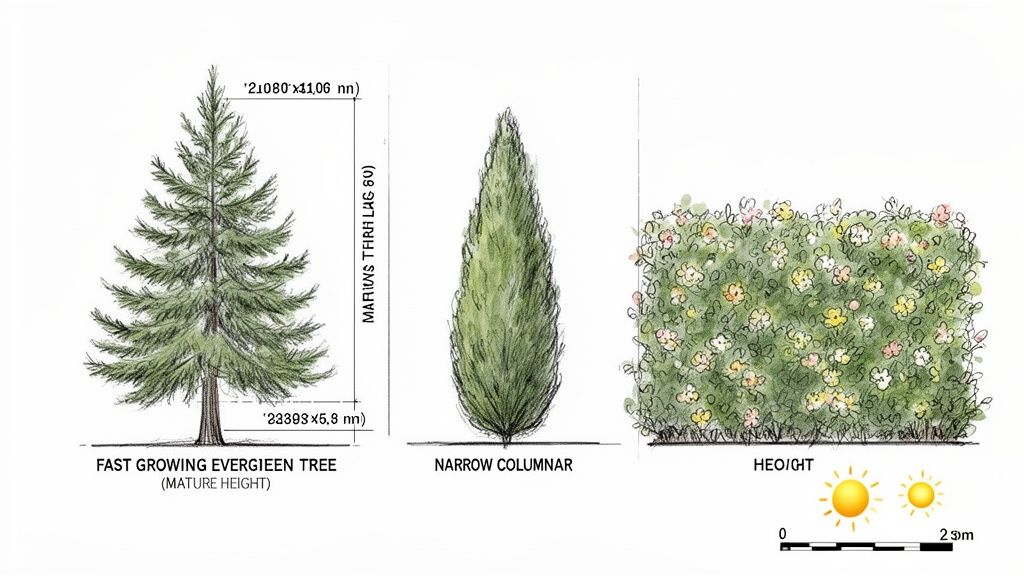
A living wall of green is hands-down one of the most beautiful and effective ways to create seclusion in your backyard. Unlike a static fence, plants add texture, help buffer sound, and create a dynamic, ever-changing backdrop for your life outdoors.
The trick, of course, is picking the right plant for your specific needs—whether that’s speed, size, or style.
And it seems most people agree. A recent survey showed a stunning 82% of homeowners prefer the organic feel of a natural screen over a solid wall. Some folks go for fast-growing arborvitae for a nearly total sight block, while others prefer the softer touch of flowering vines on a simple lattice. The goal is the same: privacy that feels like a natural part of the landscape.
Fast-Growing Evergreens for Quick Coverage
When you need privacy and you needed it yesterday, fast-growing evergreens are your best friends. They keep their foliage all year, which means your backyard stays a private retreat even in the dead of winter. These are the true workhorses of the privacy garden.
A few top performers I always recommend include:
Thuja 'Green Giant' (Arborvitae): There's a reason this one is so popular. It can shoot up an incredible 3-5 feet per year in the right conditions, forming a dense, tall screen in no time.
Leyland Cypress: Another speed demon, this evergreen can also grow several feet a year, creating a feathery, dark green wall. Just be sure to give it plenty of space, as it gets wide.
'Emerald Green' Arborvitae: For smaller yards, this is a much better fit. It's a more moderate grower and keeps a tidy, narrow shape without needing constant pruning.
Narrow Plants for Tight Spaces
Not every yard has room for a wide, sprawling hedge. I see this all the time in urban settings and on smaller lots where every square foot is precious. This is where columnar plants really shine. They give you that crucial vertical screening without eating up your valuable ground space.
Consider these slender options:
Sky Pencil Holly: This unique plant grows straight up like a living exclamation point, rarely getting wider than 2-3 feet. It's perfect for flanking a patio or screening a narrow side yard.
Columnar Juniper: Varieties like 'Skyrocket' or 'Blue Arrow' offer gorgeous blue-green foliage in a very tight, upright form. Plus, they're extremely drought-tolerant once they're established.
The most effective living screens I've seen often mix different plant types. Try combining fast-growing evergreens for your main barrier with some flowering shrubs in the foreground. It adds depth, seasonal interest, and a much more sophisticated look than just a single, monotonous row of plants.
Visualize Your Green Wall Before You Plant
Let's be honest, choosing plants can feel overwhelming. It's tough to look at a tiny sapling in a pot and picture what it will become in five years. This is where getting a visual preview becomes a game-changer, helping you avoid costly mistakes and plan with real confidence.
With an app like DreamzAR, you just upload a photo of your yard. From there, you can browse its huge plant library and virtually place different trees and shrubs right where you want them. You can apply AI landscape design to visualize exactly how a row of Sky Pencil Hollies will frame your patio using a photo of your own yard, or check if a hydrangea hedge will actually provide enough screening from that second-story window next door.
This kind of powerful visualization ensures you're picking plants that not only fit your space but truly meet your privacy goals. And before you make any final decisions, it's always smart to double-check your plant hardiness zone to make sure your choices will thrive where you live.
Time to Make Your Backyard Privacy Plan a Reality
Alright, you've got the vision. Now comes the exciting part: turning those ideas into an actual, private backyard sanctuary. This is where the planning meets the pavement—or, well, the dirt. We're talking budgets, local rules, and the big question: do you DIY it or call in the pros?
Bringing a backyard plan to life all at once can be a big hit to the wallet. A smart way to manage this is to phase your project. For instance, maybe you install the "bones" of the design, like a new fence, this year. Then, next spring, you can plant the living screen of evergreens in front of it. This breaks up the investment without derailing your ultimate goal.
Budgeting and Crossing Your T's
Before you even think about digging a hole, you need a firm grasp on the costs and any red tape you might encounter. It's the less glamorous side of landscaping, but ignoring it can lead to major headaches. A six-foot fence might be perfectly fine with your town, but an eight-foot one could require a special permit, adding unexpected costs and delays.
A few things to nail down first:
Check Local Codes: Every town has its own set of rules for things like fence height, materials, and how far they need to be from your property line. A quick phone call or a visit to your local municipal office website can save you a world of trouble.
HOA Guidelines: If you're in a neighborhood with a Homeowners' Association, you know the drill. Comb through their guidelines, as they often have very specific—and very strict—rules about what you can build.
Get Multiple Quotes: For any part of the job you're hiring out, make it a rule to get at least three quotes from reputable contractors. You'd be surprised how much the prices can vary.
To get a general idea of what you're in for, our landscaping cost estimator can give you a ballpark figure for different elements in your area. This is a great starting point for building a realistic budget.
Use Your AI Design to Get It Done Right
This is where all that visualization work really pays off. Instead of trying to wave your hands and describe your vision to a contractor, you can just show them. An app like DreamzAR gives you a detailed visual plan that leaves nothing to the imagination—from measurements to specific plant and material ideas.
When you can hand a contractor a visual mockup from an AI design app, the conversation completely changes. Vague ideas suddenly become a concrete blueprint. This leads to way more accurate quotes and a much, much smoother project from start to finish.
Sharing this visual plan gets everyone on the same page, slashing the risk of miscommunication or expensive changes mid-project. You can point to the exact spot for the privacy hedge, show them the pergola style you want, and clarify the placement of every single screening element. This level of clarity is the key to turning your plan into the private backyard you've been dreaming of.
Of course, even the best-laid plans come with a few lingering questions. When you start digging into the details of your backyard privacy project, some common challenges always seem to bubble up. Let's tackle some of the most frequent ones I hear from homeowners.
How Can I Create Backyard Privacy on a Budget?
Creating a private escape doesn't mean you have to empty your wallet. The secret to budget-friendly privacy is to find solutions that deliver a big impact without the big price tag.
A personal favorite is using fast-growing vines on a simple wire trellis. Something like a clematis or jasmine can create a surprisingly dense, lush screen in just a season or two, and the cost is a tiny fraction of what you'd spend on a solid fence.
Another fantastic trick is to strategically place large container plants. You don't need to build a wall; sometimes, just a few well-positioned pots filled with tall ornamental grasses or clumping bamboo are all it takes to block a direct sightline to a patio or a neighbor's kitchen window. You can also find some really affordable outdoor curtains or fabric screens that are easy to hang for instant, targeted coverage.
The real money-saver, though, is knowing what will work before you buy it. Use AI landscape design to visualize these ideas first. An app like DreamzAR lets you upload a photo of your own yard and see exactly what that trellis will look like, or if three big planters are actually enough. It stops you from wasting money on a solution that doesn't quite do the job.
What Is the Fastest Way to Get Privacy in My Yard?
When you need privacy and you need it now, you can't beat a physical structure. It's that simple.
The absolute quickest way to block out the world is by putting up a 6-foot or 8-foot fence or installing a series of privacy screens. A project like this can often be knocked out in a weekend, giving you an immediate sense of seclusion.
If you're set on a green solution, your fastest bet is to invest in mature, fast-growing evergreens. Trees like the Thuja 'Green Giant' or Leyland Cypress are popular for a reason—they can shoot up 3-5 feet per year. It's not truly "instant," but you'll get significant screening within just a couple of seasons.
A great middle-ground approach is to combine the two. Put up a simple lattice fence for immediate partial privacy, and then plant fast-climbing vines on it. You get some screening right away, and it just gets greener and thicker over time.
How Do I Add Privacy Without Blocking Sunlight?
This is a huge one. Nobody wants to create a private oasis that feels like a dark cave. The trick here is to think in terms of filtering views, not completely blocking them.
Forget tall, solid barriers. Instead, look at semi-private designs. A horizontal slat fence with small gaps between the boards is a classic for a reason—it breaks up the line of sight while letting light and air flow right through. The same goes for lattice screens.
Planting deciduous trees is another clever move. They’ll give you a full, leafy screen in the summer when you're outside the most, but in the winter, their bare branches let all that valuable low-angle sunlight pour into your yard and home.
A fantastic technique is to use staggered plantings. Instead of one dense, straight line of shrubs, plant two or three shorter rows and offset them. This setup completely scrambles the sightlines from the outside without creating a single, solid, light-hogging wall.
You can take all the guesswork out of this. The AR preview feature in the DreamzAR app is perfect for figuring this out. By applying AI landscape design to a photo of your own yard, you can virtually place different fences or plant arrangements and then physically walk around with your phone to see how the shadows fall at different times of day. It’s the best way to ensure you get the privacy you need without sacrificing the sun you love.
Ready to stop guessing and start seeing? With DreamzAR AI Landscape Design, you can bring your perfect private backyard to life using just a photo of your yard. Experiment with fences, plants, and structures to find the perfect solution for your home. Download the app today and create the private oasis you've always wanted.