Do It Yourself Landscape Design Your Complete Guide to a Stunning Yard
Thinking about a do it yourself landscape design project? It's far more achievable than you might imagine. With a clear plan and the right approach, you can take that weekend daydream and turn it into a stunning reality. It all boils down to blending your personal vision with some smart strategies.
Your DIY Landscape Journey Begins Here
Starting a landscape redesign from scratch can feel like a massive undertaking, but today’s technology puts some seriously powerful tools right in your hands. Forget sketching on paper and trying to guess what things will look like. Now, it’s all about visualizing your ideas in real-time by applying AI Landscape Design using photos of your own yard. This guide will walk you through the same essential steps professional designers use, making the whole process feel less intimidating and a lot more inspiring.
And you're not alone. The garden landscape design market was valued at USD 14.4 billion in 2024 and is expected to climb to USD 25.0 billion by 2035. That growth is being driven by homeowners just like you, who are excited to create outdoor spaces that feel personal and unique.
See Your Ideas Come to Life
The single biggest roadblock for any DIY designer is uncertainty. What will that patio actually look like next to the house? Will those hydrangeas feel too crowded once they mature? This is where visualization tools, especially those using AI, completely change the game. Instead of just guessing, you can apply AI Landscape Design to a photo of your actual yard to see exactly how your ideas will play out.
The ability to instantly generate and overlay professional-quality designs onto a picture of your actual yard removes the guesswork. It empowers you to experiment with different layouts, materials, and plants confidently before committing a single dollar.
This simple infographic breaks down the entire process into three core phases: Dream, Plan, and Build.
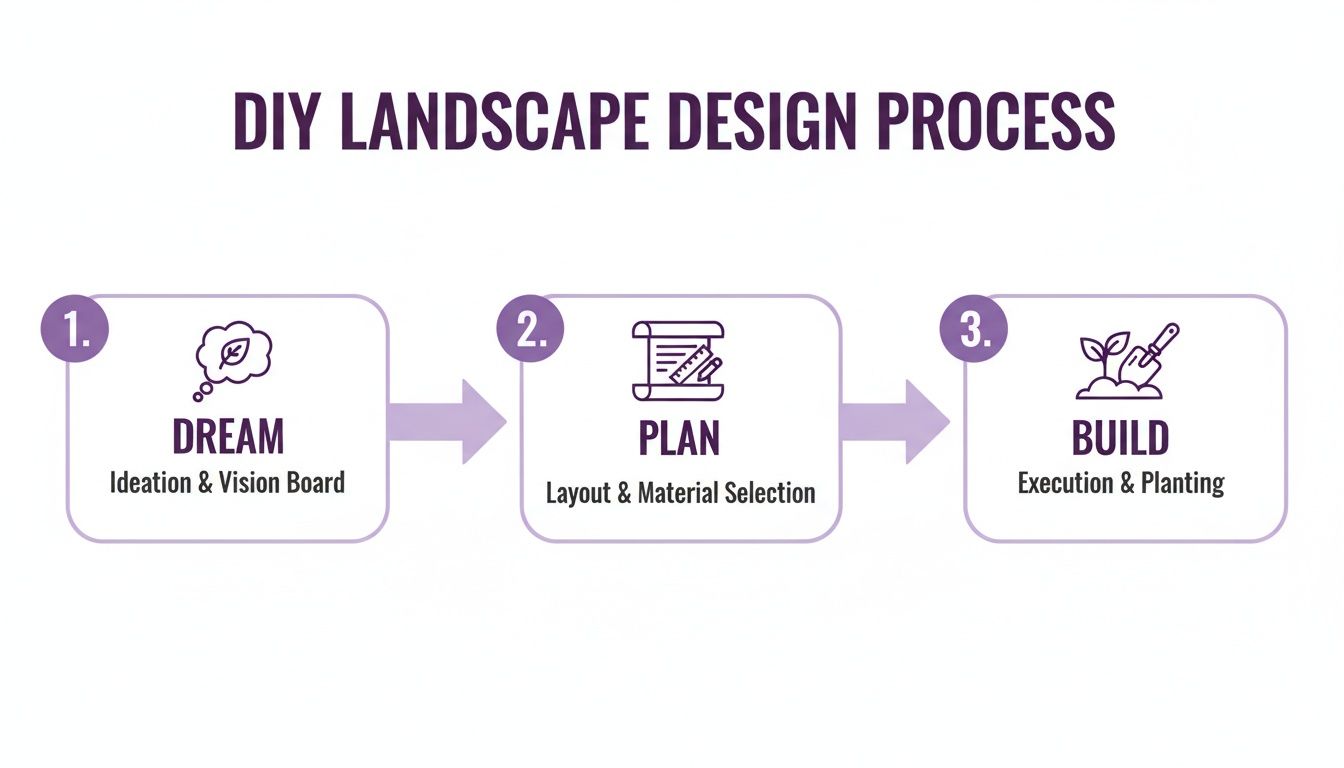
It’s a straightforward workflow that I’ve seen work time and time again: successful projects always start with imagination, are grounded in solid planning, and come to life through thoughtful execution.
Visualize with AI Before You Build
Tools like the DreamzAR AI Landscape Design app at https://www.dreamzar.app/ are built specifically for this. You just upload a photo of your yard and let the AI generate dozens of concepts tailored to your space.
You can see just how realistic these AI-generated visuals can be, making it incredibly easy to see the hidden potential of your property. It's the ultimate way to validate your ideas and make sure the final result is exactly what you envisioned by visualizing them on photos of your own yard.
Reading Your Landscape Like A Pro

Before you let your imagination run wild, you've got to get to know the canvas you’re working on—your yard. Every successful do it yourself landscape design is built on a deep understanding of the property's unique quirks and features. This first step, the site analysis, is single-handedly the most important thing you can do to prevent headaches and costly mistakes down the road.
First things first, create a simple base map. Don't worry, this doesn't need to be a professional blueprint. A rough sketch on graph paper is perfect for this. Just walk your property and measure the key dimensions—the location of your house, existing trees, sheds, walkways, and any other permanent fixtures. Getting these basics down on paper gives you a solid framework for every idea that follows.
Mapping Sun and Shade
With your map ready, it’s time to become a sun detective. The amount of light an area gets will literally make or break your plant choices. You need to observe your yard at different times of the day—morning, noon, and late afternoon—and start marking those sunny and shady spots on your map.
Full Sun: These are the spots getting 6 or more hours of direct sunlight.
Partial Shade: Locations that see 3 to 6 hours of sun, often filtered or just morning sun.
Full Shade: Areas getting less than 3 hours of direct sun.
This simple exercise is incredibly revealing. You'll quickly discover your yard's unique microclimates. For example, that patch of ground right up against a south-facing brick wall is going to be a hot, dry oven compared to the cool, damp earth under a massive maple tree. These little pockets have a huge impact on what you can successfully grow.
Understanding Your Groundwork
Now, let's look down. What’s happening under your feet is just as critical. Is your soil sandy, loamy, or heavy clay? A simple "jar test" can give you a pretty good idea. It's also smart to watch your yard after a heavy rain. See where the water pools or where it all runs off to, and mark any drainage problem areas on your map.
Of course, your broader climate is essential. You’ll want to find your USDA Plant Hardiness Zone to ensure you're picking plants that can actually survive the local winter. You can learn more about how to determine your plant hardiness zone to make much smarter choices when you get to the nursery.
At this point, your do it yourself landscape design process becomes a lot clearer. You're no longer just guessing; you're making informed decisions based on real-world data from your own yard.
This is also the perfect time to bring technology into the mix. With your analysis complete, you can apply AI Landscape Design to visualize ideas directly onto this real-world canvas. Take photos of specific areas you've studied—that hot, sunny spot or a soggy corner—and use an app to see how different plants or hardscaping might look in your own yard. It’s a fantastic way to bridge the gap between your careful analysis and your creative vision, ensuring your plans are both beautiful and practical.
Bringing Your Vision to Life

Alright, with all that site analysis and measuring behind you, it’s time for the fun part—turning all those notes and numbers into a real, tangible vision. This is where you get to dream a little and decide what your perfect yard actually looks like.
But before you start pinning pictures of gorgeous gardens, the most important question to ask is: what do you actually want to do out there? A stunning space that doesn't match your lifestyle will just end up being admired from the window. Function has to come first.
Think about how you and your family will live in the space. Are you picturing a social hub for weekend barbecues? Maybe you need a quiet, secluded corner to curl up with a book. Or perhaps it’s all about creating a durable, safe play zone for the kids and the dog. Nailing down these core functions helps you map out dedicated "rooms" in your yard, just like you would inside.
Find Your Signature Style
Once you’ve figured out the how, you can focus on the what—the look and feel of your space. The goal is to make your landscape feel like a natural extension of your home, creating a seamless vibe from the inside out. There’s a whole world of design styles out there, each with its own personality.
Modern: Loves clean lines, bold geometric shapes, and a less-is-more plant palette. Think concrete, metal, and structured gravel beds.
Cottage: A romantic, informal explosion of color and texture. We’re talking overflowing flower beds, charming winding paths, and a relaxed, lived-in feel.
Mediterranean: This style transports you to a Tuscan villa with drought-tolerant plants like lavender and olive trees, gravel groundcovers, and warm, earthy materials.
Japanese Zen: All about creating tranquility. It uses natural elements like stone, water, and meticulously pruned plants to craft a peaceful sanctuary.
Settling on a style will guide almost every decision you make, from the shape of the patio to the specific flowers you choose. If you're stuck, taking a fun landscape style quiz can be a great way to see what really clicks with you.
Bridge the Gap Between Idea and Reality with AI
This is where a modern do it yourself landscape design approach really shines. You have your functional needs and a style in mind, but how do you see what that actually looks like in your yard? This is the exact point where so many people get stuck, but it’s also where you can apply AI Landscape Design to visualize your ideas using photos of your own yard.
Instead of struggling with rough sketches or just trying to imagine it, you can use an AI landscape design app to see your ideas come to life. Just upload a photo of your yard, and you can generate dozens of visual concepts in minutes. It completely closes the gap between imagination and a concrete plan.
This gives you a risk-free way to experiment. See what that paver patio would really look like next to your house. Test out a few different flower bed layouts for the front garden. You can visualize a total backyard makeover on a photo of your actual yard without ever lifting a shovel.
Homeowners are catching on fast. The global landscape design software market was valued at USD 5.26 billion in 2024, driven by the post-pandemic boom in creating better outdoor living spaces. You can learn more about this market’s rapid expansion.
Using a tool like DreamzAR on your own photos is a game-changer. You move past generic inspiration boards and start making decisions based on how designs work with your home's unique colors, lighting, and scale. It ensures the final plan is exactly what you want before you invest a dime or an ounce of sweat.
Choosing Plants and Materials For Lasting Beauty

Okay, you've got your vision mapped out. Now for the fun part: picking the actual building blocks that will bring your yard to life. This is the moment your do it yourself landscape design starts to feel real. Choosing the right plants and hardscape materials is everything—it’s what makes sure your new space not only looks incredible on day one but actually survives and thrives for years.
The Right Plant in the Right Place
If you remember one thing from this guide, let it be this golden rule: "right plant, right place." It's a simple idea, but it's the core of successful garden design. It just means you have to match a plant's needs to the conditions you found during your site analysis. Skipping this step is the fastest way to a yard full of sad, struggling plants (and a lot of wasted money).
Before a single plant goes into your cart, flip over the tag and look for these non-negotiables:
Hardiness Zone: Is it rated for your local climate?
Sun Needs: Does it crave full sun, partial shade, or is it happy in the shadows?
Water Requirements: Are you signing up for daily watering, or can it handle a dry spell?
Mature Size: This one is huge. How big will this plant be in 5-10 years? Don't get fooled by its cute size in the pot.
We've all seen it: a tiny shrub planted a foot from the front walkway that, in three years, becomes a monster that completely swallows the path. Always, always plan for the plant's future size. As you get your beds ready, you might find our guide to calculating mulch for your new garden beds comes in handy.
Choosing Your Hardscape Materials
Hardscaping is the backbone of your landscape—the patios, walkways, retaining walls, and other non-living elements. These are the permanent structures, so your choice of material will have a lasting impact on your yard's style, your budget, and how much maintenance you're stuck with down the road.
Finding the best tile for outdoor patio surfaces or comparing pavers is a key part of the process. Here are a few popular options for DIYers:
Concrete Pavers: These are the workhorses of DIY landscaping. They're incredibly versatile, come in a million styles and colors, and are relatively easy for a homeowner to install correctly.
Natural Stone: Nothing beats the timeless, high-end look of materials like flagstone or slate. But that beauty comes with a higher price tag and can be a real challenge to lay perfectly flat if you've never done it before.
Poured Concrete: Definitely a budget-friendly route for a simple patio or path. The major downside is the risk of cracking if the base isn't prepared perfectly, and getting that smooth, professional finish is tougher than it looks.
Don't underestimate the power of DIYers. The do it yourself landscape design movement is a huge driver in the landscaping products market, which was valued at a massive USD 88.64 billion in 2024. As more homeowners get the confidence to build their own patios and outdoor spaces, that market is projected to hit USD 129.98 billion by 2030.
Hardscape Material Comparison for DIY Projects
To make your decision a bit easier, here’s a quick rundown of the most common hardscaping materials. Think about what matters most to you—cost, ease of installation, or the final look.
Material | Average Cost (per sq. ft.) | DIY Friendliness | Pros | Cons |
|---|---|---|---|---|
Concrete Pavers | $8 - $20 | High | Huge variety of styles, durable, easy to repair individual pieces. | Can shift over time, weeds can grow between joints. |
Natural Stone | $15 - $35 | Medium | Unique, high-end look, extremely durable, natural variations. | Expensive, heavy, difficult to cut, irregular shapes make installation tricky. |
Poured Concrete | $6 - $15 | Low-Medium | Very affordable, low maintenance, can be stamped or colored. | Prone to cracking, difficult for beginners to get a pro finish. |
Gravel/Pea Stone | $1 - $4 | Very High | Extremely affordable, excellent drainage, super easy to install. | Can be messy, gets kicked around, not ideal for furniture. |
Decking (Wood/Composite) | $20 - $50+ | Medium | Warm and inviting look, great for sloped areas. | Requires regular maintenance (wood), higher initial cost. |
This table should give you a solid starting point. No single material is "best"—the right choice is the one that fits your design, your wallet, and how much work you're willing to put in.
Visualize Materials with AI Before You Commit
Here’s your chance to avoid a costly mistake. Are you torn between how classic brick pavers will look versus the organic feel of natural slate? You don't have to guess.
This is the perfect time to use an AI Landscape Design app like DreamzAR. You can apply AI to visualize your ideas by uploading a photo of your yard and virtually "trying on" all those different materials. See exactly how various paver styles, mulch colors, or even specific plants from their library will look in your space.
This is an invaluable step. It lets you confirm that every choice, from the texture of a walkway to the color of a rose bush, actually works together on a picture of your own yard before you spend a single dollar or lift a shovel.
Building Your Project Plan and Budget
With a stunning design visualized, it's time to shift from dreaming to doing. Let's be honest, a great plan is nothing without a practical roadmap to bring it to life. This is where your project plan and budget come in—the crucial, down-to-earth side of your do it yourself landscape design that keeps everything on track and, importantly, within your means.
Trying to tackle a big project all at once is a classic recipe for burnout and watching your budget completely spiral out of control. The real secret? Break the work down into manageable phases. This strategy is a lifesaver, letting you spread the cost and labor over a few weekends or even across seasons.
Creating a Logical Timeline
A smart timeline is non-negotiable. You wouldn't paint a room before sanding the walls, right? The exact same logic applies here. Certain tasks have to come first to avoid the headache of redoing your hard work later.
Here's the logical flow I always recommend:
Phase 1 Site Preparation: This is always, always ground zero. Clear the area, rip out old plants or structures you don't want, and grade the land to make sure water drains away from your house.
Phase 2 Hardscaping: Next up, install the "bones" of your landscape. We're talking about patios, walkways, retaining walls, and any underground stuff like irrigation lines or electrical conduits for lighting.
Phase 3 Planting and Softscaping: Only after all that heavy construction is done should you even think about planting. Now's the time to bring in fresh soil, lay down mulch, and finally get your trees, shrubs, and flowers in the ground.
Following this order prevents gut-wrenching moments, like having to tear up a brand-new garden bed just to lay the foundation for a paver patio you forgot about.
Budgeting for Your DIY Landscape Design
Putting together a realistic budget is about way more than just the price tags on plants. You have to sniff out all the hidden costs that can pop up and derail your project.
A truly thorough budget needs to cover everything:
Material Costs: This is the big one—pavers, soil, mulch, gravel, and every single plant.
Tool Rentals: Let's face it, you probably don't own a sod cutter or a plate compactor. Factor in the cost of renting specialized equipment for a day or two.
Delivery Fees: A few bags of mulch are one thing, but having a whole truckload of topsoil or gravel delivered to your driveway comes with a fee.
A critical part of modern budgeting involves getting your measurements right from the start. Miscalculating the square footage of a patio can lead to costly material shortages or, just as bad, a pile of expensive pavers you don't need. This is a perfect place to use AI.
Newer AI landscape design apps can use a photo of your yard to give you instant measurements for specific areas. This feature is an absolute game-changer for estimating material needs with precision, helping you visualize and budget using your own space as a blueprint.
You can get a feel for how this technology works with a free landscaping cost estimator to get a clearer picture of potential expenses. For professionals or DIYers who need even greater precision for materials and costs, looking into tools like Exayard landscape takeoff software can be an incredibly valuable step.
By pairing a clear, logical timeline with a detailed, realistic budget, your ambitious design moves from just a beautiful idea to an achievable weekend project.
Common Questions About DIY Landscape Design
Look, even with a solid plan in hand, taking on your own do it yourself landscape design can feel like a huge undertaking. It's totally normal to have a bunch of questions pop up as you start turning those ideas into reality. Let's walk through some of the things I hear most often so you can move forward with a bit more confidence.
Can I Really Do This Without Experience?
You absolutely can. While a pro brings a ton of valuable knowledge to the table, today's tools have made landscape design more accessible than ever before. It's less about having prior experience and more about having a good process—knowing your site, getting clear on your goals, and picking a style you can stick with.
Your secret weapon here is visualization. You no longer need to be a skilled artist to sketch out what's in your head. Instead, you can lean on technology as your creative partner, which is where you can apply AI Landscape Design to visualize ideas using photos of your own yard.
The most powerful tool in your belt is the ability to see your ideas in context. By using a photo of your own yard, AI can instantly generate professional-level designs, removing the guesswork and helping you make confident, informed decisions.
What Is the Biggest Mistake to Avoid?
I see it all the time: impatience. The single biggest pitfall is skipping the planning phase and making a beeline for the garden center. This almost always ends in a yard that looks chaotic, a lot of wasted money, and plants that are doomed because they're in the wrong spot. A truly beautiful, sustainable landscape is built with intention, not on a whim.
Another classic mistake is underestimating how big plants get. That adorable little shrub you bought can easily morph into an overgrown monster in just a few years, swallowing up its neighbors and blocking your pathways. Always, always refer back to your base map and lock in your final layout before you buy a single plant.
How Can AI Help Me Visualize Ideas for My Yard?
This is precisely what AI landscape design tools were made for. Instead of trying to mentally photoshop a design from a magazine onto your property, you start with a photo of your actual, real-life yard.
From there, the AI overlays different designs, plants, and hardscaping materials right onto your picture. It creates an incredibly realistic preview of what that new paver patio, a completely redesigned flower bed, or a winding stone path will look like in your specific space. It allows you to:
Compare styles instantly: See how a sleek modern design stacks up against a lush cottage garden in your own backyard by visualizing them on photos of your own yard.
Test materials visually: On the fence about brick versus flagstone? Just tap a button and see them both applied directly to a photo of your yard.
Experiment risk-free: You can try out some wild ideas on photos of your own yard without committing a single dollar, hour, or drop of sweat.
This tech takes all the guesswork out of the equation. It's the bridge between what you're imagining and a plan you can actually build.
Where Should I Start If My Yard Is a Blank Slate?
A blank slate isn't a problem; it's an incredible opportunity! The best way to tackle an empty yard is to start by establishing the "bones" of the landscape. Think of these as the main structural and functional pieces that will give the space its shape and purpose.
Start with flow and function. Where does it make sense to put the main patio for entertaining? How will people move between different areas? Where will you place the primary garden beds? Once you have these core elements figured out, you can begin to layer in the fun stuff like plants and decorative touches.
This is another perfect time to bring in an AI tool. Upload a photo of your empty yard and let it generate different layouts for these foundational zones. Seeing how a patio connects to the house or how a path draws your eye through the space on a picture of your own yard helps you make those crucial first decisions with a clear visual in hand.
Ready to stop dreaming and start designing? DreamzAR AI Landscape Design lets you take a photo of your yard and instantly generate unlimited, stunning landscape ideas. Visualize patios, plants, and pools in your actual space before you ever break ground.
Download the #1 AI Landscape Design app and see your perfect yard come to life. Your dream space is just one photo away