10 Stunning Front Yard Landscaping Before and After Transformations for 2026
A stunning front yard does more than just boost curb appeal; it transforms your entire home's presence, sets the first impression, and can significantly increase property value. But visualizing that change can be the biggest hurdle. Going from a tired, overgrown space to a polished, welcoming landscape often feels overwhelming, leaving homeowners unsure where to even begin. The gap between inspiration and implementation is where most projects stall.
This guide is designed to close that gap. We will showcase 10 dramatic front yard landscaping before and after transformations, breaking down the strategies, materials, plant choices, and key takeaways for each project. You will see real-world examples that solve common problems like poor drainage, overgrown lawns, and bland entryways. When you're ready to showcase the final result, high-quality visuals are key; professional real estate drone photography can capture the full scale and impact of the transformation from a unique aerial perspective.
More importantly, we'll show you how to skip the guesswork entirely. By applying AI Landscape Design, you can upload a photo of your own yard and instantly visualize these incredible ideas, tailored perfectly to your space. Let's explore what's possible when you combine proven design principles with innovative technology to unlock your home's true potential.
1. From Overgrown Lawn to Modern Minimalist Front Yard
This popular front yard landscaping before and after transformation involves replacing a high-maintenance, overgrown lawn with a sleek, modern design. It prioritizes clean lines, architectural plants, and a mix of hardscape materials to create a sophisticated and low-maintenance outdoor space. This approach is perfect for homeowners who want to boost curb appeal and reduce their weekend yard work.
This style exchanges the traditional turf-centric look for a more intentional and structured aesthetic. By focusing on drought-tolerant plants and durable materials, it not only conserves water but also adds significant visual interest and property value. It's a strategic choice for modern homes and anyone seeking a bold, uncluttered look. Learn more about the principles of modern landscape design to master this style.
Key Strategies for Success
Swap Turf for Texture: Replace large sections of grass with materials like decomposed granite, river rock, or large-format concrete pavers. This creates visual depth and drastically cuts down on mowing and watering.
Use Architectural Plants: Select plants with strong, sculptural forms. Think agaves, ornamental grasses, or boxwoods. Repeating just two or three plant types creates a cohesive, minimalist feel.
Define with Edging: Crisp, clean lines are essential. Use steel or concrete edging to create sharp, defined borders between different materials, like gravel and garden beds.
Visualize with AI: Before starting demolition, you can apply AI Landscape Design to visualize your ideas. Simply upload a photo of your own yard and experiment with different hardscape layouts and plant combinations to perfect your modern minimalist vision.
2. Boring Lawn to Colorful Flower Bed Paradise
This classic front yard landscaping before and after project swaps a monotonous green lawn for vibrant, layered flower beds. It focuses on using a mix of perennials, annuals, and ornamental plants to introduce color, texture, and seasonal interest. This approach is ideal for homeowners looking to create a welcoming, picturesque entrance with immense curb appeal and a dynamic, ever-changing garden.
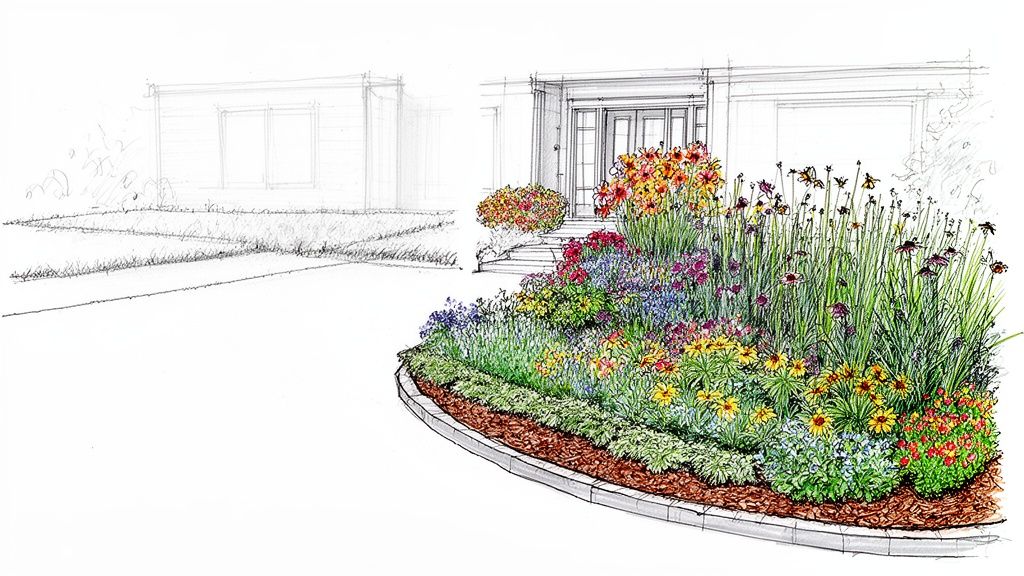
Transforming turf into a floral paradise creates a more personal and engaging landscape than simple grass. It’s a fantastic way to express creativity, whether you prefer a charming cottage-style garden or a more structured, contemporary design with linear beds. By selecting plants that bloom at different times, you can ensure your front yard offers a stunning visual display throughout the year, attracting pollinators and delighting visitors.
Key Strategies for Success
Layer Plants by Height: Arrange plants with the tallest in the back, medium in the middle, and shortest in the front. This creates a lush, multi-dimensional look and ensures all flowers are visible.
Plan for Seasonal Blooms: Choose a mix of plants that flower in spring, summer, and fall. This strategy guarantees your garden remains colorful and interesting from one season to the next.
Group for Impact: For a natural, harmonious appearance, plant flowers in odd-numbered groups (like 3, 5, or 7). This avoids a rigid, symmetrical look and creates a more appealing visual flow.
Visualize with AI: Before you start digging, you can apply AI Landscape Design to visualize your ideas. Take a photo of your own yard to see how different flowers and layouts will look, helping you create the perfect colorful paradise before buying a single plant.
3. Cracked Driveway to Permeable Paver Entrance
This high-impact front yard landscaping before and after project swaps a deteriorating asphalt or concrete driveway for an elegant and eco-friendly permeable paver system. It tackles both aesthetic and functional problems, replacing unsightly cracks and drainage issues with a durable, sophisticated entrance. This transformation significantly boosts curb appeal while providing a sustainable solution for managing stormwater runoff.
This approach is ideal for homeowners looking to make a lasting investment in their property's entrance. Unlike solid surfaces that cause water to pool or run off, permeable pavers allow rainwater to seep through the joints and into a specially prepared gravel base below. This recharges groundwater, reduces strain on storm drains, and elevates the entire look of the front yard.
Upgrading your driveway is a major decision, but the benefits in durability and environmental impact are substantial. For a deeper dive into the pros and cons, you can learn more about converting a concrete driveway to pavers to see if it’s the right fit for your home.
Key Strategies for Success
Choose Complementary Pavers: Select paver colors and styles that harmonize with your home’s exterior materials, such as its siding, roof, and trim. This ensures a cohesive and intentional design.
Ensure Proper Drainage: A successful installation requires a professionally prepared base and a slight 2-3% slope away from the house to guide excess water. Proper engineering prevents sinking and water damage.
Incorporate Design Accents: Elevate a standard paver layout by adding a contrasting border, an inset pattern, or a mix of paver sizes and textures. This creates visual interest and a custom look.
Visualize with AI: Driveway materials are a significant investment. Before committing, you can apply AI Landscape Design to visualize your ideas. Upload a photo of your own yard and experiment with different paver styles, colors, and patterns to see how they will look in your actual space.
4. Dark, Shaded Front Yard to Shade-Loving Garden Oasis
This front yard landscaping before and after project tackles a common challenge: a dark, shaded area where grass struggles and color seems impossible. Instead of fighting the conditions, this transformation embraces them, converting a dim, patchy space into a lush, vibrant garden oasis. It uses a palette of shade-tolerant plants that thrive without direct sun, focusing on rich textures and varied foliage to create a dynamic, layered look.
This approach is perfect for homes with mature trees or north-facing yards that receive limited light. By working with the shade instead of against it, homeowners can create a beautiful, low-maintenance garden that feels like a serene woodland retreat. It turns a landscaping problem into a stunning feature, proving that a sun-drenched yard isn't necessary for incredible curb appeal. Learn more about the principles of gardening in the shade to master this style.
Key Strategies for Success
Embrace Foliage Over Flowers: In shaded areas, foliage is the star. Select a mix of plants with different leaf shapes, colors, and textures. Combine the broad leaves of hostas, the delicate fronds of ferns, and the deep colors of heucheras to create visual interest.
Brighten with Variegation: Use plants with variegated leaves (patterns of white, cream, or yellow) to brighten up the darkest corners of your yard. Plants like variegated Solomon's seal or certain hosta varieties can act as natural highlights.
Improve Your Soil: Shade is often accompanied by poor, dry soil, especially under large trees. Before planting, amend the soil with plenty of compost to improve moisture retention and provide essential nutrients for your new shade garden.
Visualize with AI: Shade gardens are all about texture. You can apply AI Landscape Design to visualize your ideas by uploading a photo of your own yard. This allows you to experiment with different combinations of hostas, ferns, and groundcovers to see how they will look before you start digging.
5. Bare Slope to Erosion-Controlling Rock Garden Landscape
This front yard landscaping before and after project tackles a common challenge: a bare, erosion-prone slope. It transforms an unusable and problematic incline into a visually stunning and stable rock garden. This approach uses a strategic combination of boulders, gravel, and slope-tolerant plants to lock soil in place, manage water runoff, and create a dynamic, multi-level display.
Instead of fighting gravity, this design works with the natural topography. It converts a landscape liability into a major asset, adding texture, dimension, and year-round interest. This solution is ideal for hillside homes or any property with a steep grade, offering both an aesthetic upgrade and a practical, long-term fix for soil loss. Learn more about the specifics of how to landscape a slope to ensure your project succeeds.
Key Strategies for Success
Anchor with Boulders: Use large, heavy rocks as the primary anchors to stabilize the slope. Partially bury them to create a natural, embedded look and secure the soil around them.
Layer Materials: Install landscape fabric first to suppress weeds. Then, layer smaller rocks, gravel, or mulch around the anchor boulders and plants to cover the remaining soil and slow water flow.
Select Deep-Rooted Plants: Choose drought-tolerant perennials, groundcovers, and ornamental grasses with strong root systems. These plants will actively bind the soil together, preventing it from washing away.
Visualize with AI: A sloped yard is difficult to plan on paper. You can apply AI Landscape Design to visualize your ideas using a photo of your own yard. This allows you to experiment with boulder placement and plant groupings to see how they will look at scale before you start the heavy lifting.
6. Plain Entrance to Welcoming Architectural Entry Statement
This sophisticated front yard landscaping before and after project focuses on transforming a bland, forgettable front door area into a curated, architectural focal point. It moves beyond simple foundation plantings to create a deliberate and memorable sense of arrival. By combining structural plants, premium hardscaping, and strategic lighting, this approach elevates the home's entire facade, making the entrance an intentional design statement.
This transformation is less about overhauling the entire yard and more about concentrating design efforts where they have the most impact. It is ideal for homeowners who want to add a touch of luxury and personality that reflects their home’s interior style. Think of it as creating a "frame" for your front door, guiding the eye and welcoming guests with a magazine-worthy look that significantly boosts curb appeal.
Key Strategies for Success
Create Symmetry and Structure: Use matching planters, topiaries, or shrubs on either side of the entryway to create a sense of balance and formal elegance. This classic technique instantly adds a high-end feel.
Select a Specimen Plant: Choose one standout plant, like a Japanese Maple, a sculptural olive tree, or a unique conifer, to act as a living piece of art near the entrance. This creates a powerful focal point.
Incorporate Architectural Lighting: Use uplighting on statement plants or wall-washing lights on the home's facade to create dramatic shadows and highlight textures. This ensures the entrance is just as impressive after dark.
Visualize with AI: The entrance is a critical design zone. You can apply AI Landscape Design to visualize your ideas. Upload a photo of your own yard to experiment with different planter styles, symmetrical plant arrangements, and paver patterns to find the perfect combination before committing.
7. Maintenance-Heavy Lawn to Low-Maintenance Native Plant Garden
This practical front yard landscaping before and after project swaps a resource-intensive lawn for a beautiful, self-sustaining native plant garden. It’s an eco-conscious choice that dramatically reduces mowing, watering, and fertilizing needs. By choosing plants adapted to the local climate, homeowners create a vibrant habitat that supports pollinators and local wildlife, adding life and color to their property.
This transformation is ideal for busy homeowners who want a gorgeous yard that works with nature, not against it. It exchanges the uniform green of turf for a dynamic, four-season display of textures and blooms. This approach not only conserves water but also builds healthier soil and a more resilient landscape. Discover more about incorporating native plants into your garden to create a thriving ecosystem.
Key Strategies for Success
Go Local with Plants: Replace turf with perennials, grasses, and shrubs native to your specific region. These plants are naturally adapted to your soil and rainfall, making them incredibly low-maintenance once established.
Plant in Drifts: For a natural, meadow-like appearance, plant the same species in groups or "drifts" of three, five, or seven. This creates a stronger visual impact than scattering individual plants.
Embrace the First-Year Water: Native plants need consistent watering during their first year to establish a deep root system. After that, their water needs will drop significantly, often thriving on natural rainfall alone.
Visualize with AI: Unsure which native plants will look best? You can apply AI Landscape Design to visualize your ideas. Upload a photo of your own yard and experiment with different native plant combinations to see how they’ll mature and fill the space before you start digging.
8. Concrete Pad to Hardscape Living Space with Patio & Seating
This ambitious front yard landscaping before and after project transforms an underused concrete slab or bare patch into a functional and stylish outdoor living area. It goes beyond simple planting by integrating hardscape elements like patios, seating walls, and walkways to create defined zones for relaxation and entertainment. This approach is ideal for homeowners who want to extend their living space outdoors and make their front yard a true destination.
This transformation dramatically increases a home's usable square footage and curb appeal. By carefully blending materials like natural stone, pavers, and wood with softening vegetation, a once-barren area becomes a welcoming extension of the home. It’s a strategic investment popularized by luxury builders and outdoor living shows for its high impact and return on enjoyment.
Key Strategies for Success
Create Defined Zones: Use different materials, levels, or paver patterns to visually separate functional areas like a dining patio, a fire pit lounge, and connecting pathways. This creates a more organized and intentional design.
Soften Hardscape Edges: Plantings are crucial. Use a mix of ornamental grasses, creeping groundcovers, and shrubs along patio borders and walkways to soften the hard lines and integrate the space with the rest of the yard.
Incorporate Vertical Elements: Add built-in seating walls, pergolas, or large planters to create a sense of enclosure and add vertical interest. This makes the space feel more like a room.
Visualize with AI: Mapping out multiple hardscape zones can be complex. You can apply AI Landscape Design to visualize your ideas. Upload a photo of your own yard and experiment with different paver layouts, seating wall placements, and plant combinations to create a cohesive and functional living space before committing to construction.
9. Overgrown Foundation Planting to Refined Border Landscape
This essential front yard landscaping before and after project tackles a common issue: overgrown foundation shrubs that obscure a home's architecture. The transformation involves removing dated, oversized plants and replacing them with a refined, layered border. This approach enhances curb appeal by framing the house, highlighting windows, and creating an inviting, intentional look that complements the home’s style.
This update is perfect for homeowners looking to modernize their property’s first impression without a complete overhaul. By selecting appropriately sized plants and considering mature growth, this redesign prevents future maintenance headaches and ensures the home remains the star of the show. It’s a strategic refresh that delivers significant visual impact by simply decluttering and curating the space closest to the house.
Key Strategies for Success
Respect Proportions: Choose plants whose mature height will not exceed one-third of the height to your eaves or windowsills. This keeps the home's architecture visible and maintains proper scale.
Layer for Depth: Arrange plants in layers with taller varieties in the back, medium-sized shrubs in the middle, and low-growing perennials or groundcover in the front. This creates a lush, multi-dimensional look.
Account for Growth: Space plants according to their mature width, not their current size in the container. This common mistake leads to overcrowding and an unkempt appearance within a few years.
Visualize with AI: Avoid guesswork on plant sizes. You can apply AI Landscape Design to visualize your ideas. Upload a photo of your own yard to place different plants and see how they will look at maturity, ensuring your refined border landscape thrives for years to come.
10. Bland Backyard to Resort-Style Oasis with Firepit & Plantings
This ambitious front yard landscaping before and after project turns a neglected or uninspired space into a luxurious, functional retreat. The goal is to extend the home's living area outdoors by creating an "outdoor room" complete with resort-style amenities. It combines sophisticated hardscaping, lush plantings, and strategic lighting to craft an inviting and impressive entrance. This transformation is ideal for homeowners who want to maximize their property's utility and create a stunning first impression.
The concept moves beyond simple curb appeal, focusing on creating an experience from the moment someone arrives. By integrating elements like a central fire pit, comfortable seating, and layered plantings, it transforms a standard yard into a destination. This approach adds significant functional and monetary value, making the front of the home as livable as the back. It’s a popular choice for contemporary homes and those looking to make a bold statement.
Key Strategies for Success
Create Functional Zones: Design distinct areas for different activities, such as a cozy seating area around a fire pit for entertaining and a quieter zone with a bench for relaxation.
Layer Plants and Lighting: Use a mix of plant heights and textures to create privacy and frame views. Incorporate layered lighting (pathway, accent, and ambient) to enhance safety and create a warm, inviting atmosphere after dark.
Prioritize a Focal Point: Make a high-end fire pit or a custom water feature the centerpiece of the design. This anchors the space and gives the entire layout a clear purpose.
Visualize with AI: Before committing to a layout, you can apply AI Landscape Design to visualize your ideas. Upload a photo of your own yard to experiment with fire pit placements, seating arrangements, and planting schemes to ensure a cohesive and functional design.
10 Front Yard Before-and-After Transformations
Design | 🔄 Implementation Complexity | ⚡ Resource Requirements | 📊 Expected Outcomes ⭐ | 💡 Ideal Use Cases | Key Advantages |
|---|---|---|---|---|---|
From Overgrown Lawn to Modern Minimalist Front Yard | Medium–High: hardscaping, precise layout | High upfront cost; skilled labor; pavers, lighting | Low maintenance; strong contemporary curb appeal; higher resale | Homeowners wanting a sophisticated, low-maintenance look | Dramatically reduced mowing/watering; durable hardscape; clean modern aesthetic |
Boring Lawn to Colorful Flower Bed Paradise | Low–Medium: planting design and layering | Moderate: plants (annuals/perennials), mulch, routine upkeep | Immediate seasonal color; pollinator attraction; improved curb appeal | Those seeking vibrant, personalized front gardens | Affordable visual impact; flexible plant choices; wildlife benefits |
Cracked Driveway to Permeable Paver Entrance | High: demolition, base prep, drainage engineering | High cost; skilled contractors; permeable pavers, base materials | Solves drainage; durable 30+ yrs; eco-friendly water management | Fixing drainage issues; eco-conscious or high-impact entry upgrades | Eliminates standing water; long lifespan; replaceable pavers |
Dark, Shaded Front Yard to Shade-Loving Garden Oasis | Medium: right plant selection + lighting | Low–Moderate: shade plants, soil amendments, targeted lighting | Lush, verdant appearance; lower water use; reduced mowing vs. sun gardens | North-facing yards, under large trees, shaded courtyards | Solves challenging shade conditions; textured foliage interest |
Bare Slope to Erosion-Controlling Rock Garden Landscape | High: terracing/retaining work and drainage | Moderate–High: rocks, retaining materials, labor-intensive install | Prevents erosion; very low maintenance; drought-tolerant aesthetic | Sloped or erosion-prone sites needing stabilization | Soil stabilization; no mowing on slopes; long-term low upkeep |
Plain Entrance to Welcoming Architectural Entry Statement | Medium–High: coordinated hardscape + specimen planting | High: quality specimen plants, lighting, hardscape accents | Strong first impression; improved wayfinding; increased value | Homes needing defined, design-forward entry statements | Dramatic curb appeal; defines home character; magazine-worthy look |
Maintenance-Heavy Lawn to Low-Maintenance Native Plant Garden | Low–Medium: regional plant selection and layout | Low ongoing costs; initial establishment watering; native stock | ~75%+ less maintenance; reduced water/chemicals; wildlife support | Busy homeowners; sustainability-focused landscapes | Low long-term cost; supports pollinators; climate-adapted plants |
Concrete Pad to Hardscape Living Space with Patio & Seating | High: multi-zone hardscape, structures, drainage | Very high cost; professional design/installation; furniture, lighting | Functional outdoor living; more usable space; significant value boost | Homeowners wanting outdoor entertaining spaces | Durable multi-use zones; boosts living footprint and resale |
Overgrown Foundation Planting to Refined Border Landscape | Low–Medium: removal and replanting with proper spacing | Moderate: quality specimens; disposal of old plantings | Modernized façade; restored sightlines; reduced pruning | Homes with oversized or outdated foundation shrubs | Highlights architecture; cleaner proportional planting; lower pruning |
Bland Backyard to Resort-Style Oasis with Firepit & Plantings | Very High: integrated features, zoning, utilities | Very high investment ($15k–$50k+); pros for hardscape, features | Luxury outdoor living; year-round entertaining; high property value | Luxury or entertainment-focused backyard renovations | Comprehensive amenities; social gathering spaces; high impact |
From Inspiration to Installation: Your Next Steps
We've journeyed through a stunning gallery of front yard landscaping before and after transformations, each telling a story of potential unlocked. From the overgrown and uninspired to the polished and purposeful, these examples prove a crucial point: your front yard is a blank canvas waiting for a vision. The difference between a lackluster "before" and a breathtaking "after" isn't magic; it's a combination of smart planning, strategic design, and confident execution.
These case studies have armed you with more than just inspiration. They’ve provided a blueprint of replicable strategies, demonstrating how focused changes can yield dramatic results. Whether it's embracing low-maintenance native plants to reclaim your weekends, introducing hardscaping to create functional outdoor living space, or using color theory to craft a vibrant floral paradise, the core principles are now within your grasp.
Key Strategic Takeaways
Reflecting on the transformations, several powerful themes emerge that you can apply directly to your own project:
Define Your Goal: Every successful "after" started with a clear objective. Was the goal to reduce maintenance, boost curb appeal, solve a drainage issue, or create a welcoming entrance? Your "why" will guide every decision you make.
Balance Hardscape and Softscape: The most compelling landscapes achieve a harmonious balance between structural elements like pavers and walls (hardscape) and living elements like plants and grass (softscape). One should complement the other, not compete.
Work With Your Environment: The shade garden and erosion-control rock garden examples are perfect illustrations of this. Fighting against your yard's natural conditions is a losing battle. Embracing them leads to a landscape that is not only beautiful but also sustainable and easier to care for.
Think in Layers and Textures: A truly dynamic front yard has depth. This is achieved by layering plants of different heights, textures, and colors, from ground covers to shrubs to taller accent trees.
Your Action Plan: Turning Vision into Reality
The most significant barrier for many homeowners is the uncertainty of the final outcome. It’s difficult to commit time and resources to a plan you can't visualize. This is where modern technology fundamentally changes the game. Instead of guessing, you can see.
Take a clear photo of your current front yard and apply AI Landscape Design to start experimenting. This allows you to visualize your ideas directly on your own property. See how a modern minimalist design looks against your home's facade, or test different perennial combinations for that colorful border you've been dreaming of. This digital "dress rehearsal" removes the guesswork, empowering you to finalize a design with confidence before a single shovel hits the ground.
Once your design is set, the practical work begins. Remember that a successful installation relies on a solid foundation. As you move from inspiration to installation, ensure your new plantings thrive by taking essential steps to prepare your soil correctly. Proper soil health is the invisible hero behind every lush, vibrant "after" photo. Your dream front yard is no longer a distant possibility; it's a series of clear, actionable steps waiting to be taken.
Ready to stop dreaming and start designing? DreamzAR AI Landscape Design lets you visualize these incredible transformations on your own property. Upload a photo of your yard and use AI to instantly generate stunning new landscape designs, turning your "before" into a preview of a beautiful "after" in minutes. See your home's true potential at DreamzAR AI Landscape Design.