10 Inspiring Front Yard Landscape Design Ideas for 2026
Your front yard is more than just a patch of grass; it's the first chapter of your home's story, a living welcome mat for visitors, and a direct reflection of your personal style. It sets the tone for your entire property, influencing everything from curb appeal to daily enjoyment. Yet, many homeowners feel stuck, unsure how to transform this critical space from a simple lawn into something truly special. The challenge often lies in bridging the gap between inspiration and reality. How can you be sure that a beautiful photo from a magazine will translate well to your property's unique dimensions, lighting, and architecture?
This guide is designed to eliminate that uncertainty. We will explore a comprehensive collection of actionable front yard landscape design ideas, moving beyond generic advice to provide practical steps and stylistic inspiration. We'll cover everything from sleek modern layouts and water-wise xeriscaping to charming cottage gardens and hardscape-forward designs. For each concept, we'll delve into the specific plant palettes, materials, and design principles that define the style. Achieving a polished look for your landscape often involves careful consideration of existing plant forms, such as applying canopy shaping techniques to mature trees to enhance structure and light.
Crucially, we'll show you how to remove the guesswork from your planning process. With AI landscape design tools like DreamzAR, you can take a simple photo of your current yard and instantly visualize each of these concepts. This allows you to see exactly how a modern minimalist design or a lush pollinator garden would look right outside your front door, helping you commit to a plan with confidence. Let's unlock the potential of your home's first impression.
1. Modern Minimalist Front Yard: Less is More
The modern minimalist approach to front yard landscape design ideas champions the principle that thoughtful restraint can create a powerful visual impact. This style swaps dense, colorful flower beds for clean lines, geometric shapes, and a highly curated selection of materials and plants. The goal is to create a sophisticated, uncluttered space that feels intentional, calm, and effortlessly chic. It's an ideal choice for contemporary homes or for homeowners who desire a high-impact, low-maintenance landscape that complements their architectural style.
Key Elements of a Modern Minimalist Yard
A successful minimalist design relies on the interplay between form, texture, and negative space. Instead of filling every corner, this style uses open areas to draw attention to carefully chosen focal points.
Hardscaping: The foundation of this style is sleek, functional hardscaping. Think large-format concrete pavers set in a grid pattern, smooth gravel or river rock beds, and low-profile retaining walls made from board-formed concrete or dark metal. Straight lines and right angles dominate.
Plant Palette: The plant selection is deliberate and limited. Choose plants for their architectural form and textural qualities rather than for their flowers. Think sculptural Agave, upright ornamental grasses like Karl Foerster, or neatly clipped boxwood spheres. A monochromatic color scheme, often using shades of green and grey, enhances the serene aesthetic.
Focal Points: Every element serves a purpose. A single specimen tree, a striking corten steel planter, or a simple water feature can act as the central anchor of the design, preventing the space from feeling empty.
Pro Tip: Use repetition to create rhythm and cohesion. Planting three identical ornamental grasses in a straight line or using the same paver material for both the walkway and a patio area reinforces the minimalist theme.
Visualize Your Minimalist Design
This style’s success hinges on precise placement and scale. To apply AI Landscape Design, you can upload a photo of your front yard and virtually place different hardscape materials, test the visual weight of architectural plants, and see how clean lines transform your curb appeal. An AI tool ensures your final design achieves that perfect balance of "less is more" before you commit to any physical work.
2. Native Plant & Pollinator Gardens
Creating a native plant and pollinator garden is one of the most impactful front yard landscape design ideas, transforming your space into a vibrant, living ecosystem. This approach moves away from traditional, high-maintenance lawns and exotic ornamentals, instead embracing plants that have evolved in your specific region. The result is a beautiful, resilient landscape that supports local wildlife like bees, butterflies, and birds, while significantly reducing the need for water, fertilizers, and pesticides. It’s a perfect choice for the eco-conscious homeowner who wants a garden that gives back to nature.
Key Elements of a Native Plant & Pollinator Garden
A thriving pollinator garden is a layered, dynamic space that provides food, shelter, and water for local fauna throughout the seasons. It’s a celebration of natural beauty and ecological function.
Hardscaping: Keep it natural and permeable. Use materials like flagstone for pathways with gaps for groundcover plants, gravel or mulch for informal trails, and locally sourced boulders for texture and seating. Consider installing a small pond or a simple bird bath as a vital water source.
Plant Palette: The core of this design is a diverse selection of native species. Choose a mix of perennials, shrubs, and trees with varying bloom times to provide nectar and pollen from early spring to late fall. Good examples include Coneflower (Echinacea), Milkweed (Asclepias) for monarchs, and Aster for late-season pollinators. Group plants with similar water and sun requirements together.
Focal Points: A multi-stemmed serviceberry tree, a large patch of vibrant bee balm, or a decorative brush pile for sheltering insects can serve as compelling focal points. The goal is to create visual interest while enhancing the habitat.
Pro Tip: Leave some bare, unmulched ground for the 70% of native bees that are ground-nesters. Also, leave perennial stems and seed heads standing over winter to provide food for birds and shelter for overwintering insects.
Visualize Your Pollinator Paradise
Choosing the right combination of native plants for continuous blooms and visual appeal can be challenging. You can apply AI Landscape Design by uploading a photo of your own yard to experiment with different native plant arrangements. Visualize how a patch of Black-Eyed Susans will look next to native grasses or test the placement of a small water feature, ensuring your design is both beautiful and ecologically functional before you start digging. Learn more about how you can plan a biodiverse pollinator garden with AI landscape design.
3. Xeriscaping & Drought-Resistant Landscapes
Xeriscaping is a smart and stylish approach to front yard landscape design ideas that prioritizes water conservation without sacrificing beauty. This method involves creating a landscape with drought-tolerant plants, efficient irrigation, and strategic use of hardscaping to minimize water usage. It's an essential strategy for arid climates like the American Southwest but is increasingly being adopted everywhere by environmentally-conscious homeowners looking to reduce maintenance and utility bills. A xeriscape is not a barren rock garden; it’s a vibrant, resilient landscape designed to thrive in its local environment.
Key Elements of a Xeriscape Yard
A successful xeriscape design balances texture, color, and form to create a visually engaging space that is both sustainable and stunning. It thoughtfully replaces thirsty lawns with a tapestry of resilient plants and functional hardscape.
Plant Palette: The core of xeriscaping is a selection of plants that require minimal water once established. Think architectural succulents like Agave and Aloe, textural sedums, and hardy perennials like Lavender and Russian Sage. Grouping plants with similar water needs together, a practice known as hydrozoning, is crucial for efficient watering.
Hardscaping & Mulch: Hardscape elements like decomposed granite pathways, decorative boulders, and dry creek beds serve as functional focal points and reduce the amount of planted area. Applying a 2-3 inch layer of mulch, such as gravel, river rock, or wood chips, is critical for retaining soil moisture and suppressing weeds.
Efficient Irrigation: A traditional sprinkler system is inefficient for a xeriscape. Instead, a drip irrigation system with a timer delivers water directly to the base of each plant, eliminating waste from evaporation and runoff.
Pro Tip: Don't be afraid of color. Many drought-tolerant plants produce spectacular blooms. For a curated list of vibrant, water-wise options, check out our guide to the 10 best drought-tolerant plants for front yard landscapes.
Visualize Your Xeriscape Design
The beauty of a xeriscape comes from the interplay of textures between plants and hardscape materials. You can apply AI Landscape Design to visualize these combinations by uploading a photo of your yard. Experiment with different types of gravel, see how large boulders can anchor a design, and place a variety of succulents and native grasses. This allows you to perfect the balance and visual appeal of your water-wise landscape before breaking ground.
4. Cottage Garden Front Yards
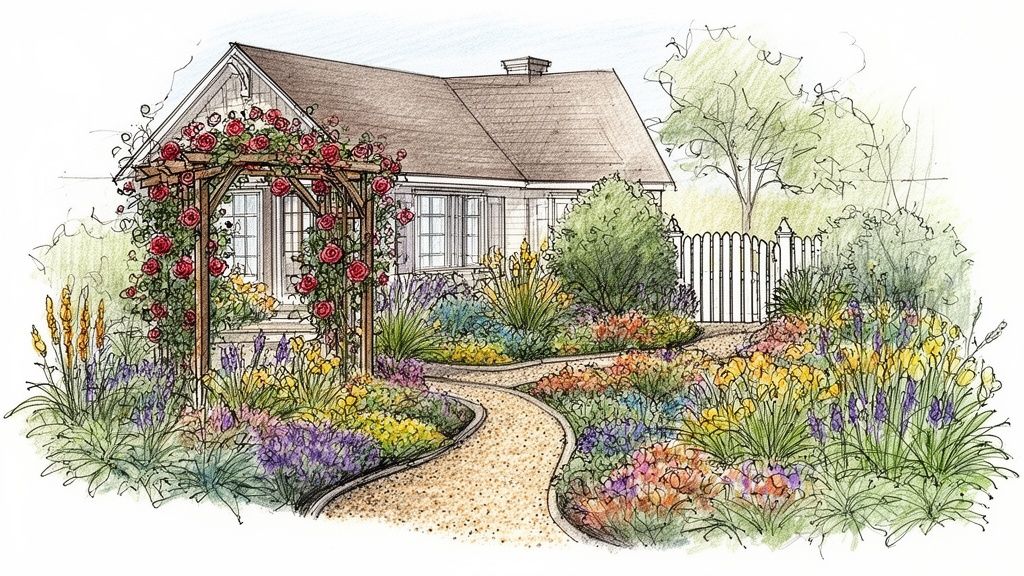
The cottage garden approach to front yard landscape design ideas is an embrace of charming, romantic abundance. This style trades rigid formality for a dense, layered tapestry of flowers, herbs, and shrubs, creating an enchanting and welcoming atmosphere. It’s characterized by a delightful mix of colors, textures, and heights, resulting in a look that feels both lived-in and intentionally beautiful. This design is a perfect match for traditional, farmhouse, or Victorian-style homes, turning the front yard into a storybook entrance.
Key Elements of a Cottage Garden Yard
A successful cottage garden feels spontaneous yet cohesive, relying on plant selection and charming structural elements to create its signature look. The goal is to fill the space with life, scent, and color through all seasons.
Lush, Layered Planting: The core of the cottage style is dense, informal planting. Mix perennials like coneflowers and black-eyed Susans with climbing roses, fragrant lavender, and flowering shrubs. Layering is key: place taller plants like delphiniums or hollyhocks at the back and shorter, mounding plants like geraniums at the front of the border.
Charming Hardscaping: Hardscape elements should feel rustic and natural. Think winding flagstone or brick pathways, a white picket fence, or a wooden arbor covered in climbing vines. These structures provide a framework for the abundant plant life.
Seasonal Interest: A great cottage garden offers year-round beauty. Combine spring-blooming bulbs (tulips, daffodils) with summer-long bloomers and late-season perennials like asters to ensure there is always something in flower.
Pro Tip: Plant in odd-numbered groupings (3s, 5s, 7s) to create a more natural, less contrived appearance. This simple trick prevents the "soldier" effect of plants lined up in perfect rows and enhances the garden's organic feel.
Visualize Your Cottage Garden Design
The free-flowing nature of a cottage garden can be challenging to plan on paper. You can apply AI Landscape Design to visualize the complex layering and color combinations using a photo of your own yard. Digitally "plant" different flower varieties to see how their colors and textures interact. You can experiment with placing a rustic arbor over your walkway or test various pathway materials, ensuring your romantic vision translates perfectly to your space before a single shovel hits the dirt.
5. Rock Gardens & Hardscape-Forward Designs
For homeowners seeking dramatic visual interest and minimal upkeep, hardscape-forward front yard landscape design ideas offer a compelling solution. This approach prioritizes elements like decorative rocks, boulders, gravel, and pavers as the primary design features, using plants as complementary accents rather than the main attraction. The result is a bold, textural, and enduring landscape that can evoke anything from a serene Japanese Zen garden to a rugged Southwest desert scene, providing a powerful statement with very little maintenance required.
Key Elements of a Hardscape-Forward Yard
A successful rock garden or hardscape-dominant design is a masterclass in texture, scale, and composition. It’s about creating a landscape that looks intentional and artfully arranged, not simply barren.
Stone Selection: The core of this style is the stone itself. Combine large, dramatic boulders as focal points with mid-sized rocks and a ground cover of gravel or river stones. Aim for a cohesive color palette that complements your home's exterior.
Plant Accents: Plants are used sparingly to soften the hardscape and add a touch of life. Choose sculptural, low-water plants like Yucca, Sedum, or dwarf conifers. Their architectural forms stand out beautifully against the stone backdrop. Learn more about the foundational elements of hardscape design to perfect your material choices.
Pathways and Negative Space: Use contrasting gravel or strategically placed pavers to create clear pathways. The "empty" spaces are just as important as the rocks themselves, allowing each element room to breathe and be appreciated.
Pro Tip: When placing boulders, bury the bottom third to make them look as if they are emerging naturally from the ground. This simple technique creates a more authentic and integrated appearance.
Visualize Your Rock Garden Design
The scale and placement of large rocks are critical and difficult to change once installed. To apply AI Landscape Design for this style, upload a photo of your front yard to virtually position different-sized boulders. You can experiment with various gravel colors and see how a few architectural plants can soften the overall look, ensuring you can preview the dramatic impact and balance of your hardscape-forward design before any heavy lifting begins.
6. Curved Bed Lines & Organic Landscape Shapes
Breaking away from rigid, straight lines, this approach to front yard landscape design ideas uses flowing, curved planting beds and pathways to create a sense of natural movement. This organic style softens the hard angles of a home's architecture, guiding the eye gently through the landscape and creating a welcoming, relaxed atmosphere. It's a versatile design that can complement various architectural styles, from traditional English gardens adapted for residential use to more fluid, modern organic concepts.
Key Elements of a Curved Landscape
A successful organic design feels intentional yet unforced, mimicking the gentle contours found in nature. The key is to create smooth, sweeping lines that provide visual interest and direct movement throughout the space.
Hardscaping: Pathways made from flagstone, brick, or stamped concrete follow gentle arcs, inviting exploration. Retaining walls, if needed, should also follow these curves, perhaps built from natural stone to enhance the organic feel. The focus is on creating soft transitions rather than abrupt angles.
Plant Palette: Planting in large, layered drifts that follow the curve of the bed creates a lush, cohesive look. Use a mix of textures and forms, such as mounding hostas, feathery astilbe, and upright ornamental grasses. Placing taller plants at the back of the curve and shorter ones at the front adds depth and dimension.
Defining Edges: Maintaining the clean, flowing lines of your garden beds is crucial. Installing a durable edging made from steel, aluminum, or stone will prevent grass from creeping in and keep mulch or rock in place, preserving the intended shape with minimal maintenance.
Pro Tip: Before you start digging, lay out your proposed curves using a garden hose or a long rope. This allows you to easily adjust the radius and flow of the lines until they feel balanced and proportional to your yard and home.
Visualize Your Organic Design
Achieving the perfect curve can be challenging; a line that looks good on paper might feel awkward in reality. You can apply AI Landscape Design to master this style. By uploading a photo of your front yard, you can experiment with different curve radii and pathway materials. You can visualize how different plant groupings will look within these flowing beds, ensuring your design achieves a natural, harmonious rhythm before you commit to the physical labor.
7. Vertical Gardens & Green Walls: Maximize Your Impact
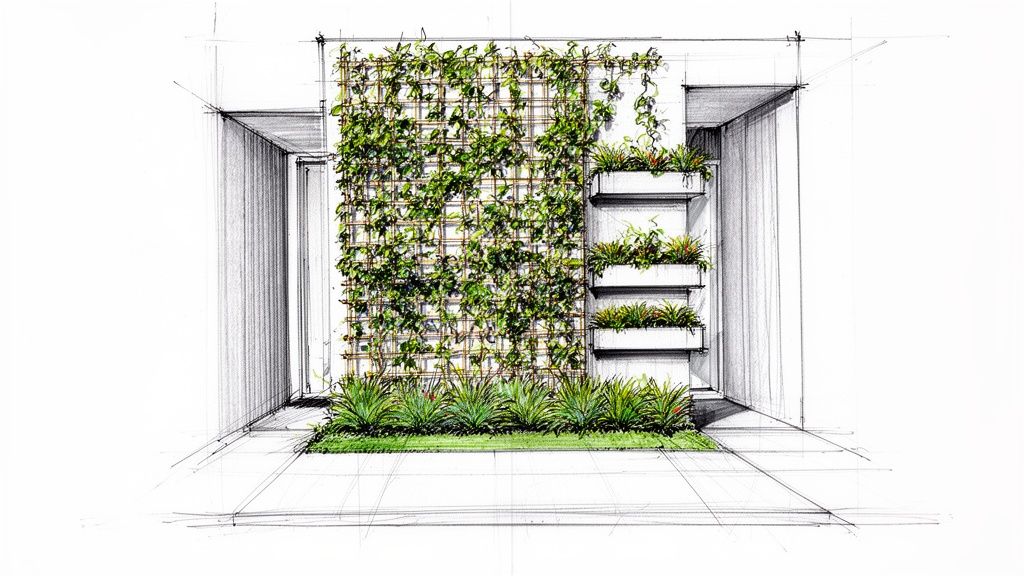
When ground space is at a premium, the only way to go is up. Vertical gardens and living green walls are innovative front yard landscape design ideas that transform blank walls, fences, and facades into lush, living art. This approach is perfect for urban homes with small front yards, townhouses, or any property where you want to add a dramatic layer of greenery without sacrificing a single square foot of your lawn or walkway. It’s a modern solution that adds texture, color, and a powerful "wow" factor.
Key Elements of a Vertical Garden
A successful vertical design leverages structural supports and plant selection to create a thriving vertical ecosystem that integrates seamlessly with your home's architecture. It’s about more than just hanging a few pots; it's about creating a cohesive, green tapestry.
Structure: The foundation can be anything from a simple wooden or metal trellis for climbing vines to a sophisticated modular system with built-in irrigation for a full living wall. Wall-mounted planters and hanging baskets can also be arranged creatively to achieve a vertical effect.
Plant Selection: Choose plants suited for vertical life. For trellises, consider vigorous climbers like clematis, climbing roses, or jasmine. For living wall systems, shallow-rooted plants like succulents, ferns, and various herbs work beautifully and create incredible texture.
Focal Point & Contrast: A green wall can be the primary focal point of your entire front yard. Use the contrast between a dark-painted wall and the bright green foliage to make the plants pop. Strategic lighting can turn your vertical garden into a stunning feature after sunset.
Pro Tip: Plan your irrigation from the start. Drip irrigation systems are essential for larger living walls to ensure every plant receives consistent moisture, as the top plants can dry out quickly.
Visualize Your Vertical Design
The scale and placement of a vertical garden are crucial to its success. Before you start drilling holes, you can apply AI Landscape Design to see the final result. Upload a photo of your own yard and virtually place different trellis styles, experiment with living wall modules, and test plant combinations. This allows you to perfect the size and visual impact, ensuring your vertical garden elevates your curb appeal exactly as you envision.
8. Sustainable Hardscape Materials & Permeable Paving
Choosing sustainable hardscape materials is a front yard landscape design idea that combines beautiful aesthetics with environmental responsibility. This approach prioritizes eco-friendly materials like permeable pavers, recycled stone, and reclaimed wood to create functional surfaces that minimize environmental impact. Instead of creating impervious surfaces like traditional concrete that cause water runoff, this design allows rainwater to soak back into the ground, reducing strain on storm drains and replenishing local groundwater. It's a forward-thinking choice for homeowners looking to create a beautiful, durable, and green front yard.
Key Elements of a Sustainable Hardscape Yard
A successful sustainable design is built on material choices and installation techniques that work with nature, not against it. It's about creating a landscape that is both beautiful and beneficial to the local ecosystem.
Permeable Surfaces: The core of this design is using materials that allow water to pass through. This includes permeable interlocking concrete pavers, porous asphalt, or loose materials like gravel and decomposed granite set over a proper drainage base.
Reclaimed & Recycled Materials: Give new life to old materials. Reclaimed wood from old structures can be used for raised beds or accents, and crushed recycled concrete or glass can create unique and sustainable pathways or mulch alternatives.
Strategic Water Management: Pair permeable surfaces with other green infrastructure. A permeable paver driveway, for example, can be designed to direct excess water flow into an adjacent rain garden, maximizing on-site water retention.
Pro Tip: Proper installation is critical for permeable systems to function correctly. When considering the practical implementation of your landscape design, especially for durable elements like permeable paving, professional construction expertise from a team like Aldridge Construction is essential to ensure longevity and proper drainage.
Visualize Your Sustainable Design
The pattern and texture of permeable pavers can dramatically alter your home's curb appeal. You can apply AI Landscape Design to visualize different options before committing. Upload a photo of your driveway or walkway and virtually lay out various paver styles, from traditional grids to intricate herringbone patterns. This allows you to see how different materials complement your home's exterior and helps you make a confident, sustainable choice. If you're weighing the benefits, you can learn more about the advantages of a paver driveway.
9. Mediterranean & Tuscan-Inspired Front Yards
A Mediterranean or Tuscan-inspired front yard landscape design idea evokes the sun-drenched, rustic charm of Southern Europe. This style trades lush green lawns for warm, inviting spaces filled with drought-tolerant plants, natural stone, and earthy textures. The goal is to create a romantic, timeless landscape that feels connected to nature and encourages relaxed outdoor living. It is a perfect match for homes with Spanish, Italian, or stucco exteriors, particularly in warm, arid climates similar to the Mediterranean basin.
Key Elements of a Mediterranean Yard
This design style is defined by its warm color palette, rustic materials, and fragrant, hardy plants that thrive in the sun. It beautifully blends formal structure with informal, naturalistic plantings.
Hardscaping: The foundation relies on natural, warm-toned materials. Think gravel pathways, terracotta pots, rustic stone retaining walls, and patios made from travertine or Saltillo tile. Wrought iron details on gates or railings and stucco walls add authentic character.
Plant Palette: The plant selection is key to achieving this look and is often water-wise. Signature plants include sculptural olive trees, fragrant lavender, upright Italian Cypress, and rosemary. Bougainvillea adds a vibrant splash of color, while succulents and agave provide textural contrast. Aromatic herbs are a must.
Focal Points: A central water feature, like a tiered stone fountain, often serves as the heart of the design, providing the soothing sound of water. A rustic wooden bench placed under a vine-covered pergola or a collection of oversized terracotta urns can also create a compelling focal point.
Pro Tip: Embrace imperfection and aged finishes. Weathered stone, slightly crumbling stucco, and sun-faded pots contribute to the authentic, lived-in charm of a Tuscan landscape. This style is about warmth and history, not pristine perfection.
Visualize Your Mediterranean Design
Capturing the right balance of rustic materials, plant textures, and warm colors is essential. You can apply AI Landscape Design to perfect this vision by using a photo of your own yard. Virtually lay down gravel paths, place terracotta planters, and see how the silvery foliage of an olive tree or the deep purple of lavender complements your home’s exterior. This allows you to fine-tune your design and ensure it captures the authentic spirit of the Mediterranean before breaking ground.
10. Smart Landscaping with Lighting & Outdoor Living Integration
Modern front yard landscape design ideas are increasingly blurring the lines between indoor and outdoor living, extending the home's functionality and aesthetic appeal right to the curb. This approach integrates smart technology, strategic lighting, and thoughtful living elements to create a front yard that is as useful as it is beautiful. It transforms the often-underutilized front space into a welcoming, secure, and interactive environment that serves you day and night. This is perfect for homeowners who want to maximize their property's potential, enhance security, and create a sophisticated, tech-savvy first impression.
Key Elements of an Integrated Smart Yard
A successful integrated design relies on a seamless blend of technology, lighting, and functional outdoor features. The goal is to create a cohesive system where each element enhances the others, boosting both ambiance and practicality.
Strategic Lighting: This goes beyond simple path lights. It involves layering different types of light for maximum effect. Use uplighting to highlight the texture of a stone facade or the branching structure of a specimen tree, pathway lighting for safe navigation, and subtle accent lights to draw attention to key landscape features.
Smart Technology: The "smart" component adds convenience and efficiency. Think automated irrigation systems that adjust based on weather forecasts and soil moisture, and smart lighting that can be controlled via an app, set to timers, or linked to motion sensors for enhanced security.
Outdoor Living Features: Integrate elements that invite you to linger. This could be a small, intimate seating area with a bench tucked into a garden nook, a sleek modern fire pit, or a quiet water feature that provides soothing ambient sound.
Pro Tip: For a warm and inviting atmosphere, choose LED lights with a color temperature between 2700K and 3000K. This soft, golden-hued light is more flattering to both plants and architecture than harsh, cool-white light. You can learn more about how to design landscape lighting in our homeowner's guide.
Visualize Your Illuminated Design
The impact of lighting is notoriously difficult to predict. You can apply AI Landscape Design to overcome this challenge. By uploading a photo of your front yard, you can virtually place various light fixtures, experimenting with their position and intensity. This allows you to visualize how uplighting will accentuate your favorite tree or how path lights will guide visitors to your door, ensuring your investment creates the perfect blend of security, beauty, and ambiance.
Top 10 Front Yard Landscape Designs Comparison
Design | 🔄 Implementation Complexity | ⚡ Resources & Maintenance | ⭐📊 Expected Outcomes & Key Advantages | 💡 Ideal Use Cases & Tips |
|---|---|---|---|---|
Modern Minimalist Front Yard | 🔄 Medium — precise layout and quality materials | ⚡ Medium upfront cost; Low–Medium maintenance; low water use | ⭐⭐⭐ Clean, timeless curb appeal; low-maintenance; water-efficient | 💡 Urban/modern homes, busy owners — tip: use 2–3 focal plants for warmth |
Native Plant & Pollinator Gardens | 🔄 Medium — requires species research and planning | ⚡ Low–Medium initial cost; Low maintenance after 1–2 yr establishment; low water | ⭐⭐⭐ High ecological impact; supports pollinators; seasonal interest | 💡 Environmentally conscious yards — tip: group by water needs and include varied bloom times |
Xeriscaping & Drought-Resistant Landscapes | 🔄 Medium — irrigation planning and plant selection | ⚡ Medium–High initial (irrigation); Low ongoing maintenance; major water savings | ⭐⭐⭐⭐ Dramatic water reduction (50–75%); durable, low-maintenance aesthetic | 💡 Drought-prone/Western climates — tip: install drip irrigation with timers |
Cottage Garden Front Yards | 🔄 Medium–High — layered planting and ongoing care | ⚡ Low–Medium setup; High regular maintenance (deadheading, watering) | ⭐⭐⭐ Lush, colorful, highly personalized; attracts pollinators | 💡 Gardeners who enjoy hands-on care — tip: repeat 5–7 key plants for cohesion |
Rock Gardens & Hardscape-Forward Designs | 🔄 Medium — heavy material placement and grading | ⚡ High initial material cost; Very Low maintenance; negligible watering | ⭐⭐⭐ Durable, dramatic focal points; excellent drainage; long-lasting | 💡 Low-maintenance or arid sites — tip: add 2–3 architectural plants to soften edges |
Curved Bed Lines & Organic Landscape Shapes | 🔄 Medium — thoughtful planning to achieve smooth flow | ⚡ Moderate cost; Medium maintenance (edging upkeep) | ⭐⭐⭐ More natural, mature appearance; guides movement; visual interest | 💡 Larger yards or elegant designs — tip: outline curves with a hose before planting |
Vertical Gardens & Green Walls | 🔄 High — structural support, irrigation, and access needs | ⚡ High installation and maintenance; higher water use; may need professionals | ⭐⭐⭐ High impact in small spaces; improves privacy, air quality; dramatic focal point | 💡 Small urban yards/high-impact sites — tip: plan irrigation and load-bearing support carefully |
Sustainable Hardscape & Permeable Paving | 🔄 Medium–High — specialized installation and subgrade prep | ⚡ Medium–High upfront; Low–Medium upkeep; strong environmental benefits | ⭐⭐⭐⭐ Reduces runoff, recharges groundwater; durable and marketable | 💡 Flood-prone or eco-focused projects — tip: pair permeable pavers with rain gardens |
Mediterranean & Tuscan-Inspired Front Yards | 🔄 Medium — climate-appropriate plant and material choices | ⚡ Medium cost; Medium maintenance; best in warm climates | ⭐⭐⭐ Warm, inviting aesthetic; many drought-tolerant, fragrant plants | 💡 Warm climate/luxury homes — tip: choose heat-hardy varieties and a central water feature |
Smart Landscaping with Lighting & Outdoor Living Integration | 🔄 High — electrical, control systems, and integrated design | ⚡ High initial cost; Medium maintenance (tech updates); water savings with smart irrigation | ⭐⭐⭐⭐ Enhances curb appeal, security, nighttime use; tech-enabled efficiency | 💡 Tech-savvy or security-focused owners — tip: layer lighting and use sensors to avoid light pollution |
Your Dream Yard is Just One Photo Away
Your home's front yard is more than just a patch of grass; it's the first impression, a welcome mat to the world, and a powerful extension of your personal style. Throughout this guide, we've journeyed through a diverse collection of front yard landscape design ideas, from the sleek, clean lines of modern minimalism to the wild, romantic charm of a cottage garden. We explored practical, eco-conscious solutions like xeriscaping and native plant gardens, and delved into the structural beauty of hardscape-forward rock gardens and sustainable permeable pavers.
Each idea, whether it's the gentle sweep of curved bed lines or the innovative use of vertical space, offers a unique pathway to transforming your property. The core takeaway is that a stunning, functional, and personalized front yard is not an out-of-reach fantasy. It is an achievable goal, built upon a foundation of clear vision and confident decision-making. The challenge has never been a lack of inspiration, but rather the uncertainty of how these concepts will translate to your specific space.
From Inspiration to Actionable Blueprint
The true power in modern landscaping lies in bridging the gap between imagination and reality. You no longer need to rely on sketches or hope that the final result matches the picture in your head. This is where technology becomes your most valuable landscaping tool. Visualizing complex front yard landscape design ideas is the critical step that prevents costly mistakes and ensures you love the final outcome.
Consider the key decisions we've covered:
Plant Selection and Placement: Will that Japanese Maple overpower the entryway? Are those ornamental grasses the right scale for the foundation bed?
Hardscape Materials: Does flagstone or decomposed granite better complement your home's exterior? How will a paver walkway alter the flow from the sidewalk to your door?
Layout and Flow: Do the proposed curved beds feel natural, or would a more geometric design be more fitting?
Lighting and Ambiance: Where should path lights be placed for maximum safety and aesthetic appeal? How will uplighting transform the look of your home at night?
Answering these questions with certainty is the difference between a good project and a great one.
Embrace the Power of AI-Powered Visualization
The days of guesswork are over. With AI landscape design tools like the DreamzAR app, you can turn a simple photograph of your front yard into a dynamic digital canvas. This technology empowers you to take all the front yard landscape design ideas we've discussed and see them implemented in your own space, instantly.
You can virtually plant a pollinator garden, lay down a modern concrete paver path, or test different rock arrangements for a xeriscape design. This process demystifies landscape design, allowing you to experiment freely and without risk. You can iterate on ideas, compare different styles side-by-side, and refine your concept until it perfectly aligns with your vision and your home's architecture. This digital preview becomes your actionable blueprint, a clear guide for you or your contractor to follow, ensuring the project is executed precisely as you envisioned. Your ideal curb appeal is not a distant dream; it's a tangible reality waiting to be designed.
Ready to stop guessing and start designing? Download DreamzAR AI Landscape Design and use a photo of your own yard to visualize these ideas and create a professional-grade plan. Turn your inspiration into a stunning reality today by visiting DreamzAR AI Landscape Design.