10 Front yard landscaping ideas You Should Know
- Dec 2, 2025
- 20 min read
Your front yard is more than just a patch of grass; it’s the first impression your home makes and a vital extension of your living space. Transforming this area can dramatically boost curb appeal, increase property value, and create a welcoming environment for you and your guests. This guide is designed to provide a comprehensive collection of actionable front yard landscaping ideas, moving beyond generic advice to offer specific, practical solutions for any style, budget, or climate. Whether you're aiming for a low-maintenance oasis, a vibrant pollinator paradise, or a sleek modern design, you'll find tangible inspiration here.
We will explore a diverse range of concepts, from drought-tolerant xeriscaping and charming cottage gardens to eco-friendly native plant installations. Each idea is broken down into its core components: key plants, essential hardscape elements, and distinct focal points. You'll get quick implementation tips and suggested plant palettes to help you get started immediately. For larger projects involving retaining walls, complex pathways, or significant earthworks, understanding the scope of professional structural landscaping services can provide clarity on what's possible and ensure the project is built to last.
A major challenge in landscaping is visualizing how these ideas will look on your own property. To solve this, you can apply AI Landscape Design to visualize your ideas. By taking a photo of your own yard, you can use augmented reality (AR) to preview different designs, test plant combinations, and see your vision come to life before breaking ground. This approach removes the guesswork, empowering you to make confident decisions and create a front yard you'll love for years to come. Let's dive into the possibilities.
1. Native Plant Gardens
A native plant garden is a powerful front yard landscaping idea that champions sustainability and regional identity. This approach involves using plants that have evolved in your specific geographical area, making them naturally adapted to the local climate, soil conditions, and rainfall patterns. The result is a resilient, low-maintenance landscape that supports local ecosystems by providing food and shelter for native birds, bees, and butterflies.
Instead of fighting against nature with thirsty, non-native species, you work in harmony with it. This creates a yard that is not only beautiful but also ecologically functional. From vibrant wildflower meadows in the Midwest to sculptural xeriscaped designs in the Southwest using agave and desert marigold, native gardens offer a diverse aesthetic that is authentically tied to your home's location. A great way to see how these plants will look is to apply AI Landscape Design; you can upload a photo of your yard and digitally place native species to preview the final effect.
Key Elements & Implementation Tips
Plants: Focus on species endemic to your region. Think Black-Eyed Susans and Coneflowers in the Northeast, or California Poppies and Manzanita on the West Coast.
Hardscape: Use locally sourced stone, gravel, or wood for pathways and borders to complement the naturalistic feel.
Water Management: Design rain gardens with moisture-loving native plants to manage stormwater runoff effectively.
Actionable Tip: Group plants with similar water and sun requirements together, a practice known as hydrozoning. This drastically reduces water waste and ensures each plant thrives.
Expert Insight: Before planting, contact your local Native Plant Society or university extension office. They often provide free, region-specific plant lists and resources that are invaluable for getting started.
This approach is perfect for homeowners seeking a low-water, chemical-free yard that buzzes with life. It reduces lawn-mowing time and supports critical pollinator populations, making it a responsible and rewarding landscaping choice.
Visualize This Idea: Not sure how a native prairie garden would look in front of your colonial-style home? You can apply AI Landscape Design to visualize your ideas. Just take a photo of your own yard and use an app like DreamzAR to overlay native plant selections to see a realistic preview before you start digging.
2. Xeriscaping
Xeriscaping is a smart, water-conserving landscaping method that has become essential for creating beautiful and sustainable front yards, particularly in drought-prone regions. This approach goes beyond simply using succulents; it’s a holistic system of design principles aimed at drastically reducing or eliminating the need for supplemental irrigation. It's about working with the environment, not against it, to create a stunning landscape that thrives in dry conditions.
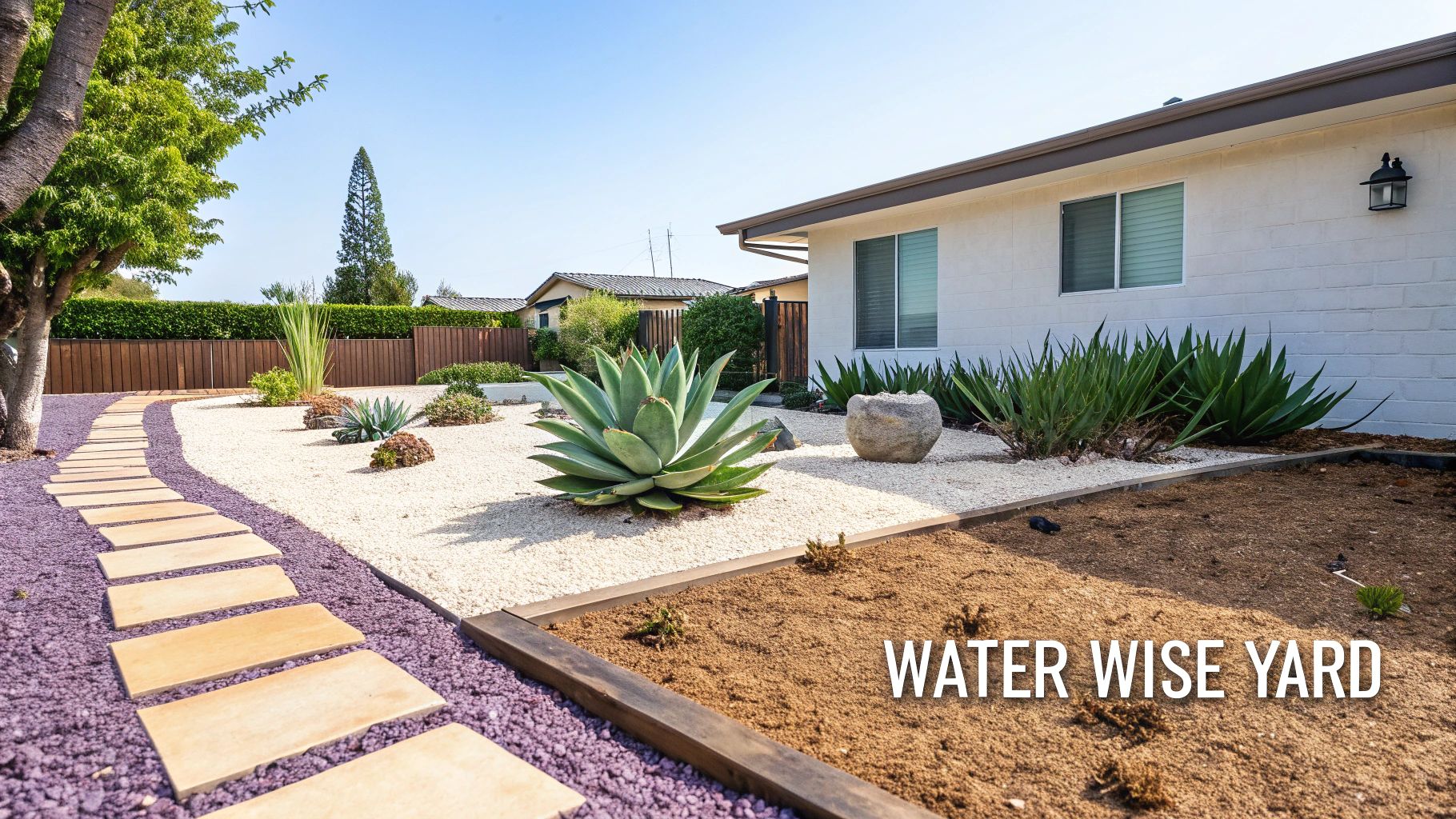
From the striking rock gardens of Colorado to the modern, minimalist yards of Southern California, xeriscaping proves that low-water landscapes can be lush, colorful, and full of texture. By prioritizing efficient irrigation, soil improvement, and proper plant selection, you create a front yard that saves water, money, and maintenance time. You can apply AI Landscape Design using photos of your own yard to see how different rock and plant combinations would look. For those aiming for a sustainable and beautiful front yard, explore these smart drought-tolerant landscaping ideas to get inspired.
Key Elements & Implementation Tips
Plants: Choose drought-tolerant and native species like Agave, Russian Sage, Lavender, and ornamental grasses. These plants are naturally adapted to survive with minimal water.
Hardscape: Incorporate permeable materials like decomposed granite, gravel, or pavers with gaps to allow rainwater to penetrate the soil instead of running off.
Water Management: Install a drip irrigation system with a smart controller that adjusts watering based on weather. Grade your yard to direct any rainfall toward plant beds.
Actionable Tip: Apply a 2-3 inch layer of organic mulch (like bark chips) or inorganic mulch (like pebbles) over your soil. This simple step significantly reduces water evaporation, suppresses weeds, and moderates soil temperature.
Expert Insight: Before you begin, get a soil test. Amending your soil with compost can improve its structure and water-holding capacity, which is a cornerstone of successful xeriscaping. Creating a drought-resistant landscape starts from the ground up.
This approach is perfect for homeowners who want a visually appealing yard without high water bills or constant upkeep. It’s an environmentally responsible choice that results in a unique, resilient, and modern landscape.
Visualize This Idea: Curious how a combination of Agave, Red Yucca, and decomposed granite pathways would look in your yard? Apply AI Landscape Design to find out. Snap a photo of your own front lawn, and a tool like DreamzAR can instantly replace your grass with a complete xeriscape design, letting you see the stunning, water-wise transformation before you commit.
3. Cottage Garden Style
A cottage garden is a charming and informal front yard landscaping idea that evokes a sense of romantic abundance and timeless appeal. This style shuns rigid structure in favor of dense, overflowing beds packed with a mix of flowers, herbs, and edible plants. It creates a vibrant, slightly untamed look that feels welcoming and full of life, as if it has been cultivated with love over many years.
Inspired by the classic English gardens of the Cotswolds and popularized by icons like Gertrude Jekyll, the cottage style prioritizes beauty, fragrance, and a succession of blooms. It’s about creating a personal sanctuary that is both productive and picturesque. To see how this lush style would fit your space, you can apply AI Landscape Design with photos of your own yard to test different flower arrangements and path layouts. Winding paths, climbing roses, and a seemingly chaotic yet harmonious mix of textures and colors are hallmarks of this delightful approach.
Key Elements & Implementation Tips
Plants: Combine a rich mix of perennials like foxgloves, delphiniums, and hollyhocks with annuals such as cosmos and sweet peas for continuous color. Integrate fragrant herbs like lavender and rosemary along pathways.
Hardscape: Use rustic, natural materials. Think winding brick or gravel pathways, weathered wooden fences, and charming arbors or trellises to support climbing plants like clematis or wisteria.
Focal Points: A quaint wooden bench, a birdbath, or a rustic gate can serve as a charming focal point amidst the dense plantings.
Actionable Tip: Plant in layers with taller plants like hollyhocks at the back of the border, medium-sized plants like peonies in the middle, and low-growing flowers like sweet alyssum at the front to create a sense of depth and profusion.
Expert Insight: Don't be afraid to mix ornamental plants with edibles. Tuck in some kale, chives, or strawberry plants among your flowers. This practice is true to the cottage garden's origins as a practical source of food and medicine for the home.
This style is perfect for homeowners who love a lush, romantic aesthetic and enjoy spending time tending to their garden. It turns a front yard into a storybook entrance that changes beautifully with the seasons.
Visualize This Idea: Curious how a profusion of foxgloves and climbing roses would look against your modern ranch-style home? Apply AI Landscape Design using a photo of your own yard. A tool like DreamzAR allows you to overlay different cottage garden flower combinations and see a realistic preview of the charming transformation.
4. Modern Minimalist Design
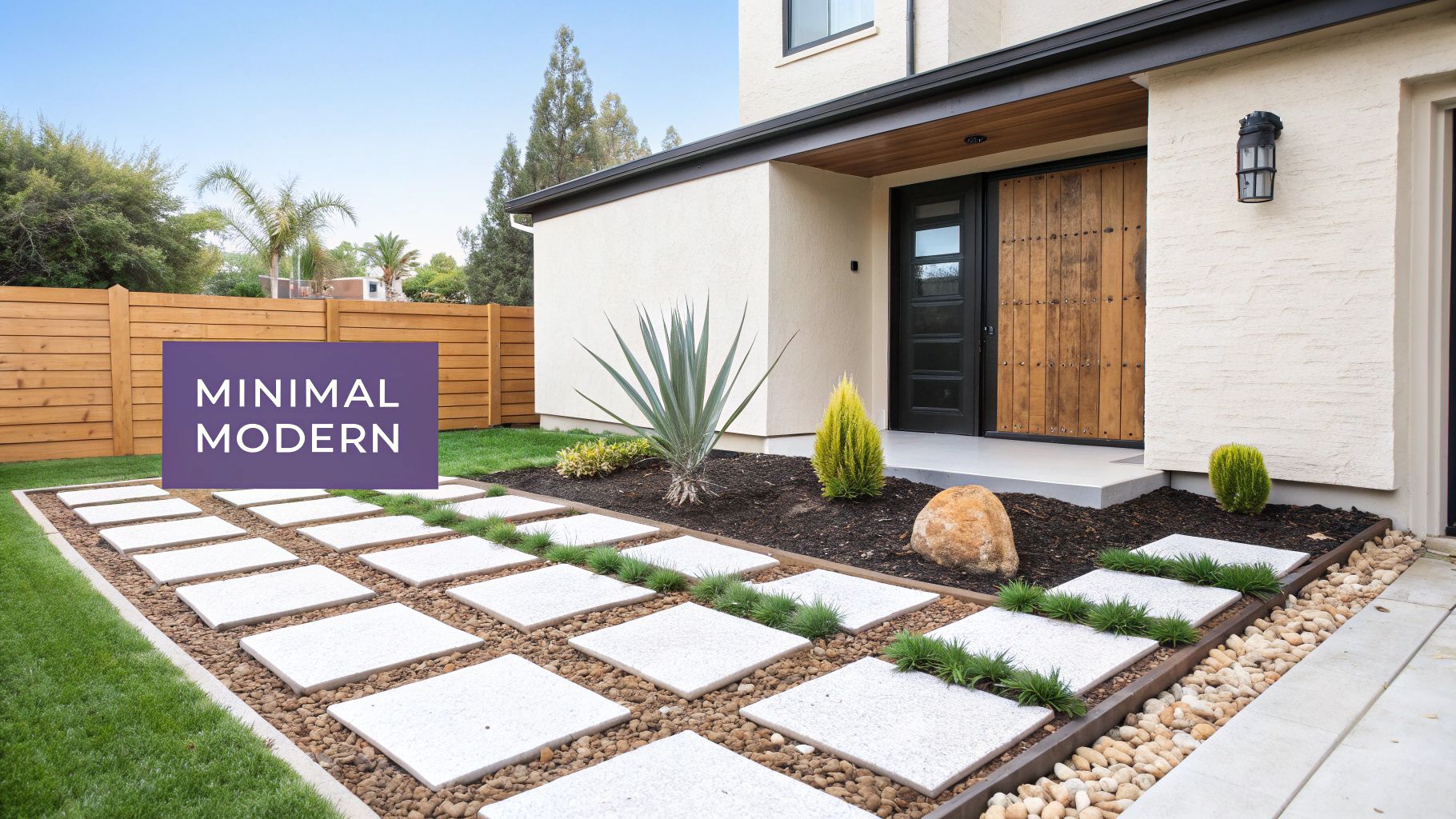
Modern minimalist front yard landscaping is an exercise in restraint and intention, emphasizing clean lines, geometric shapes, and a "less is more" philosophy. This approach strips away clutter to focus on the interplay between a few carefully selected plants, high-quality hardscaping materials, and open space. The result is a sophisticated, uncluttered aesthetic that feels both tranquil and highly structured.
This design style prioritizes functionality and visual clarity, creating a powerful first impression that complements contemporary architecture. Think of the serene simplicity of a Japanese Zen garden or the sleek, architectural landscapes seen in modern California homes. It’s about making every element count, from a single sculptural tree to the precise placement of concrete pavers. Before committing to a layout, apply AI Landscape Design with a photo of your yard to experiment with different geometric patterns and plant placements to achieve the perfect balance.
Key Elements & Implementation Tips
Plants: Choose plants for their form and texture. Ornamental grasses like Blue Fescue add movement, while structural plants like Agave or Snake Plant provide strong silhouettes.
Hardscape: Use materials with clean, neutral tones like smooth concrete, dark gravel, or sleek metal edging. Create strong geometric patterns with walkways and garden beds.
Focal Points: Incorporate a single, impactful focal point such as a modern sculpture, a minimalist water feature, or a specimen tree like a Japanese Maple.
Actionable Tip: Create intentional asymmetry. Instead of a perfectly balanced design, place a large planter on one side of a walkway and balance it with a cluster of smaller grasses on the other to create dynamic visual interest.
Expert Insight: The success of a minimalist design lies in the quality of materials and the precision of the installation. Invest in high-grade pavers, corten steel edging, and healthy plant specimens, as every detail will be highly visible.
This approach is perfect for homeowners who appreciate contemporary design and desire a low-clutter, high-impact front yard. It significantly reduces maintenance by limiting the number of plants and replacing lawn with hardscape, making it a stylish yet practical landscaping choice.
Visualize This Idea: Curious how a grid of large concrete pavers and a bed of black river rock would look against your home? You can apply AI Landscape Design to visualize your ideas. Snap a picture of your own front yard, then use an app like DreamzAR to add geometric hardscaping and place structural plants to see a realistic preview of your modern vision.
5. Pollinator Gardens
A pollinator garden is a vibrant and ecologically crucial front yard landscaping idea designed specifically to attract and support beneficial creatures like bees, butterflies, hummingbirds, and moths. This approach focuses on creating a complete habitat that provides food, water, and shelter, turning your yard into a vital resource for local wildlife. By carefully selecting plants and adopting chemical-free maintenance, you can create a beautiful, dynamic landscape that actively contributes to the health of your local ecosystem.
Instead of a static, purely ornamental space, a pollinator garden is a living, buzzing landscape full of color and movement. These gardens are more than just a collection of pretty flowers; they are functional ecosystems that support the life cycles of critical pollinators. From Monarch butterfly waystations rich with milkweed to urban plots bursting with native wildflowers, a pollinator garden is a powerful statement of environmental stewardship that enriches your curb appeal. You can apply AI Landscape Design with a photo of your yard to visualize different plant combinations that attract pollinators.
Key Elements & Implementation Tips
Plants: Prioritize native, single-petal flowers in shades of blue, purple, yellow, and orange. Include host plants for caterpillars, like milkweed for Monarchs and fennel for Swallowtails.
Hardscape: Incorporate a shallow water source like a birdbath with stones for insects to land on. Leave small patches of bare, unmulched ground for ground-nesting native bees.
Bloom Succession: Group plants with different bloom times to ensure a continuous supply of nectar and pollen from early spring through late fall.
Actionable Tip: Arrange plants in dense clusters or drifts of the same species. This creates a large visual target that is more attractive to pollinators than single, scattered plants.
Expert Insight: Avoid all pesticides and herbicides, as even organic options can harm beneficial insects. Healthy soil and diverse plantings are the best defense against pests and diseases. For guidance, consult resources from organizations like the Xerces Society or your local extension office.
This landscaping idea is perfect for nature-loving homeowners who want a yard that is both beautiful and functional. It's a low-maintenance, high-impact choice that supports biodiversity and provides endless opportunities for wildlife observation. Learn more about attracting pollinators to your garden.
Visualize This Idea: Curious how a colorful mix of coneflowers, bee balm, and salvia would look against your home's facade? You can apply AI Landscape Design to see it. Take a photo of your own front yard and use an app like DreamzAR to overlay various pollinator-friendly plants to see how you can create a beautiful, life-sustaining habitat before planting a single flower.
6. Raised Garden Beds
Raised garden beds are one of the most functional and visually striking front yard landscaping ideas, transforming a static lawn into a productive and dynamic space. These elevated planting structures, typically built from wood, metal, or composite materials, create defined zones for growing everything from vegetables to flowers. They introduce clean lines, add vertical interest, and make gardening more accessible by bringing the soil up to a comfortable height.
This approach blends form and function, allowing you to showcase an edible garden or a stunning floral display as a core landscape feature. Raised beds solve common yard problems like poor drainage, compacted soil, and weed intrusion, giving you complete control over the growing medium. From a series of rustic cedar beds lining a walkway to sleek, modern metal planters framing an entryway, this idea makes a deliberate and organized statement. Apply AI Landscape Design with photos of your own yard to test different layouts and materials for your raised beds before you start building.
Key Elements & Implementation Tips
Materials: Choose rot-resistant wood like cedar or redwood for a classic look, or opt for contemporary corten steel or durable composite materials for longevity.
Soil Mix: Fill beds with a high-quality mix of topsoil, compost, and amendments like perlite to create a rich, well-draining environment that surpasses native soil quality.
Layout & Design: Arrange beds symmetrically for a formal look or asymmetrically for a more cottage-style feel. A standard 4x8 foot dimension is ideal for easy access from all sides.
Actionable Tip: Install a drip irrigation or soaker hose system on a timer before you fill the beds with soil. This ensures deep, consistent watering directly at the root zone, which is far more efficient and promotes healthier plants.
Expert Insight: Before building, consider the depth needed for your chosen plants. Leafy greens and herbs need about 12 inches of soil depth, while root vegetables like carrots and tomatoes with deeper root systems require at least 18-24 inches to thrive.
This approach is perfect for homeowners who want to combine aesthetics with productivity, creating an "edible estate" or simply a more organized and accessible garden. It’s a fantastic way to introduce structure and intentionality to your front yard design.
Visualize This Idea: Curious how a series of tiered, dark wood raised beds would look against your modern home's facade? Apply AI Landscape Design to visualize your ideas. Snap a photo of your own front yard, and use an app like DreamzAR to place different styles and arrangements of raised garden beds to find the perfect configuration before you buy materials.
7. Mediterranean Landscape
A Mediterranean landscape is a sun-drenched, rustic front yard landscaping idea that evokes the relaxed elegance of coastal Italy, Spain, and Greece. This style is defined by its use of drought-tolerant plants, earthy hardscape materials, and a seamless blend of indoor and outdoor living. It creates a welcoming, vacation-like atmosphere that is both beautiful and highly practical for warm, dry climates.
Instead of a traditional lawn, this approach uses gravel, stone, and fragrant herbs to create a sensory-rich environment. The aesthetic feels established and timeless, featuring textures like terracotta, weathered wood, and stucco. From a sprawling Tuscan-style estate in Arizona to a coastal California home with olive trees, a Mediterranean front yard is a testament to sophisticated, water-wise design that celebrates sunshine and outdoor living. You can apply AI Landscape Design using a photo of your yard to see how elements like terracotta pots and olive trees would complement your home’s exterior.
Key Elements & Implementation Tips
Plants: Focus on aromatic, drought-tolerant species. Think Lavender, Rosemary, Olive trees, Bougainvillea, and ornamental grasses.
Hardscape: Use warm-toned materials like terracotta, travertine pavers, decomposed granite, and rustic flagstone for pathways and patios. Stucco walls are also a hallmark of this style.
Focal Points: Incorporate elements like a tiered water fountain, large urns, or a pergola covered in climbing vines to add structure and a sense of place.
Actionable Tip: Plant fragrant herbs like rosemary and sage along walkways. As you brush past them, they will release their essential oils, creating an immersive sensory experience for you and your guests.
Expert Insight: The key to an authentic Mediterranean feel is imperfection and texture. Avoid overly polished surfaces and straight lines. Embrace the natural, slightly weathered look of stone, wood, and pottery to create a space that feels lived-in and timeless.
This style is ideal for homeowners in arid or semi-arid climates looking to create a low-water, high-impact front yard that doubles as an outdoor living space. It reduces maintenance needs while offering incredible curb appeal and charm.
Visualize This Idea: Curious how a gravel path lined with lavender and olive trees would look against your home's exterior? Apply AI Landscape Design with a photo of your own yard. An app like DreamzAR lets you instantly place terracotta pots, stone pathways, and Mediterranean plants to see a realistic preview of your sun-kissed escape.
8. Front Lawn Alternatives (No-Mow Solutions)
Moving beyond the traditional turf lawn is one of the most impactful front yard landscaping ideas for sustainability and reduced upkeep. Front lawn alternatives replace high-maintenance grass with beautiful, eco-friendly options like flowering clover, creeping ground covers, or native grasses. These no-mow or low-mow solutions dramatically cut down on watering, fertilizing, and mowing, saving you time and resources.
This approach transforms your yard from a monoculture desert into a dynamic, textured landscape. Imagine a lush, green carpet of microclover that stays green all summer with minimal water, or a swath of native prairie grasses that sway in the breeze. These alternatives not only boost curb appeal with unique aesthetics but also create healthier ecosystems by supporting pollinators and improving soil health. Apply AI Landscape Design using photos of your own yard to visualize how different ground covers would look in place of your lawn.
Key Elements & Implementation Tips
Plants: Opt for resilient ground covers like Creeping Thyme, Dutch White Clover, or regional native sedges and grasses. For shady spots, a moss garden offers a vibrant, velvety alternative.
Hardscape: Integrate pathways, patios, or gravel beds to break up large planting areas and create functional zones within the former lawn space.
Soil Preparation: Success depends on properly preparing the soil. Remove the existing turf completely and amend the soil as needed before planting your chosen alternative.
Actionable Tip: Before committing, start with a small test patch. This allows you to see how your chosen ground cover performs in your specific soil and light conditions before a full-scale conversion.
Expert Insight: Always check with your local municipality and Homeowners' Association (HOA) before removing your lawn. Some have specific regulations, but many are now offering incentives for homeowners who switch to water-wise, sustainable landscape designs.
This is the perfect choice for homeowners who want a beautiful front yard without the constant work of a conventional lawn. It's an environmentally conscious decision that reduces your carbon footprint and creates a more interesting and biodiverse landscape.
Visualize This Idea: Curious if a clover lawn or a native grass meadow fits your home's style? Apply AI Landscape Design with a photo of your own yard. An app like DreamzAR can let you instantly overlay different ground covers and planting arrangements to see a realistic preview of your no-mow future.
9. Hardscape Features (Patios, Pathways, Water Features)
Hardscape features are the architectural bones of your front yard landscaping, providing structure, defining spaces, and improving functionality. These non-plant elements include everything from patios and pathways to retaining walls and water features. Integrating hardscaping is a powerful way to add permanent visual interest, direct traffic flow, and create usable outdoor living areas that complement your home's style.
By carefully selecting materials and designs, you can establish a strong foundation that enhances your softscape (plantings). A winding flagstone path invites guests to your front door, a small bluestone patio creates a welcoming seating area, and a bubbling water feature adds soothing sounds and a dynamic focal point. Before you begin construction, you can apply AI Landscape Design with a photo of your yard to visualize different materials like pavers or flagstone. These structural components are essential for a polished, cohesive, and highly functional front yard design.
Key Elements & Implementation Tips
Materials: Choose materials that harmonize with your home’s exterior. Consider bluestone for classic homes, concrete pavers for modern designs, or decomposed granite for a rustic, permeable path.
Functionality: Plan pathways to create a clear and logical route from the driveway or sidewalk to your front entrance. Ensure patios are sized appropriately for their intended use, such as a small bistro set.
Water Management: Use permeable pavers or gravel for driveways and walkways to help manage stormwater runoff by allowing water to soak back into the ground.
Actionable Tip: Integrate low-voltage landscape lighting directly into your hardscape. Uplighting a retaining wall or embedding lights into pathway steps enhances safety and creates dramatic curb appeal after dark.
Expert Insight: When planning major hardscape projects like patios or retaining walls, always consult a professional. Proper installation requires expertise in grading, drainage, and foundation work to ensure longevity and prevent costly issues down the line.
This approach is perfect for homeowners looking to add lasting value, structure, and year-round interest to their property. Well-designed hardscape reduces high-maintenance lawn areas and provides a durable framework for your garden to mature around.
Visualize This Idea: Can't decide between a brick paver pathway and a modern concrete slab walkway? Apply AI Landscape Design using photos of your own yard. A tool like DreamzAR can let you instantly apply different hardscape materials and patterns to see which best complements your home’s architecture before committing.
10. Seasonal Color and Year-Round Interest
A front yard designed for seasonal color and year-round interest is a dynamic landscape that offers visual appeal through all four seasons. This strategic approach moves beyond a single-season "wow" factor, layering plants with varied bloom times, foliage colors, textural bark, and evergreen structures. The goal is a front yard that looks intentionally beautiful whether it's bursting with spring flowers, basking in summer sun, glowing with autumn hues, or resting under a blanket of winter snow.
This landscaping idea ensures your curb appeal never takes a vacation. By carefully selecting a sequence of plants, you can create a continuous display of beauty. Imagine a yard where flowering cherry blossoms give way to vibrant hydrangeas, which then transition to the fiery red of a Japanese maple, finally revealing the strong architectural form of evergreen shrubs and colorful dogwood stems in winter. Apply AI Landscape Design with photos of your own yard to simulate how different plants will look throughout the seasons. It’s a thoughtful and rewarding way to design a landscape that is always alive and engaging.
Key Elements & Implementation Tips
Plants: Select plants for multi-season appeal. Think spring-blooming bulbs like tulips, summer-flowering coneflowers, fall-foliage stars like the Burning Bush, and winter-interest evergreens like Blue Spruce.
Hardscape: Use neutral-colored pathways and retaining walls made of stone or pavers. This provides a consistent backdrop that allows the seasonal plant colors to take center stage.
Focal Points: Incorporate elements with winter presence, such as a sculptural birdbath, an ornamental tree with interesting bark like a Paperbark Maple, or large evergreen shrubs.
Actionable Tip: Create a "bloom calendar" for your yard. Map out what will be in bloom or showing color each month. This simple chart helps you identify gaps and select plants to ensure there’s always something visually interesting happening.
Expert Insight: When planning, prioritize “good bones.” This means establishing a strong foundation of evergreen trees and shrubs first. They provide the essential structure and green backdrop that makes the changing colors of your deciduous and perennial plants pop throughout the year.
This approach is perfect for homeowners who want a consistently attractive and vibrant front yard. It requires more initial planning than a simple design but pays off with a landscape that delivers continuous beauty and prevents the dreaded "barren winter" look.
Visualize This Idea: Curious how a Red Twig Dogwood will look against the snow in front of your house? You can apply AI Landscape Design to see it. Snap a photo of your own front yard in its current state and use an app like DreamzAR to add plants known for winter interest to see how they’ll provide that crucial year-round appeal before you commit.
Front Yard Landscaping Ideas — 10-Option Comparison
Style | Implementation (🔄) | Resources & Efficiency (⚡) | Expected Outcomes (📊 ⭐) | Ideal Use Cases | Key Advantages (💡) |
|---|---|---|---|---|---|
Native Plant Gardens | Moderate planning; time to establish 🔄 | Low water & fertilizer; moderate sourcing ⚡ | High biodiversity and resilience 📊 ⭐⭐⭐ | Regional yards seeking sustainability | Water-saving, wildlife support — research hardiness zone |
Xeriscaping | Design + irrigation setup; moderate-high effort 🔄 | Higher upfront cost; very low ongoing water ⚡ | Major water savings and durable aesthetic 📊 ⭐⭐⭐ | Arid/drought-prone or water-restricted areas | Saves water, low maintenance — install smart irrigation |
Cottage Garden Style | Low design complexity but high upkeep 🔄 | Moderate water and regular care ⚡ | Lush, continuous blooms and pollinator-friendly 📊 ⭐⭐ | Romantic, informal yards and small properties | Flexible, productive plantings — stagger bloom times |
Modern Minimalist Design | High design precision and planning 🔄 | Moderate-high material cost; low plant maintenance ⚡ | Clean, upscale look with low upkeep 📊 ⭐⭐ | Contemporary homes and low-maintenance priorities | Minimal upkeep, strong visual clarity — invest in focal specimens |
Pollinator Gardens | Moderate planning; pesticide-free management 🔄 | Low-medium plantings; season-long attention ⚡ | High ecological impact for pollinators 📊 ⭐⭐⭐ | Conservation yards, schools, community spaces | Supports pollinators and education — include host plants |
Raised Garden Beds | Moderate construction and setup 🔄 | Upfront materials and quality soil; variable watering ⚡ | Improved soil, accessibility, organized planting 📊 ⭐⭐ | Urban yards, poor soil sites, accessible gardening | Better drainage and control — use rot-resistant materials |
Mediterranean Landscape | Moderate design; climate-specific choices 🔄 | Low water in warm climates; well-draining soils ⚡ | Distinctive, drought-tolerant aesthetic 📊 ⭐⭐ | Warm, dry regions and outdoor-living focus | Low maintenance, fragrant plants — use terracotta/pergolas |
Front Lawn Alternatives (No-Mow) | Low-moderate; requires planning and permits 🔄 | Low water and mowing; initial establishment time ⚡ | Reduced emissions and maintenance; pollinator benefits 📊 ⭐⭐ | Eco-minded homeowners, urban fronts seeking low upkeep | Eliminates mowing, sustainable — check HOA/regulations |
Hardscape Features | High installation complexity; often professional 🔄 | High upfront cost; long-term durability ⚡ | Defined spaces, increased functionality and value 📊 ⭐⭐ | Entertaining yards, formal entrances, drainage control | Durable, adds value — use permeable materials for runoff |
Seasonal Color & Year-Round Interest | High planning for succession and structure 🔄 | Moderate resources for diverse plant palette ⚡ | Continuous curb appeal across seasons 📊 ⭐⭐ | Homeowners seeking dynamic, high-appeal landscapes | Year-round interest and wildlife support — include evergreens and staggered blooms |
Final Thoughts
We've explored a diverse spectrum of front yard landscaping ideas, from the water-wise wisdom of xeriscaping to the charming, untamed beauty of cottage gardens. This journey has shown that your front yard is more than just a patch of grass; it's a blank canvas brimming with potential. It's the first impression your home makes, a personal sanctuary, and an opportunity to contribute positively to your local ecosystem.
The core takeaway is that a successful landscape design achieves a harmonious balance between aesthetics, functionality, and sustainability. Your ideal front yard is one that not inly reflects your personal style but also aligns with your local climate, your lifestyle, and your willingness to perform maintenance. The most beautiful designs are often those that work with nature, not against it.
Synthesizing Inspiration into Action
As you move from inspiration to implementation, remember the foundational principles we've discussed. Every choice, from selecting a stone for a walkway to planting a native perennial, contributes to the overall narrative of your landscape. Don't feel pressured to tackle everything at once. A beautifully curated front yard is often a project that evolves over several seasons.
Consider these key takeaways as you plan your project:
Function First: Before focusing on aesthetics, define the purpose of your space. Do you need a clear, accessible pathway to your door? A private seating area to enjoy your morning coffee? Or a low-maintenance design that frees up your weekends?
Embrace Your Environment: The most resilient and stunning landscapes are those that honor the local climate. Choosing drought-tolerant plants in an arid region or moisture-loving ferns in a damp, shady area will lead to a healthier garden and less work for you.
Think in Layers: Create visual depth and year-round interest by layering elements. Combine tall grasses with mid-height shrubs, low-growing groundcovers, and a striking hardscape feature. This layered approach ensures your yard looks dynamic, even in the middle of winter.
Hardscape as the Backbone: Pathways, walls, and patios provide the essential structure for your design. These permanent elements define spaces and guide movement, anchoring the softer, living elements of your garden.
The Power of Visualization in Your Landscape Journey
The single greatest challenge in landscaping is bridging the gap between imagination and reality. It's one thing to admire photos of modern minimalist designs or lush pollinator gardens, but it's another entirely to envision how those specific front yard landscaping ideas will translate to your unique space, with its specific lighting, slope, and existing features.
This is where modern technology becomes your most powerful tool. You can apply AI Landscape Design to visualize your ideas using photos of your own yard. This is a critical step in the planning process. By taking a photo of your current yard and applying different styles, plant palettes, and hardscape features digitally, you can:
Experiment Without Risk: Test out a bold idea, like replacing your entire lawn with a wildflower meadow, before you lift a single shovel.
Refine Your Vision: Compare different pathway materials or see exactly how a Japanese Maple will look next to your entryway.
Communicate Effectively: A visual rendering is invaluable when explaining your ideas to a partner, a contractor, or even a nursery professional when seeking plant advice.
Transforming your front yard is a deeply rewarding endeavor that enhances your home's curb appeal, provides personal enjoyment, and can even increase its value. By starting with a clear vision, thoughtfully selecting elements that suit your needs, and leveraging technology to see the future, you are perfectly equipped to create an outdoor space you will love for years to come.
Ready to stop guessing and start seeing? Bring your favorite front yard landscaping ideas to life with DreamzAR AI Landscape Design. Simply upload a photo of your yard and let our AI generate stunning, realistic designs in seconds, helping you visualize the full potential of your property. Explore your options and design with confidence by visiting us at DreamzAR AI Landscape Design.