10 Front Yard Landscaping Design Ideas to Boost Curb Appeal in 2025
Your front yard is more than just a patch of grass; it’s the first impression your home makes, a public-facing introduction to your personal style, and a significant driver of its overall value. Crafting a beautiful, functional landscape sets the tone for your entire property, welcoming guests and creating a sense of arrival. The right design can transform an ordinary exterior into a memorable one, boosting what is commonly known as curb appeal. For a deeper dive into making your home stand out, explore more on unlocking the secret to stunning curb appeal and its impact on property value.
However, moving from inspiration to implementation can feel daunting. The sheer number of choices, from plant selection to hardscape materials, can lead to decision paralysis. This guide is designed to eliminate that uncertainty. We've compiled 10 distinct and actionable front yard landscaping design ideas, each broken down into its core components. You'll find specific recommendations for what to plant, what materials to use, and how to approach the layout, whether you're a DIY enthusiast or plan to hire a professional.
Most importantly, we'll show you how to move beyond guesswork. Visualizing how a rock garden or modern pathway will look in your specific space is no longer a challenge. With AI Landscape Design apps, you can take a photo of your current yard and instantly overlay these concepts. This allows you to preview, customize, and perfect your design with confidence before breaking ground. Let’s explore the possibilities and create a front yard that truly reflects you and your home.
1. Modern Minimalist Front Yard with Clean Lines
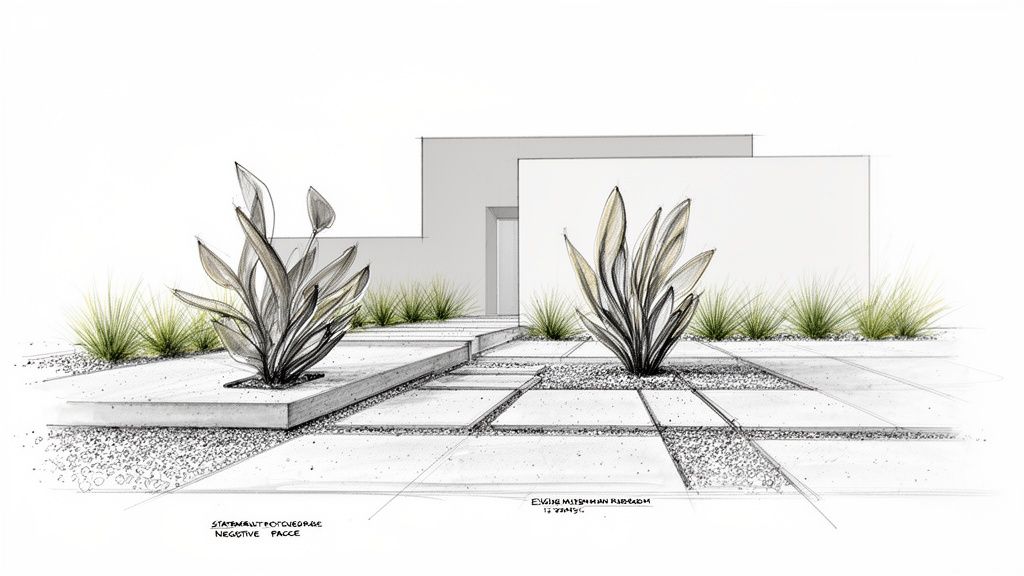
A modern minimalist approach transforms your front yard into a sophisticated, uncluttered space that emphasizes architectural beauty and intentional design. This style is one of the most impactful front yard landscaping design ideas because it favors simplicity, strong geometric shapes, and a limited, neutral color palette. It’s not about emptiness; it's about making every element count, from a single sculptural tree to the precise lines of a concrete walkway. This design is perfect for contemporary or mid-century modern homes, creating a seamless transition from the exterior architecture to the landscape.
Key Elements of This Design
This style relies on a "less is more" philosophy. Hardscaping often becomes the star, with elements like oversized concrete pavers, dark gravel beds, or a sleek metal retaining wall providing structure and texture. Plant selection is highly curated, focusing on form and year-round visual interest.
What to Plant: Opt for plants with strong silhouettes. Consider Snake Plant (Dracaena trifasciata), Horsetail Reed (Equisetum hyemale), or Blue Fescue (Festuca glauca). For a focal point, a Japanese Maple (Acer palmatum) or a multi-stemmed Birch (Betula) provides sculptural appeal.
Hardscape Suggestions: Large-format concrete or porcelain pavers in a grid pattern create clean lines. Use Mexican beach pebbles or black slate chips as ground cover instead of traditional mulch. A low, board-formed concrete wall can define the space and add architectural interest.
Visualize It Before You Build
The precision required for a minimalist design makes visualization crucial. Spacing, scale, and material choices are everything. An AI Landscape Design tool is invaluable here; simply upload a photo of your yard to test different hardscape materials and paver layouts. You can experiment with geometric patterns and place statement plants to see how the final design achieves the intended clean, balanced aesthetic before committing.
Seasonal Care: Maintenance is generally low. Prune plants annually to maintain their shape, replenish gravel or stone ground cover as needed, and keep hardscape surfaces clean.
Estimated Cost: $15 - $50 per square foot, depending heavily on hardscape materials and plant maturity.
DIY or Contractor? Laying pavers and installing concrete features often requires a professional for a crisp, level finish. Planting and adding gravel can be a straightforward DIY project.
2. Native Plant Front Yard Landscape
A native plant landscape is a sustainable and intelligent approach that uses flora naturally adapted to your specific region's climate, soil, and rainfall patterns. This design is one of the most rewarding front yard landscaping design ideas because it works in harmony with the local environment, not against it. The result is a beautiful, resilient yard that requires minimal irrigation, fertilizer, and maintenance while supporting vital local ecosystems, including pollinators like bees and butterflies. This approach is both environmentally responsible and cost-effective over the long term.
Key Elements of This Design
This style celebrates regional identity and ecological function. The design is less about rigid structure and more about creating a thriving, naturalistic habitat. Hardscape elements often play a supporting role, using materials that complement the local environment, such as flagstone paths or river rock beds that aid in water drainage.
What to Plant: This is entirely region-dependent. In the Midwest, a prairie-style garden might feature Black-Eyed Susans (Rudbeckia hirta) and Coneflowers (Echinacea purpurea). In the arid Southwest, you might choose Palo Verde trees (Parkinsonia florida) and various cacti. A California garden could thrive with California Poppies (Eschscholzia californica) and native sages (Salvia). Contact your local native plant society for the best recommendations. For more ideas on water-wise planting, explore these drought-tolerant plant options.
Hardscape Suggestions: Use permeable materials that allow rainwater to return to the soil, such as natural flagstone for walkways or decomposed granite paths. Dry creek beds made from river rock can be a beautiful and functional way to manage stormwater runoff.
Visualize It Before You Build
Native gardens evolve and change with the seasons. Visualizing how different plant combinations will fill the space throughout the year is key to a successful, year-round design. You can apply AI Landscape Design by taking a photo of your own yard to see how native plants will look as they mature. Virtually place different species, from small wildflowers to larger shrubs, and arrange them in clusters to create a naturalistic feel, ensuring your design has visual interest in every season.
Seasonal Care: Maintenance is minimal once established. In the first year, regular watering is needed to help roots take hold. Afterward, care typically involves cutting back perennials and grasses in late winter or early spring and removing any invasive weeds.
Estimated Cost: $10 - $35 per square foot. Costs are often lower due to reduced need for soil amendments and hardscape infrastructure.
DIY or Contractor? This is an excellent DIY project for passionate gardeners. However, a landscape designer specializing in native plants can be invaluable for creating a cohesive, well-planned design and sourcing the right plants.
3. Front Yard Rock and Stone Garden Design
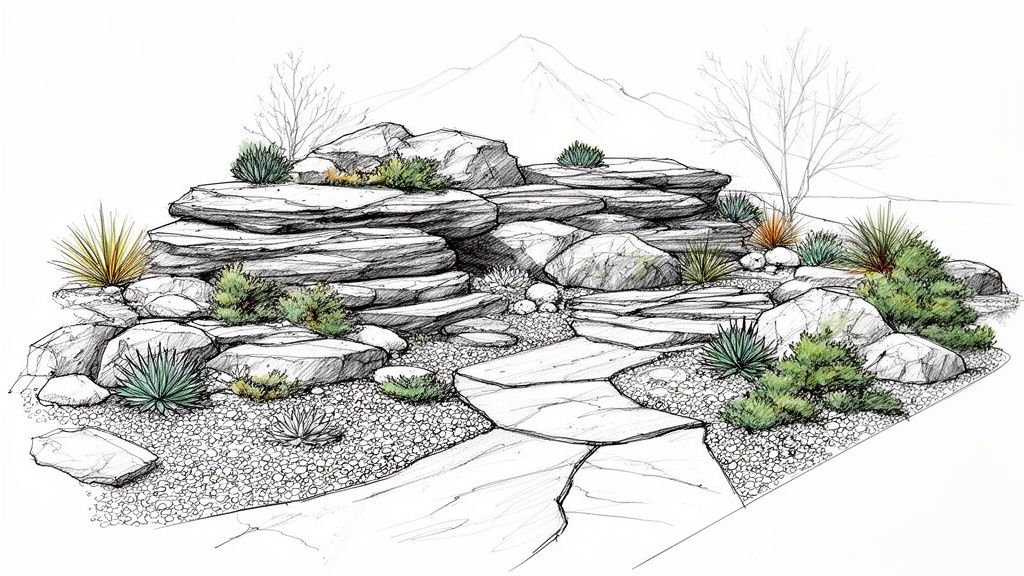
A front yard rock and stone garden uses decorative rocks, boulders, gravel, and stone hardscaping as the primary design elements. This sophisticated approach is one of the most versatile front yard landscaping design ideas, as it reduces water needs, suppresses weeds, and creates immense visual interest through texture and layering. It's an excellent choice for various climates and architectural styles, from desert homes in Arizona to mountain lodge-style properties, and is particularly effective for managing sloped yards.
Key Elements of This Design
This design philosophy celebrates the raw beauty of natural stone. The focus is on creating a layered, textured landscape where rocks are the stars and plants are complementary accents. Thoughtful placement of boulders creates focal points and structure, while different sizes of gravel and river rocks add depth and define different zones.
What to Plant: Choose drought-tolerant plants that thrive in rocky conditions. Creeping Thyme (Thymus serpyllum), various Sedums, and Blue Star Juniper (Juniperus squamata) are excellent ground covers. For height, consider Agave or ornamental grasses like Little Bluestem (Schizachyrium scoparium).
Hardscape Suggestions: Layer rocks from large, character-rich boulders down to smaller river rocks and pea gravel. Use flagstone or irregular stone steppers for a naturalistic walkway. A dry creek bed made of smooth river stones can add movement and help with drainage. For more inspiration, explore these garden rock ideas to try in 2025.
Visualize It Before You Build
The success of a rock garden depends entirely on the placement, scale, and color of the stones. A misplaced boulder or the wrong color gravel can disrupt the entire aesthetic. To prevent this, apply AI Landscape Design: use a photo of your own yard to test different rock combinations. Instantly see how materials like white marble chips, black lava rock, or warm river stones will look. You can virtually place boulders to find the perfect spot before a single one is delivered.
Seasonal Care: Extremely low-maintenance. Weed suppression is excellent when landscape fabric is used. Occasional leaf blowing and replenishing gravel in high-traffic areas are the primary tasks.
Estimated Cost: $8 - $30 per square foot. Costs vary widely based on the type and size of rocks, delivery fees for large boulders, and professional installation.
DIY or Contractor? Spreading gravel and placing smaller rocks is a manageable DIY task. Installing large, heavy boulders or building retaining walls requires professional equipment and expertise.
4. Curved Planting Beds with Layered Textures
Moving away from rigid, straight lines, curved planting beds introduce a sense of flow and natural softness to your front yard. This approach uses sweeping, organic shapes to define garden spaces, making a yard feel larger and more inviting. By layering plants of varying heights, textures, and colors within these beds, you can create a lush, dynamic landscape with year-round appeal. This versatile design complements a wide range of home styles, from charming cottages to modern suburban houses.
Key Elements of This Design
The beauty of this design lies in its soft geometry and rich, multi-dimensional planting scheme. The curved edges guide the eye through the landscape, while layers of foliage create depth and visual interest. Success is achieved by combining different plant forms for a composition that feels intentional yet natural.
What to Plant: For the back layer (tallest), consider evergreen shrubs like Boxwood (Buxus) or Arborvitae (Thuja) for structure. The middle layer can feature perennials like Coneflower (Echinacea), Black-Eyed Susan (Rudbeckia), and Salvia. Add texture with ornamental grasses like Little Bluestem (Schizachyrium scoparium). Use low-growing groundcovers like Creeping Phlox (Phlox subulata) for the front edge.
Hardscape Suggestions: Use a subtle, flexible edging material like steel or recycled plastic to maintain the clean curve of the bed. Natural stone or flagstone steppers can create an informal path that winds through the garden beds, enhancing the organic feel. A simple birdbath or a small boulder can act as a lovely focal point.
Visualize It Before You Build
Achieving the right balance of texture, height, and color in a layered design can be challenging. Visualizing how plants will look at full maturity is key to avoiding an overcrowded or disjointed appearance. To apply AI Landscape Design, take a photo of your yard to map out curved bed lines and virtually place different plants. This allows you to adjust spacing and combinations in real-time to perfect the composition and ensure continuous blooms throughout the seasons.
Seasonal Care: In spring, cut back perennial foliage and divide overgrown clumps. Apply mulch to retain moisture and suppress weeds. Deadhead flowers during summer to encourage new blooms, and water deeply during dry spells.
Estimated Cost: $8 - $30 per square foot. The cost varies based on the density of planting and the maturity of the plants you purchase.
DIY or Contractor? Defining the beds and planting is a very manageable DIY project for homeowners. For larger-scale installations or if you need irrigation systems integrated, consulting a contractor is a good idea.
5. Hardscape-Focused Design with Paver Patios and Pathways
A hardscape-focused design prioritizes durable, functional surfaces like paver patios and walkways to create usable outdoor living areas right in your front yard. This approach is one of the most practical front yard landscaping design ideas because it reduces high-maintenance lawn space and establishes clear, inviting paths to your home. It’s perfect for homeowners who want to add curb appeal while creating a space for a morning coffee, a conversation with neighbors, or simply a beautiful transition from the driveway to the front door. This design elegantly suits Mediterranean homes with herringbone patterns or modern houses with large-format porcelain pavers.
Key Elements of This Design
This style is built on a foundation of well-laid pavers, stone, or brick, which define the yard's structure and flow. Softscaping is then used to complement the hardscape, often in the form of low-maintenance container gardens, perennial borders, or ornamental grasses that soften the edges of patios and walkways. The goal is to balance beauty with utility.
What to Plant: Choose plants that won't encroach on pathways. Low-growing ground covers like Creeping Thyme (Thymus serpyllum) can be planted between pavers. For borders, use neat, clump-forming plants like Lavender (Lavandula), Dwarf Fountain Grass (Pennisetum alopecuroides 'Hameln'), or Boxwoods (Buxus) for a classic look.
Hardscape Suggestions: For a classic feel, use traditional brick pavers in a running bond or basketweave pattern. For a modern aesthetic, select large-format concrete or bluestone pavers. Consider permeable pavers, which allow rainwater to seep into the ground, reducing runoff and improving drainage. Learn more about how to master the art of patio garden design.
Visualize It Before You Build
The pattern, color, and texture of your pavers will dramatically impact your home's curb appeal. Visualizing these choices against your home's exterior is essential to avoid costly mistakes. This is a perfect opportunity to apply AI Landscape Design. By uploading a photo of your yard, you can instantly compare dozens of paver styles and patterns, testing everything from classic brick herringbone to modern large-format porcelain to see which material and layout best complements your home’s architecture.
Seasonal Care: Maintenance involves sweeping surfaces, pulling weeds from between paver joints, and pressure washing annually to remove dirt and mildew. Resanding joints every few years may be necessary.
Estimated Cost: $18 - $60 per square foot, with costs varying based on the type of paver (e.g., concrete vs. natural stone) and the complexity of the installation.
DIY or Contractor? Small, simple walkways can be a DIY project. For larger patios or driveways that require extensive base preparation and precision leveling, hiring a professional contractor is highly recommended to ensure longevity and proper drainage.
6. Statement Trees and Specimen Plants for Focal Points
This strategic approach uses one or two exceptionally beautiful or architecturally interesting plants as the primary star of your landscape. Instead of a busy garden bed, a single statement tree or specimen plant creates a powerful visual anchor, provides structure, and draws the eye exactly where you want it. This is one of the most versatile front yard landscaping design ideas, as it enhances curb appeal for both sprawling and compact yards by making a deliberate, high-impact choice. It’s about creating a living sculpture that complements your home’s architecture.
Key Elements of This Design
The success of this design hinges on selecting the right plant and placing it thoughtfully. The goal is to frame an entryway, soften a harsh corner, or add vertical interest. The surrounding landscape should be kept simple to allow the specimen plant to stand out without competition.
What to Plant: For vibrant seasonal color and delicate structure, a Japanese Maple (Acer palmatum) is a classic choice. For vertical drama in tight spaces, consider Columnar Evergreens like Italian Cypress (Cupressus sempervirons) or Emerald Green Arborvitae (Thuja occidentalis 'Smaragd'). Multi-stemmed Birch (Betula) trees offer striking white bark for year-round interest.
Hardscape Suggestions: A simple circular bed edged with steel or stone can define the space around your tree. Use a fine-textured mulch or a shade-tolerant groundcover like Mondo Grass (Ophiopogon japonicus) underneath. Uplighting installed at the base of the tree can create a dramatic effect at night.
Visualize It Before You Build
A tree's mature size and shape can dramatically alter your home's appearance. Visualizing its placement and future growth is essential to avoid costly mistakes like planting too close to the house or under utility lines. Apply AI Landscape Design by uploading a photo of your yard to place a virtual 3D model of different trees. You can see how a Redbud will look next to your porch, adjust the tree's size to simulate future growth, and ensure your chosen focal point is a perfect fit for the long term.
Seasonal Care: Prune to maintain shape and health, especially in the first few years. Provide deep, infrequent watering to encourage a strong root system. Fertilize according to the specific needs of your chosen species.
Estimated Cost: $10 - $35 per square foot. The cost is highly dependent on the price of the mature specimen plant, which can range from $100 to over $2,000.
DIY or Contractor? Planting smaller trees and shrubs is a great DIY project. For large, mature trees, hiring a professional with the right equipment for transport and installation is highly recommended to ensure the tree's health.
7. Water Features and Fountain Landscapes
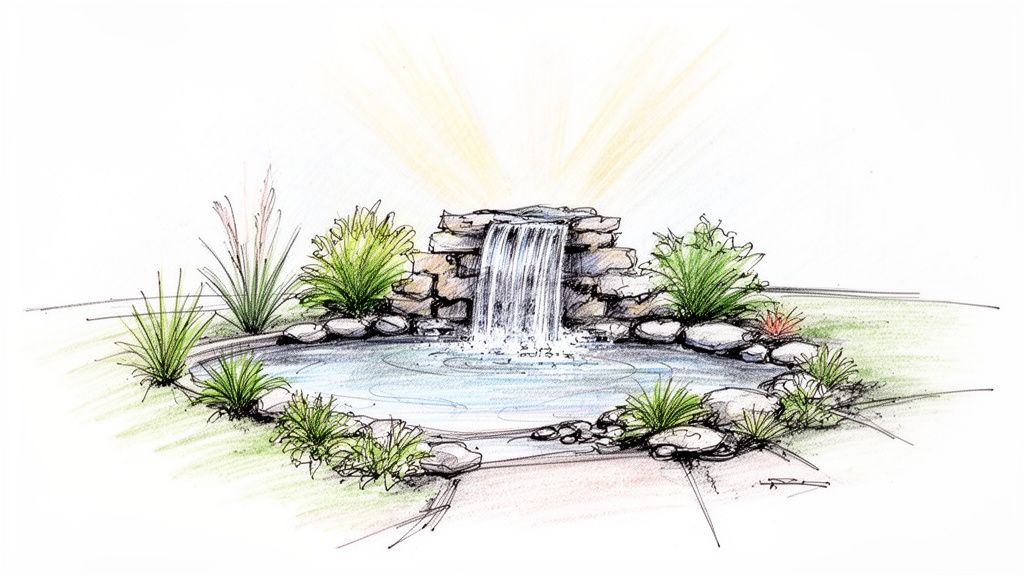
Integrating a water feature introduces a dynamic sensory experience to your front yard, combining soothing sounds, captivating movement, and a stunning visual focal point. This is one of the most transformative front yard landscaping design ideas because it appeals to multiple senses and can attract wildlife like birds and butterflies. From a simple, bubbling urn to a cascading pondless waterfall, a water element adds a touch of tranquility and luxury, instantly elevating your home's curb appeal and creating a more serene atmosphere.
Key Elements of This Design
The core of this design is the feature itself, supported by plants and hardscaping that complement its style. Whether you choose a formal tiered fountain for a traditional home or a sleek, minimalist water wall for a modern one, the goal is to create a harmonious composition where the water element feels like a natural part of the landscape.
What to Plant: Surround your feature with water-loving or moisture-tolerant plants. Consider Japanese Iris (Iris ensata), Dwarf Cattail (Typha minima), or Creeping Jenny (Lysimachia nummularia) for ground cover. Ornamental grasses like Japanese Forest Grass (Hakonechloa macra) add soft texture and movement.
Hardscape Suggestions: Use natural stone boulders and river rock to create an organic-looking waterfall or stream bed. A formal fountain can be placed in a bed of decorative gravel or surrounded by a brick or paver patio to define its space. Add subtle landscape lighting to highlight the moving water at night.
Visualize It Before You Build
The scale and placement of a water feature are critical. A fountain that's too large can overwhelm a small yard, while one that's too small will get lost. You can apply AI Landscape Design by uploading a photo of your own yard to virtually place different styles of fountains or waterfalls. Test a tiered fountain near your entryway or a pondless waterfall in a garden bed, adjusting the size and position to see what looks best from the street and your windows before any installation begins.
Seasonal Care: Maintenance involves regularly checking water levels, cleaning out debris like leaves, and cleaning the pump filter. In colder climates, you may need to winterize your feature by draining it and removing the pump.
Estimated Cost: $20 - $75+ per square foot. A simple self-contained fountain can be a few hundred dollars, while a custom pond or waterfall system can be several thousand.
DIY or Contractor? Small, self-contained fountains are easy DIY projects. Complex systems with plumbing, electrical work, and significant excavation should be handled by a professional landscaper.
8. Layered Lighting Design for Evening Impact
A well-executed lighting plan transforms your front yard after sunset, boosting curb appeal, improving safety, and creating an enchanting atmosphere. Layered lighting is one of the most transformative front yard landscaping design ideas because it uses multiple light sources at different heights and intensities to create depth, drama, and visual interest. Instead of a single, harsh floodlight, this strategy combines ambient, task, and accent lighting to highlight your home’s architecture and landscape features, extending its beauty into the evening hours.
Key Elements of This Design
This design approach focuses on creating a visually cohesive and functional nighttime scene. By layering different types of light, you can guide visitors, draw attention to beautiful plants, and create a warm, welcoming ambiance that deters intruders. The goal is to paint with light, revealing textures and forms that are not visible during the day.
What to Light: Use uplighting to create dramatic silhouettes of statement trees like Oaks or Crepe Myrtles. Install path lights along walkways and driveways for safe navigation. Use spotlights to graze stone veneer or highlight architectural details. Small wash lights can softly illuminate flower beds.
Fixture Suggestions: Choose a mix of fixtures. Bronze or black low-voltage LED path lights offer a classic look. In-ground well lights are perfect for uplighting trees without creating a trip hazard. Wall-mounted sconces can flank a garage or front door for ambient light, while discreet spotlights accent specific features.
Visualize It Before You Build
Visualizing how light will interact with your landscape at night is notoriously difficult. The angle, brightness, and color temperature of each fixture dramatically alter the final effect. To solve this, apply AI Landscape Design using a photo of your own yard. You can add various virtual lighting fixtures and simulate lighting effects from dusk to dawn, helping you see where shadows will fall and how different layers of light will combine. This prevents costly mistakes and ensures a balanced, professional-looking result.
Seasonal Care: Clean fixtures and lenses twice a year to ensure maximum brightness. Check for and replace any burned-out bulbs promptly. Trim back any plant growth that may be obstructing the light beams.
Estimated Cost: $20 - $60 per linear foot for professionally installed systems. High-quality DIY kits can reduce costs, but complex wiring is best left to an electrician.
DIY or Contractor? Low-voltage lighting systems are often DIY-friendly. However, for a complex, multi-layered design or any 120-volt connections, hiring a professional landscape lighting designer or licensed electrician is highly recommended for safety and optimal results.
9. Front Yard Border and Edging with Raised Beds
Defining your front yard with clear borders and raised planting beds is a powerful way to create structure, visual interest, and a polished look. This approach is one of the most versatile front yard landscaping design ideas because it adds dimension and organization to any space. Raised beds improve drainage, allow you to use customized soil for specific plants, and create a crisp separation between lawns, walkways, and garden areas. This design is highly adaptable, working equally well for modern, cottage, and traditional home styles.
Key Elements of This Design
This style is all about creating intentional, well-defined zones. The material you choose for your borders and beds becomes a key design element, tying the landscape back to your home’s architecture. These structures can be geometric and linear for a modern feel or soft and curved for a more traditional or cottage aesthetic.
What to Plant: The controlled environment of a raised bed is perfect for layered plantings. Use taller perennials like Coneflower (Echinacea) or Salvia in the back, mid-height plants like Coral Bells (Heuchera) in the middle, and spilling ground covers like Creeping Thyme (Thymus serpyllum) along the edges. Boxwoods (Buxus) can provide formal, evergreen structure.
Hardscape Suggestions: Match the edging material to your home. Use Corten steel or composite boards for a contemporary look. Natural stone or traditional bricks work beautifully for classic or rustic homes. For cottage styles, consider simple wooden raised beds.
Visualize It Before You Build
The placement, size, and material of raised beds can dramatically alter your home's curb appeal. Visualizing these structures in your space is essential to ensure they complement your existing layout and architecture rather than overwhelming it. By using an AI Landscape Design tool with a photo of your own yard, you can virtually place raised beds and borders. Experiment with materials like stone, wood, or metal, and test layouts to see which design best organizes your space.
Seasonal Care: Maintenance involves annual mulching, weeding (which is easier at a raised height), and checking the integrity of the border material. Amend the soil in the beds every few years to replenish nutrients.
Estimated Cost: $10 - $45 per linear foot for edging, and $20 - $60 per square foot for installed raised beds, depending on material choice.
DIY or Contractor? Simple wood or modular block beds are great DIY projects. For more complex designs involving mortared stone or custom metalwork, a contractor is recommended for a durable, professional finish.
10. Front Yard Garden Arbors, Pergolas, and Trellises
Adding vertical architectural elements like arbors, pergolas, and trellises is one of the most transformative front yard landscaping design ideas for creating height, structure, and charm. These features draw the eye upward, provide a framework for beautiful climbing plants, and can define entryways or outdoor "rooms." A well-placed arbor over a walkway or a pergola shading a small seating area adds a sense of depth and purpose to your landscape, turning a flat yard into a multi-dimensional garden. This approach is perfect for adding character to any home style, from rustic cottage to modern farmhouse.
Key Elements of This Design
The success of this design lies in choosing the right structure and pairing it with appropriate plants to complement your home's architecture. An arbor can create an enchanting entrance, a trellis can soften a bare wall, and a pergola can establish a welcoming transition space. These elements become living focal points as plants grow and weave through them.
What to Plant: Classic choices include Climbing Roses (Rosa setigera) for a romantic look or Clematis for its stunning, vibrant blooms. For fragrant options, consider Jasmine (Jasminum) or Honeysuckle (Lonicera). Wisteria provides dramatic, drooping flowers but requires a very sturdy structure.
Hardscape Suggestions: The structure itself is the key hardscape. Options range from rustic cedar arbors and modern black metal pergolas to low-maintenance white vinyl trellises. Ensure the material and style match your home’s exterior, whether it's painted wood, stained cedar, or sleek metal.
Visualize It Before You Build
Positioning and scale are critical for vertical structures. An arbor that's too small can look lost, while one that's too large can overwhelm the house. It's essential to see how it will frame views and impact your home's curb appeal. You can apply AI Landscape Design with a photo of your own yard to place 3D models of arbors, pergolas, and trellises. Test various styles, materials, and sizes to find the perfect fit and ensure it frames your entryway exactly as you envision.
Seasonal Care: Maintenance involves training and pruning climbing plants to encourage healthy growth and prevent them from becoming overgrown. Check the structure annually for stability, especially wooden ones, and re-stain or paint as needed.
Estimated Cost: $300 - $5,000+, depending on the structure's size, material (vinyl vs. custom cedar), and installation complexity.
DIY or Contractor? Assembling a pre-fabricated arbor or trellis kit is a manageable DIY project. For larger, custom-built pergolas or structures requiring deep footings, hiring a contractor is recommended for safety and longevity.
10 Front Yard Landscaping Designs Comparison
Style | 🔄 Implementation Complexity | ⚡ Resource Requirements | ⭐ Expected Outcomes | 📊 Ideal Use Cases | 💡 Key Tips |
|---|---|---|---|---|---|
Modern Minimalist Front Yard with Clean Lines | Moderate → high (precise hardscape & layout) | Moderate materials (pavers/gravel) + skilled install; low ongoing water | High curb appeal, timeless modern look | Urban and modern homes, small yards | Use 2–3 statement plants, test paver layouts with AI Design |
Native Plant Front Yard Landscape | Moderate (site research, establishment time) | Low long‑term water & inputs; moderate initial plant cost | Strong ecological benefits, low maintenance long‑term | Drought regions, sustainability-focused properties | Consult local native plant society; visualize with AI on your yard photo |
Front Yard Rock and Stone Garden Design | Moderate (heavy materials, careful placement) | High material/hauling cost; low water & maintenance | Durable, low‑water, textural aesthetic | Xeriscapes, sloped or mountain‑style yards | Layer rocks largest→smallest; use AI to test rock colors |
Curved Planting Beds with Layered Textures | Moderate (planning for mature sizes & sequencing) | Moderate plant diversity & soil prep; seasonal upkeep | Rich seasonal texture, visual depth, forgiving style | Cottage, perennial borders, existing landscapes | Space for mature size, use odd numbers, visualize layers with AI |
Hardscape‑Focused Design with Paver Patios and Pathways | High (base prep, grading; professional install advised) | High upfront materials & labor; durable long‑term | Increased usable space, improved drainage, strong curb appeal | Entertainment yards, heavy foot traffic, formal entries | Use permeable pavers, proper base prep, use AI to test patterns |
Statement Trees and Specimen Plants for Focal Points | Low–moderate (species selection & planting logistics) | Moderate initial cost; watering during establishment | Strong vertical focal point, year‑round structure, shade | Small yards, entry framing, architectural accents | Select zone‑appropriate species; visualize 10-year growth with AI |
Water Features and Fountain Landscapes | High (pump/electrical/plumbing; possible permits) | High installation & ongoing maintenance; energy/water needs | High sensory appeal, attracts wildlife, masks noise | Formal entrances, urban sites needing ambiance/noise masking | Ensure power access, pick correct pump size, use AI to check scale |
Layered Lighting Design for Evening Impact | Moderate (electrical planning, placement, controls) | Moderate equipment & install; low energy with LEDs | Dramatic evening curb appeal, improved safety & usability | Homes wanting night‑time presentation or security | Layer background/mid/foreground lights; simulate night effects with AI |
Front Yard Border and Edging with Raised Beds | Low–moderate (build beds, soil fill) | Moderate material & soil costs; one‑time labor | Improved drainage, organized appearance, easier maintenance | Poor soil sites, accessible gardening, structured designs | Use quality soil blends, 8–12"+ bed heights, visualize materials with AI |
Front Yard Garden Arbors, Pergolas, and Trellises | Moderate–high (structural install and plant training) | Moderate material cost; ongoing pruning/training time | Adds height, framed entries, vertical seasonal interest | Entryways, vertical gardens, small yards needing height | Choose sturdy materials, select climate‑appropriate vines, test placement with AI |
From Idea to Reality: Your Dream Front Yard Awaits
We've explored a diverse collection of ten distinct front yard landscaping design ideas, moving from the sleek sophistication of modern minimalism to the organic beauty of native plant gardens. You've seen how hardscape elements like stone pathways create structure, how layered lighting adds drama after dusk, and how a single statement tree can become a living sculpture. Each concept offers a unique pathway to transforming your home's exterior and boosting its curb appeal.
The true value of these ideas lies not in their individual merit, but in their potential to be adapted, combined, and personalized to your unique property. Your front yard is a blank canvas, and the concepts we've discussed are your palette of colors and textures. Whether you were drawn to the gentle curves of layered planting beds or the architectural elegance of a garden pergola, the ultimate goal is the same: to create a space that reflects your personal style and welcomes you home every single day.
Synthesizing Inspiration into a Cohesive Plan
The most common hurdle homeowners face is bridging the gap between inspiration and implementation. It's easy to admire a photo of a lush, cottage-style garden or a zen-like rock garden, but it’s much harder to envision those elements in your own space. This is where many well-intentioned projects stall, caught between a wealth of ideas and the uncertainty of how they will actually look.
The key takeaway is this: successful landscape design is built on confident decision-making. Confidence doesn't come from guesswork; it comes from visualization. Before a single shovel hits the dirt, you should have a clear picture of the final result. This eliminates costly mistakes, streamlines the installation process, and ensures the finished project aligns perfectly with your original vision.
The Power of AI in Landscape Visualization
In the past, achieving this level of visualization required hiring expensive landscape architects to create complex renderings. Today, technology has democratized the design process. AI-powered tools like the DreamzAR AI Landscape Design app place the power of professional-grade visualization directly into your hands. Instead of trying to imagine how a Japanese Maple will look next to your porch, you can see it by applying AI Landscape Design to a photo of your own yard. Instead of guessing which paver color best complements your home's siding, you can test dozens of options in seconds.
This technological leap changes everything. You can take the concept of a "Native Plant Front Yard" and instantly populate your property's photo with local flora like Coneflowers, Switchgrass, and Butterfly Weed to see the exact combination and placement. Considering a "Hardscape-Focused Design"? Use an AI tool to lay out a virtual flagstone walkway, add a low retaining wall, and fill the surrounding beds with drought-tolerant succulents, all before making a single purchase. This ability to digitally "try on" different front yard landscaping design ideas removes the anxiety and uncertainty from the equation.
By leveraging AI, you are not just looking at ideas; you are actively designing. You are testing, iterating, and refining your vision in a risk-free digital environment. This ensures that when it comes time to hire a contractor or start your DIY project, you are working from a proven, visually-confirmed blueprint. Your dream front yard is no longer an abstract concept. It’s a tangible, achievable plan waiting to be brought to life.
Ready to stop dreaming and start designing? The DreamzAR AI Landscape Design app allows you to upload a photo of your own yard and instantly apply these landscaping ideas, experimenting with thousands of plants, materials, and layouts. See exactly how your new front yard will look before you begin, and turn your vision into a reality with confidence. Download DreamzAR AI Landscape Design today and create the curb appeal you've always wanted.