10 Cheap Landscaping Ideas for Backyard Transformations in 2026
Dreaming of a beautiful backyard retreat but worried about the cost? A stunning outdoor space doesn't have to come with a hefty price tag. With a bit of creativity, strategic planning, and smart material choices, you can create the backyard oasis you've always wanted without breaking the bank. This guide is designed to provide actionable and cheap landscaping ideas for backyard makeovers that deliver maximum impact for a minimal investment. We’ll cover everything from simple DIY projects like creating a pollinator garden to more structured additions. When planning your backyard transformation, exploring options like cost-effective timber decking can provide an excellent foundation for outdoor living spaces.
This roundup explores ten practical concepts, complete with cost estimates, material lists, and step-by-step implementation tips. We will cover everything from laying a paver patio and using reclaimed materials to building budget-friendly fire pits and shade structures. Crucially, we'll also show you how to use powerful AI Landscape Design to visualize your ideas using photos of your own yard before you even pick up a shovel. This modern approach removes the guesswork, ensuring your efforts and budget are well-spent. Let's dig in and turn your affordable backyard dreams into a beautiful, tangible reality.
1. Mulch and Ground Cover Landscaping
One of the most effective and cheap landscaping ideas for a backyard is leveraging mulch and ground cover. This foundational technique instantly adds structure, color, and texture to bare or unruly spaces. It involves spreading a layer of organic or inorganic material, such as wood chips, pine straw, or gravel, over the soil to define garden beds, create pathways, and suppress weeds. The result is a clean, polished look that dramatically reduces long-term maintenance needs.
Quick Implementation Guide
Estimated Cost: $2-$7 per bag (covering ~8 sq. ft.), or $30-$100 per cubic yard for bulk delivery.
Materials/Tools: Mulch, landscape fabric (optional), garden rake, shovel, wheelbarrow, landscape edging.
DIY Steps: 1. Clear the designated area of weeds and grass. 2. Lay down landscape fabric for superior, long-term weed control. 3. Install edging (like simple plastic, metal, or paver stones) to create a crisp border and contain the mulch. 4. Spread the mulch evenly to a depth of 2-3 inches, keeping it away from direct contact with plant stems.
Smart Choices and Pro Tips
For a modern aesthetic, opt for dark brown or black mulch, which makes green foliage pop. For a more natural or rustic feel, choose cedar or pine bark. Beyond aesthetics, mulch conserves soil moisture, reducing your watering bill. Before you commit, apply AI Landscape Design to visualize your ideas using photos of your own yard. This allows you to see how different mulch colors and textures will look against your home’s exterior, preventing costly mistakes. To ensure you buy the right amount, use a mulch calculator to accurately estimate your needs.
2. DIY Paver Patio or Walkway
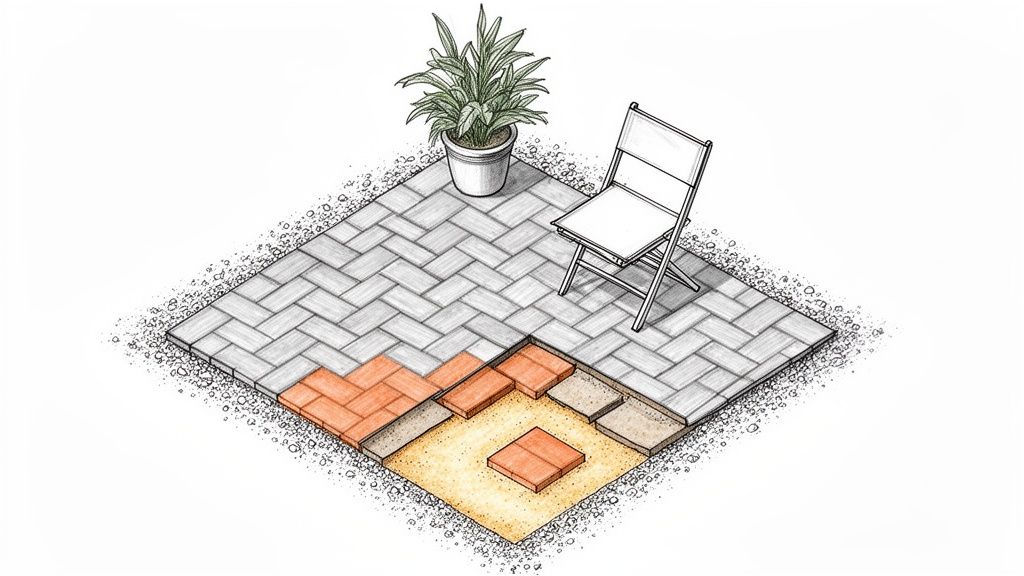
Building your own paver patio or walkway is a fantastic cheap landscaping idea for your backyard that adds immense functional value. This hardscaping project creates a defined, durable surface for outdoor dining, entertaining, or simply relaxing. By handling the labor yourself and choosing affordable materials like interlocking concrete pavers or recycled bricks, you can install a professional-looking hardscape for a fraction of the cost of hiring a contractor.
Quick Implementation Guide
Estimated Cost: $4-$12 per square foot, depending on paver choice and base material depth.
Materials/Tools: Pavers, gravel base, paver sand, landscape fabric, shovel, wheelbarrow, tamper or plate compactor (rentable), level, rubber mallet, polymeric sand.
DIY Steps: 1. Excavate the area 6-8 inches deep and ensure proper slope for drainage (about 1/8 inch per foot). 2. Compact the soil, lay down landscape fabric, and add a 4-6 inch layer of compacted gravel base. 3. Add a 1-inch layer of paver sand and screed it to create a perfectly level surface. 4. Lay the pavers in your desired pattern, tapping them into place with a rubber mallet. 5. Sweep polymeric sand into the joints and lightly mist with water to activate and harden it.
Smart Choices and Pro Tips
Start with a manageable size, like an 8x10 foot patio, before tackling a larger project. Renting a plate compactor is crucial for ensuring a stable, long-lasting base that won't shift. Before buying materials, apply AI Landscape Design to visualize your ideas using photos of your own yard. This helps you confidently choose a design that complements your home's style by testing different paver patterns, shapes, and colors right in your backyard. For a complete guide on designing your perfect outdoor space, explore these versatile patio ideas to inspire your project.
3. Native Plant and Pollinator Gardens
Creating a garden with native plants and pollinator-friendly species is one of the most sustainable and cheap landscaping ideas for a backyard. This eco-conscious approach involves choosing plants that naturally thrive in your local climate, which dramatically cuts down on water, fertilizer, and pest control costs. The result is a vibrant, low-maintenance garden that supports local wildlife like bees and butterflies, adding life and movement to your outdoor space.
Quick Implementation Guide
Estimated Cost: $3-$15 per plant (plugs are cheapest), or free if starting from seeds.
Materials/Tools: Native plants/seeds, compost or soil amendment, shovel, garden trowel, watering can.
DIY Steps: 1. Identify your region's native species by contacting a local Native Plant Society or university extension office. 2. Prepare garden beds by clearing weeds and amending the soil with compost for a healthy start. 3. Arrange plants according to their mature size and light requirements (sun-loving vs. shade-tolerant). 4. Plant your new additions, water them thoroughly, and apply a light layer of natural mulch to retain moisture.
Smart Choices and Pro Tips
For maximum impact, start with 3-5 hardy native species like Coneflower, Black-Eyed Susan, or Milkweed, and expand your garden over time. Group plants with similar water needs together to make irrigation more efficient. A great way to plan is to apply AI Landscape Design to visualize your ideas using photos of your own yard. See how different native plant arrangements, blooming cycles, and foliage textures will complement each other before you plant. To save even more, collect seeds from existing native plants at the end of the season for free propagation next year. Discover more beautiful layouts and plant combinations by exploring these pollinator garden ideas.
4. Recycled and Reclaimed Material Landscaping
One of the most resourceful and cheap landscaping ideas for a backyard involves using recycled and reclaimed materials. This sustainable approach transforms salvaged items like old bricks, reclaimed wood, or discarded stone into unique and character-filled garden features. By sourcing materials from salvage yards, online marketplaces, or even local renovation sites, you can build beautiful hardscaping elements like pathways, garden beds, and retaining walls for a fraction of the cost of new materials.
Quick Implementation Guide
Estimated Cost: $0-$50 for free finds, or significantly reduced prices from salvage yards.
Materials/Tools: Reclaimed materials (bricks, wood, stone), shovel, wheelbarrow, level, cleaning brushes, safety gear.
DIY Steps: 1. Source your materials from places like Craigslist, Facebook Marketplace, or local 'Buy Nothing' groups. 2. Thoroughly inspect and clean all materials, removing nails, dirt, and debris. 3. Plan your project based on the materials you acquired. For example, use broken concrete chunks (urbanite) to create a rustic patio. 4. Install your feature, such as laying a brick pathway on a sand base or building a raised garden bed from reclaimed lumber.
Smart Choices and Pro Tips
For a charming heritage look, build a winding pathway from mismatched, salvaged bricks. For a rustic vibe, create raised planters from untreated pallet wood. Always avoid older pressure-treated wood which may contain arsenic. Before you start building, apply AI Landscape Design to visualize your ideas using photos of your own yard. This lets you see how that reclaimed brick path or urbanite patio will integrate with your existing space, ensuring the final look is cohesive and intentional. This planning step is crucial when working with unique, one-of-a-kind materials.
5. Container and Vertical Gardening
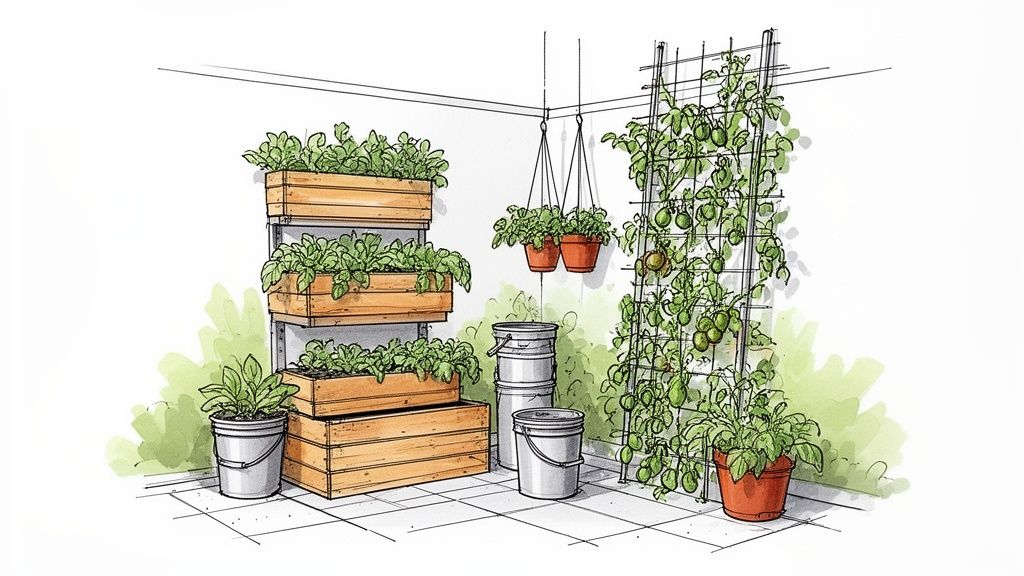
For those with limited space or a desire for flexible design, container and vertical gardening is one of the most versatile and cheap landscaping ideas for a backyard. This method involves growing plants in pots, raised planters, and upright structures to create lush, dynamic displays without extensive digging. It's an ideal solution for patios, balconies, or small yards, allowing you to easily introduce color, grow herbs, or even cultivate a vegetable garden in a compact footprint.
Quick Implementation Guide
Estimated Cost: $5-$50+ per container; vertical systems range from $30 DIY projects to $200+ for kits.
Materials/Tools: Containers (pots, window boxes, hanging baskets), potting mix, plants or seeds, small trowel, watering can.
DIY Steps: 1. Select containers that have drainage holes to prevent root rot. 2. Fill containers with a high-quality potting mix formulated for container gardening. 3. Arrange your chosen plants in the containers, considering their mature size and light requirements. 4. Position the containers in your desired location, grouping them for visual impact and easier watering. 5. For vertical gardens, securely mount your structure or pallet to a wall or fence before planting.
Smart Choices and Pro Tips
To keep costs down, get creative with repurposed containers like old buckets, wooden crates, or thrift store finds. Mix various container sizes, colors, and textures to create a visually interesting, layered look. A key benefit of this approach is control; you can provide the perfect soil for specific plants, like acidic soil for blueberries. Before you buy a dozen pots, apply AI Landscape Design to visualize your ideas using photos of your own yard. Visualize different container arrangements, color schemes, and plant combinations to perfect your layout and ensure the final design feels cohesive and intentional. This prevents overbuying and helps you create a professional-looking space.
6. Lawn Alternatives and No-Mow Landscaping
One of the most impactful cheap landscaping ideas for a backyard involves rethinking the traditional turf grass lawn. Embracing lawn alternatives like clover, hardy groundcovers, or even targeted artificial turf patches can dramatically slash long-term costs associated with mowing, watering, and fertilizing. This "no-mow" approach not only saves time and money but also creates a unique, ecologically friendly landscape that supports pollinators and conserves water, offering a sustainable and visually interesting alternative to a uniform green carpet.
Quick Implementation Guide
Estimated Cost: $15-$30 for a bag of clover seed (covers ~5,000 sq. ft.), or $1-$5 per plant for groundcover plugs.
Materials/Tools: Rake, seed spreader (for clover), garden trowel (for plugs), watering can or hose.
DIY Steps: 1. Decide on your alternative. White clover can be easily overseeded into an existing lawn for a gradual transition. 2. For a full replacement, remove the existing grass by solarizing it with plastic sheeting or using a sod cutter. 3. Prepare the soil by raking it smooth and removing debris. 4. Spread seeds or plant groundcover plugs according to package directions, ensuring good soil contact. 5. Water regularly until the new plants are well-established.
Smart Choices and Pro Tips
For a soft, green, and drought-tolerant lawn, white clover is an excellent budget-friendly choice that also fixes nitrogen in the soil. In shady areas where grass struggles, consider native groundcovers like wild ginger or moss. Before committing, check your HOA regulations to ensure lawn alternatives are permitted. To visualize the transformation and avoid an outcome you dislike, apply AI Landscape Design to visualize your ideas using photos of your own yard. You can virtually replace your grass with different textures like clover, creeping thyme, or even a section of artificial turf to see what best complements your home’s style.
7. Budget-Friendly Fire Pit and Seating Areas
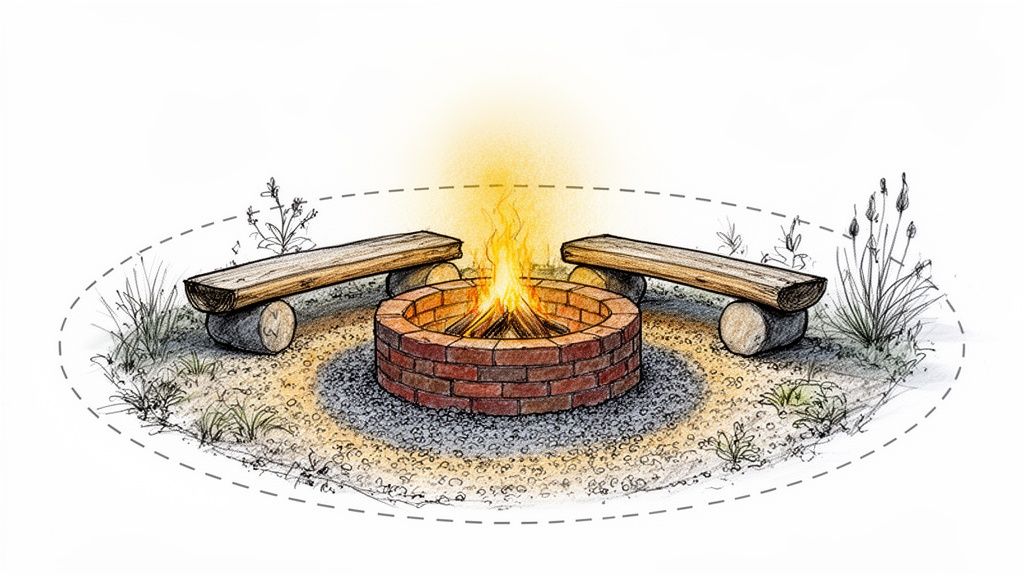
Transform a neglected corner of your yard into a cozy gathering spot with a DIY fire pit and seating area. This is one of the most impactful cheap landscaping ideas for a backyard because it creates a functional entertainment zone for a minimal investment. By using affordable materials like retaining wall blocks, reclaimed wood, or natural stones, you can build an intimate space for year-round enjoyment, perfect for everything from roasting marshmallows to quiet evenings outdoors.
Quick Implementation Guide
Estimated Cost: $75-$300 for a basic DIY setup.
Materials/Tools: Retaining wall blocks or stones, metal fire pit ring (optional), gravel or sand, shovel, level, tape measure.
DIY Steps: 1. Check local fire codes and regulations before starting. 2. Choose a level spot at least 10 feet away from any structures or flammable materials. 3. Mark your circle, dig out a few inches of sod, and fill the base with gravel for drainage. 4. Stack your stones or blocks in a circle, typically 3-4 layers high, ensuring the structure is stable. 5. Place seating, like log benches or simple Adirondack chairs, around the fire pit.
Smart Choices and Pro Tips
For the simplest and safest installation, use a metal fire pit ring insert, which provides structural integrity. Create rustic, no-cost seating with large logs or build simple benches from reclaimed wood. For those looking to build their own fire pit, exploring options like DIY fire pit kits with spark ignition can simplify the construction process and help manage costs. Before you start digging, apply AI Landscape Design to visualize your ideas using photos of your own yard. This visualization tool helps you test different locations, sizes, and seating arrangements to perfectly integrate the new feature into your existing layout and explore more fire pit landscaping ideas for inspiration.
8. Simple Shade Structures and Pergolas
Adding vertical interest and functional shade is a fantastic, cheap landscaping idea for a backyard that elevates usability. Simple structures like DIY pergolas, arbors, or modern shade sails can define an outdoor living area, create a cooler retreat, and support beautiful climbing plants. These elements offer significant architectural impact without the cost of complex, custom-built installations, making a high-end look accessible on a budget.
Quick Implementation Guide
Estimated Cost: $100-$300 for shade sails; $400-$1,500+ for DIY or kit pergolas.
Materials/Tools: Pressure-treated lumber (4x4 posts, 2x6 beams), post-hole digger, level, drill, lag bolts, concrete mix. For shade sails: sail, mounting hardware, and sturdy anchor points.
DIY Steps: 1. Select a strategic location that needs afternoon shade. 2. Set your posts securely in concrete, ensuring they are perfectly plumb and level with each other. 3. Attach the main support beams and cross-rafters according to your design or kit instructions. 4. For shade sails, securely install anchor hardware to your house, trees, or dedicated posts, then attach and tension the sail.
Smart Choices and Pro Tips
For a basic but effective pergola, use pressure-treated 4x4 posts and 2x6 beams to construct a simple 8x10 foot frame. This creates an instant focal point for a seating area. To add natural, inexpensive shade, plant fast-growing vines like clematis or climbing roses at the base. Before you build, apply AI Landscape Design to visualize your ideas using photos of your own yard. This allows you to visualize where a pergola would look best, experiment with different sizes, and see how climbing plants will mature over time, ensuring your investment enhances your space perfectly.
9. Water Features and Fountains
Adding a water feature is a surprisingly affordable way to introduce tranquility and elegance to your backyard. This cheap landscaping idea uses the sound and movement of water to create a relaxing atmosphere, mask unwanted noise, and attract wildlife. From simple birdbaths to self-contained fountains, these elements serve as captivating focal points without requiring extensive plumbing or a massive budget.
Quick Implementation Guide
Estimated Cost: $30-$100 for a simple birdbath; $100-$300 for a prefabricated electric or solar fountain.
Materials/Tools: Prefabricated fountain kit or birdbath, level, shovel, exterior-grade extension cord (if not solar).
DIY Steps: 1. Select a level location for your feature, ideally near a seating area and an electrical outlet if needed. 2. For fountains, assemble the kit according to the manufacturer’s instructions, connecting the pump. 3. Place the feature, ensure it is perfectly level, and fill it with water. 4. Plug in the pump (or ensure the solar panel is in direct sun) and enjoy the ambiance.
Smart Choices and Pro Tips
For the lowest cost and effort, a classic birdbath is a perfect starting point. If you want moving water, solar-powered fountains are an excellent choice as they eliminate the need for wiring. To keep water clear naturally, add a few aquatic plants like water hyacinth. Before you buy, it’s crucial to visualize the scale. Apply AI Landscape Design to visualize your ideas using photos of your own yard. This helps you virtually place different fountain styles and sizes in your yard to choose a feature that complements your space rather than overwhelming it, ensuring your investment enhances your backyard's overall design.
10. Smart Budget Landscaping, Lighting, and AI Visualization
Combining affordable outdoor lighting with modern AI visualization tools is one of the smartest cheap landscaping ideas for a backyard. This approach allows you to plan, preview, and perfect your design before spending a dollar, ensuring every element has maximum impact. By using inexpensive solar or LED lights to enhance features and an AI app to generate and visualize layouts, you can avoid costly mistakes and create a high-end look on a minimal budget. It extends your outdoor living hours and highlights your best landscape features after dark.
Quick Implementation Guide
Estimated Cost: Solar stake lights ($2-$5 each), LED string lights ($15-$50 per strand), AI app subscription (often free or low-cost options available).
Materials/Tools: Solar/LED lights, smartphone or tablet with an AI landscape design app.
DIY Steps: 1. Take clear, well-lit photos of your backyard from several different angles. 2. Upload the photos to an AI landscape design app to generate dozens of design variations. 3. Filter and save your favorite concepts, focusing on layouts that work with your space and budget. 4. Use the app’s visualization features to virtually place lights and other elements in your yard, seeing how they look in real-time.
Smart Choices and Pro Tips
For a truly customized and cheap landscaping idea for your backyard, layer different types of lighting. Use solar stake lights to define pathways and garden beds, and hang string lights over a patio for a warm, inviting ambiance. To get the best results from AI, use high-quality photos. Apply AI Landscape Design to visualize your ideas using photos of your own yard to simulate different lighting placements and nighttime effects. This lets you experiment with uplighting behind a tree or backlighting a planter before you even buy the fixtures, ensuring your budget is spent on what truly works.
10 Budget Backyard Landscaping Ideas — Side-by-Side Comparison
Item | Implementation Complexity 🔄 | Resource Requirements 💡 | Expected Outcomes 📊 | Ideal Use Cases ⚡ | Key Advantages ⭐ |
|---|---|---|---|---|---|
Mulch and Ground Cover Landscaping | Low — quick DIY (2–4 hrs) | Low — mulch, rake, optional fabric; $20–100+ | Instant bed definition; weed suppression; moisture retention | Define beds, budget refresh, preview layouts | Extremely affordable; low maintenance; soil benefits |
DIY Paver Patio or Walkway | Medium — base prep, compaction (2–3 days) | Moderate — pavers, sand, compactor; $2–8/ft² | Durable, usable outdoor surface; adds value | Patios, walkways, phased hardscape projects | Repairable, modular, DIY-friendly |
Native Plant and Pollinator Gardens | Medium — research + planting; establishment 1–2 yrs | Low–Moderate — plugs/seeds; $0.50–2 each; specialty sourcing | Lower water/fertilizer needs; supports biodiversity long-term | Wildlife gardens, low-water yards, ecological restoration | Low maintenance once established; water savings; habitat support |
Recycled and Reclaimed Material Landscaping | Variable — sourcing + adaptation; skill to fit pieces | Low cost materials often free; time for sourcing, transport | Unique character; sustainable reuse; budget savings | Raised beds, borders, rustic hardscape accents | Very low material cost; one-of-a-kind aesthetics; eco-friendly |
Container and Vertical Gardening | Low — quick setup (1–2 hrs); seasonal updates | Low — containers, potting mix, plants; $5–50 per setup | Fast visual impact; space-efficient production | Renters, patios, small yards, testing plant combos | Mobile, flexible, accessible for small spaces |
Lawn Alternatives and No‑Mow Landscaping | Low–Medium — seeding or turf install; HOA checks | Varies — clover seed inexpensive; artificial turf high upfront | Dramatically reduced mowing/watering; distinct look | Water-saving yards, allergy reduction, low-maintenance sites | Big savings on water and maintenance; eco-friendly |
Budget-Friendly Fire Pit and Seating Areas | Low–Medium — basic build 4–8 hrs; safety checks | Low — metal ring or pavers; $50–300 DIY; seating extra | Gathering focal point; extends outdoor use | Entertaining areas, small backyards, social hubs | High impact for low cost; easy to customize |
Simple Shade Structures and Pergolas | Medium — carpentry skills; 2–4 days DIY | Moderate — lumber or kit; $200–500 DIY; tools required | Shaded outdoor room; architectural definition | Creating outdoor rooms, supporting vines, seating zones | Adds usable space and curb appeal; modular expansion |
Water Features and Fountains | Low–Medium — fountains hours; ponds more complex | Moderate — pump, electrical or solar; $30–2,000 | Soothing sound, wildlife attraction, focal point | Seating areas, meditation spots, small gardens | Enhances ambiance; attracts wildlife; movable if prefab |
Smart Budget Landscaping, Lighting & AI Visualization | Low — lighting install 2–4 hrs; AI design minutes | Low–Moderate — solar/LED lights $50–300; AI tools free→premium | Extends evening use; accurate cost estimates; multiple design options | Planning, lighting upgrades, budget optimization | Visualization/AR previews, cost estimation, rapid iteration |
Bringing Your Budget-Friendly Backyard to Life
Creating a beautiful and functional backyard doesn't require an extravagant budget. As we've explored, the path to an amazing outdoor oasis is paved with creativity, strategic planning, and a willingness to embrace DIY projects. The collection of cheap landscaping ideas for backyard transformations in this guide proves that with smart choices, anyone can cultivate a space that is both stunning and affordable. From the rich texture of mulch and ground cover to the rustic charm of a DIY fire pit, the power to enhance your property is firmly within your grasp.
The common thread connecting all these successful projects is not just thriftiness, but thoughtful execution. A well-placed paver walkway, a thriving native plant garden, or an innovative vertical planter can dramatically elevate your yard's appeal for a fraction of the cost of a professional overhaul. These projects empower you to infuse your personal style into your landscape, turning a generic patch of grass into a true extension of your home.
The Modern Blueprint for Budget Landscaping
The most significant takeaway is the immense value of confident planning. Before you lift a shovel or purchase a single plant, the most crucial step is visualization. This is where modern technology becomes your most powerful landscaping tool. Instead of trying to imagine how a new patio or pollinator garden will look, you can see it with perfect clarity.
Leveraging AI Landscape Design is no longer a futuristic concept; it's a practical necessity for budget-conscious homeowners. By applying AI Landscape Design to visualize your ideas using photos of your own yard, you can:
Test materials virtually: See how different mulch colors, paver styles, or ground covers complement your home's exterior.
Finalize layouts with confidence: Experiment with the placement and scale of a fire pit, seating area, or simple pergola without any physical commitment.
Visualize plant arrangements: Mock up a container garden or see how native grasses will look along your fence line before you buy them.
This digital-first approach eliminates expensive guesswork and prevents the kind of DIY mistakes that can derail a project and inflate its cost. It transforms your plan from an abstract idea into a concrete, visual blueprint, ensuring every dollar and every hour of your effort is invested wisely. Your dream backyard is closer and more affordable than you've ever imagined, waiting for you to bring it to life.
Ready to stop guessing and start designing? Visualize any of these cheap landscaping ideas for backyard projects in your own yard by applying AI Landscape Design. Use photos of your yard to see your dream landscape become a reality before you even break ground.