10 Brilliant Backyard Privacy Screening Ideas for Your Yard in 2026
Your backyard should be a private retreat, a personal sanctuary where you can relax and unwind without feeling the eyes of neighbors or passersby. However, for many homeowners, close-proximity housing, busy streets, or an undesirable view can shatter this sense of seclusion, turning a potential oasis into an exposed, uncomfortable space. The challenge is creating privacy without sacrificing style or building an imposing, unfriendly barrier.
This guide is designed to solve that exact problem. We will explore a curated collection of ten effective and aesthetically pleasing backyard privacy screening ideas, moving far beyond generic hedges and simple fences. You will discover practical solutions ranging from lush, living green walls and modern composite panels to fast-growing shrubs and elegant vine-covered pergolas. When reclaiming your backyard's seclusion, it's wise to consider the holistic approach of integrating structures and nature harmoniously into your landscape. Each idea is presented with actionable insights, covering key details like installation tips, height and density considerations, maintenance requirements, and crucial pros and cons.
More importantly, this listicle eliminates the guesswork and uncertainty that often accompanies a significant landscaping project. For every solution discussed, we will explain how you can use AI-powered landscape design tools, such as the DreamzAR app, to visualize the final result. By simply uploading a photo of your own yard, you can see exactly how a horizontal slatted fence or a row of bamboo would look in your space. This powerful preview capability ensures you invest your time and money with confidence, helping you select the perfect screen to transform your overlooked yard into the secluded haven you deserve.
1. Living Green Walls & Vertical Gardens
Living green walls and vertical gardens are sophisticated, space-saving solutions that transform a plain wall or fence into a lush, dense tapestry of foliage. Unlike a traditional hedge, these systems grow upwards, creating a natural privacy barrier perfect for modern backyards, patios, or urban balconies where ground space is at a premium. They consist of climbing vines on a trellis, modular planter panels, or stacked container systems, effectively blocking sightlines while softening hard architectural edges.
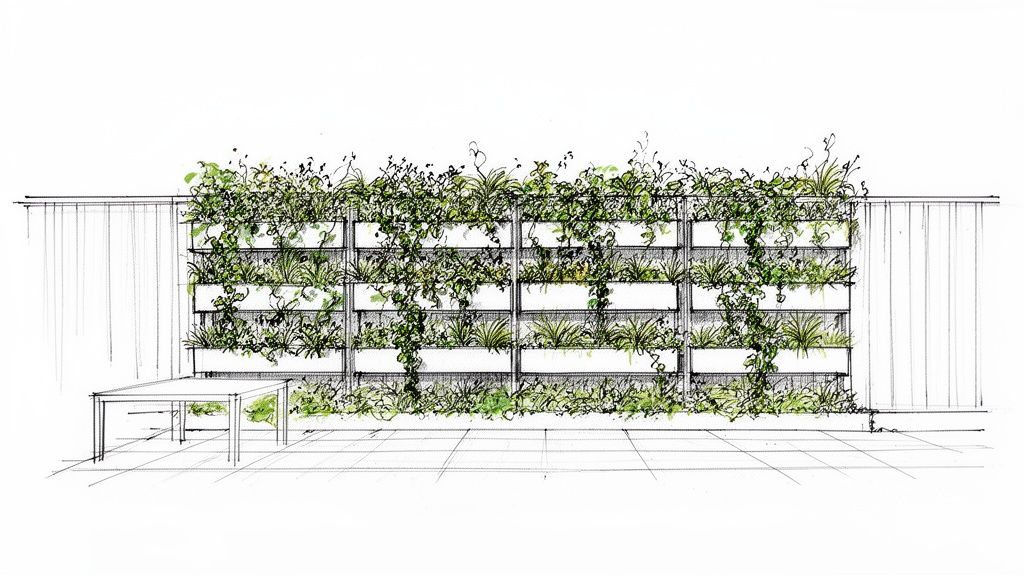
This method provides more than just visual seclusion; it also offers acoustic buffering, improves air quality, and creates a stunning focal point. For instance, high-end homes in dense urban areas like Los Angeles often feature modular green wall panels for instant, full-coverage privacy, while historic Toronto residences might use classic English Ivy (Hedera helix) on a wire trellis for a timeless look.
Implementation & Best Practices
To achieve a full and vibrant green wall, strategic planning is key. Consider these actionable tips for one of the most effective backyard privacy screening ideas:
Plant Selection: Choose plants suited to your climate and the wall’s sun exposure. Fast-growing climbers like clematis or climbing hydrangea can provide coverage within 2-3 seasons. For year-round privacy, select evergreen options or layer multiple plant types for continuous color and texture.
Irrigation is Crucial: Vertical gardens dry out quickly. Install a drip irrigation system with a timer during the initial setup to ensure consistent watering and dramatically reduce long-term maintenance.
Structural Support: Ensure your wall or fence can support the weight of the plants, soil, and irrigation system, especially once the plants are mature and wet.
Pro Tip: If you want privacy in the summer but more sunlight in the winter, opt for a deciduous vine like Virginia Creeper. Its leaves provide dense coverage in warm months and drop to let in light during the colder, darker season.
Visualize Before You Build with AI
Unsure how a full-scale green wall will look against your home? You can apply AI Landscape Design to visualize your ideas using photos of your own yard. Simply upload a picture to an AI tool like DreamzAR and use the app to overlay different vertical garden styles. This allows you to experiment with plant density, height, and textures, ensuring the living wall provides the exact level of privacy you need before you commit to the installation.
2. Horizontal Slatted Wood Fences & Privacy Screens
Horizontal slatted wood fences offer a distinctly modern and architectural approach to backyard privacy. Unlike traditional vertical fencing, this design uses boards installed horizontally, creating clean, linear lines that can make a space feel wider and more contemporary. The key advantage is adjustable privacy; by controlling the spacing between the slats, you can create anything from a solid, sight-proof barrier to a semi-transparent screen that allows light and air to filter through.
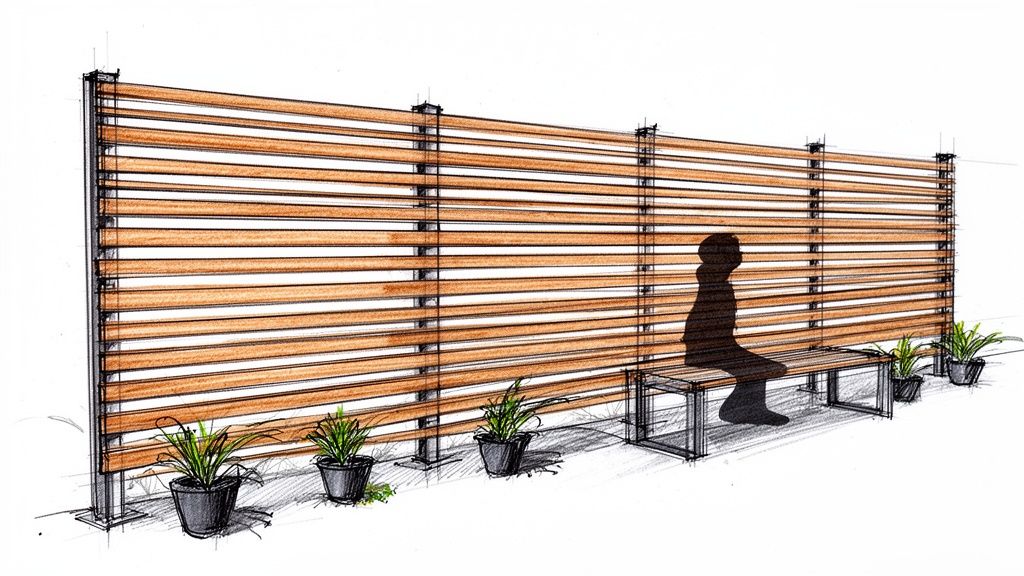
This style has become a hallmark of modern landscape design, seamlessly integrating with various architectural aesthetics. Pacific Northwest homes often use warm cedar slats for a naturalistic look, while California modern estates might pair sleek ipe wood screens with concrete and steel elements. As a prominent feature, this type of fence is a key component of your property's hardscape design and significantly impacts its overall curb appeal. Learn more about how hardscape elements define your outdoor space.
Implementation & Best Practices
Achieving a professional-looking and durable horizontal fence requires precision. Consider these tips for one of the most stylish backyard privacy screening ideas:
Material Selection: Choose materials based on your climate and desired maintenance level. Western Red Cedar offers natural resistance to rot and insects, while composite materials provide a zero-maintenance alternative that won't warp or fade.
Structural Integrity: Horizontal boards are more prone to sagging over time than vertical ones. Ensure posts are spaced no more than 6-8 feet apart and consider adding a vertical "stiffener" board in the center of each panel for extra support.
Control Your View: The gap between slats dictates your privacy level. A tight 1/4-inch gap provides near-total privacy, while a 1-inch gap offers a slatted view that breaks up sightlines without feeling like a solid wall.
Pro Tip: For a dynamic look, vary the slat widths within a single panel. For instance, alternating 3.5-inch and 5.5-inch boards creates a subtle rhythm and texture that elevates the design from a simple fence to an architectural feature.
Visualize Before You Build with AI
The spacing and color of a horizontal fence dramatically change a backyard's look and feel. You can apply AI Landscape Design to visualize your ideas using photos of your own yard. Upload a picture to an app like DreamzAR and use the tool to overlay different horizontal fence styles. You can instantly test cedar versus a dark composite, experiment with 1/2-inch versus 1-inch spacing, and see how the final structure will interact with your home and existing landscape before a single board is cut.
3. Bamboo Privacy Screens & Fencing
Bamboo is a fast-growing, sustainable screening solution that brings a touch of Zen and modern elegance to any outdoor space. It can be used as a living grove or in pre-fabricated fence panels, offering rapid growth rates and a natural aesthetic that creates a dense, effective privacy barrier. This method is particularly popular for Asian-inspired gardens, contemporary backyards, and eco-conscious homeowners seeking a renewable resource for their landscape design.
The versatility of bamboo makes it one of the most dynamic backyard privacy screening ideas. For instance, Southern California homes often pair slender bamboo groves with stainless steel panels for a sleek, modern look, while residential properties in Hawaii and Miami frequently use clumping bamboo to create lush, tropical screens that also provide a gentle, rustling sound in the wind.
Implementation & Best Practices
Controlling bamboo's vigorous growth is essential for a successful and low-maintenance privacy screen. Consider these actionable tips for implementing this natural barrier:
Choose the Right Type: Select clumping bamboo varieties like Fargesia or Bambusa. Unlike aggressive running types, clumping bamboo grows in a tight, contained habit, making it far easier to manage in residential settings.
Install a Rhizome Barrier: Even with clumping varieties, it's wise to install a high-density polyethylene (HDPE) barrier 24-30 inches deep around the planting area. This is a non-negotiable step for running bamboo to prevent it from spreading into your lawn or your neighbor's yard.
Spacing for Density: To create a solid wall of green quickly, space individual bamboo plants about 12-18 inches apart. This encourages the canes to grow into each other, forming an impenetrable screen within a few seasons.
Pro Tip: Thin out older, yellowing canes from your bamboo grove annually. This not only improves the aesthetic appearance but also encourages vigorous new growth and maintains healthy air circulation within the plant cluster.
Visualize Before You Build with AI
Bamboo grows tall and fast, and it can be difficult to predict its final scale. You can apply AI Landscape Design to visualize your ideas using photos of your own yard. Upload a picture of your property line to an app like DreamzAR to test different bamboo heights and densities. This helps you ensure the screen provides the desired privacy without overwhelming the space or casting unwanted shadows before you plant. You can learn more about creating a stunning bamboo garden and its design principles.
4. Composite & Metal Privacy Panels
Composite and metal privacy panels are engineered solutions that offer a sleek, contemporary alternative to traditional wood or vinyl fencing. These systems combine durable frames, often made of aluminum or steel, with infill materials like wood-plastic composite, vinyl, or decorative metal slats. The result is a highly durable, low-maintenance screen that provides excellent privacy with a clean, architectural aesthetic, making them a top choice for modern backyard designs.
This approach provides more than just a visual block; it creates a structured, resort-like feel with minimal upkeep. For example, high-end Miami residences often use louvered aluminum screens to control light and airflow, while modern San Francisco homes might feature composite panels from brands like Trex with integrated LED lighting for a dramatic evening effect. Their robust construction makes them one of the most long-lasting backyard privacy screening ideas available.
Implementation & Best Practices
Achieving a polished, professional look with these panels requires careful planning and installation. Consider these actionable tips for a successful project:
Soften with Greenery: The clean lines of metal or composite can feel stark. Plant ornamental grasses, bamboo, or even a climbing vine like ivy at the base of the panels to soften their appearance and integrate them into the landscape.
Mix Materials: Create visual interest by mixing panel styles. Alternate solid composite sections with panels that have laser-cut patterns or horizontal slats to break up the monotony of a long, uniform screen.
Foundation First: These panels are heavy and require a solid foundation. Ensure posts are set in concrete below the frost line for your region to prevent heaving and leaning over time, guaranteeing stability and longevity.
Pro Tip: For a truly dynamic effect, install translucent or perforated panels and place outdoor uplighting behind them. This technique turns the privacy screen into a dramatic, sculptural light feature in your garden at night.
Visualize Before You Build with AI
Wondering if a sleek metal screen will complement your home's brick exterior? You can apply AI Landscape Design to visualize your ideas using photos of your own yard. Upload a picture to a tool like DreamzAR and digitally place different panel styles and colors. This allows you to experiment with various designs, from solid panels to louvered screens, ensuring the final look provides the perfect blend of privacy and modern style for your space.
5. Hedging with Fast-Growing Shrub Varieties
A well-maintained hedge is a timeless and classic solution for backyard privacy, creating a dense, living wall that seamlessly blends with the natural landscape. Unlike static fences, hedges using fast-growing shrub varieties like Leyland cypress or privet can establish a substantial screen within just a few seasons. This method offers unparalleled flexibility in height, shape, and texture, providing year-round greenery and a solid barrier against noise and unwanted views.
This approach is highly effective and adaptable. For example, many Pacific Northwest homes use Leyland cypress for its rapid growth rate, often exceeding 24 inches per year, to quickly block sightlines from neighboring properties. In contrast, formal New England estates might use meticulously sheared privet hedges to define property lines and create an elegant, structured look. This method remains one of the most popular backyard privacy screening ideas because it combines natural beauty with functional seclusion.
Implementation & Best Practices
Establishing a dense, healthy hedge requires proper planning and care during its initial years. Follow these actionable tips for a successful living fence:
Choose the Right Variety: Select a fast-growing shrub that thrives in your USDA hardiness zone and matches your soil and sun conditions. Arborvitae, privet, and boxwood are all excellent choices.
Proper Spacing is Key: Plant young shrubs approximately 18-36 inches apart, depending on the species' mature width. This spacing encourages the plants to grow together into a thick, impenetrable screen.
Establish a Strong Root System: For the first two years, use a drip irrigation system to provide consistent moisture directly to the roots. Apply a layer of organic mulch around the base to retain water and suppress weeds.
Encourage Density with Pruning: Prune conservatively in the first year to allow the plant to establish. In years two and three, prune more aggressively to encourage dense, bushy growth from the bottom up, preventing a "leggy" appearance.
Pro Tip: For a more naturalistic look and increased resilience to pests and diseases, create a mixed hedge by blending several compatible shrub species. This technique, known as a "tapestry hedge," adds texture, color, and seasonal interest.
Visualize Before You Build with AI
Wondering how tall a 10-foot Leyland cypress hedge will look? You can apply AI Landscape Design to visualize your ideas using photos of your own yard. Upload a picture to an app like DreamzAR, and you can virtually place different types of hedges, adjusting their height and density to see the final result. This allows you to select the perfect shrub and plan your layout with confidence. You can also explore the extensive collections of plants and shrubs in the DreamzAR app to find the ideal variety for your privacy needs.
6. Mixed Border Plantings with Staggered Heights
Mixed border plantings offer a naturalistic, ecologically rich approach to privacy by layering different types of plants at staggered heights. This technique mimics a woodland edge, combining trees, shrubs, perennials, and groundcovers to create a dense, visually dynamic screen that evolves with the seasons. Instead of a single, uniform row of plants, this method builds a deep, textured barrier that effectively blocks sightlines, dampens noise, and provides a vibrant habitat for local wildlife.
This style of backyard privacy screening provides more than just a functional barrier; it creates a four-season garden with continuous interest. For example, a Pennsylvania woodland property might layer native river birch, serviceberry shrubs, and shade perennials to create a lush, private retreat. Similarly, California gardens often combine coast live oaks with manzanita and native sages for a water-wise, textured screen that feels integrated with the natural landscape.
Implementation & Best Practices
Creating a successful mixed border requires thoughtful planning to achieve a cohesive, multi-layered effect. Follow these actionable tips for one of the most beautiful and functional backyard privacy screening ideas:
Create Height Zones: Plan your border in at least three distinct layers: a tall canopy layer (trees), a mid-story layer (large shrubs or small ornamental trees), and an understory or ground layer (perennials, grasses, and groundcovers). This creates density from top to bottom.
Stagger Plant Placement: Avoid planting in straight lines. Instead, place plants in offset, triangular patterns to create a fuller, more natural appearance that blocks views more effectively as the plants mature.
Prioritize Native Plants: Select plants native to your region. They are adapted to your local climate and soil, require less maintenance and water once established, and provide crucial food and shelter for pollinators and birds.
Pro Tip: When spacing your plants, always use their mature width as your guide, not their size at the time of planting. It may look sparse initially, but this gives them the necessary room to grow in without becoming overcrowded, ensuring long-term health and privacy.
Visualize Before You Build with AI
A multi-layered border can be difficult to envision. You can apply AI Landscape Design to visualize your ideas using photos of your own yard. Upload a picture of your property line to an app like DreamzAR and experiment by layering various trees, shrubs, and perennials. This allows you to test different textures, heights, and seasonal color palettes, ensuring your mixed border provides the perfect blend of privacy and aesthetic appeal before you start digging.
7. Water Features & Water Walls for Privacy
Water features and sheer descent water walls introduce a dynamic, sensory layer to privacy screening that goes beyond static barriers. This sophisticated approach uses both visual and auditory elements to create seclusion. The movement and shimmer of falling water create a captivating focal point that draws the eye away from boundaries, while the gentle sound of a fountain or waterfall effectively masks neighborhood noise, such as traffic or conversation, creating a serene and private oasis.
This method elevates the backyard from a simple space to a multi-sensory retreat. For example, luxury estates in Beverly Hills often incorporate dramatic, floor-to-ceiling water walls as architectural privacy elements, while modern Miami homes might use rainfall features to create a tranquil curtain between a pool deck and a neighboring property. This technique provides privacy not just by blocking a view, but by completely transforming the atmosphere of the space.
Implementation & Best Practices
To successfully integrate a water feature as a privacy solution, focus on both its aesthetic placement and functional design. Consider these actionable tips for one of the most elegant backyard privacy screening ideas:
System Selection: Choose a recirculating system to conserve water. Materials like stainless steel, stone, or copper are durable and resist corrosion. Ensure the pump is sized correctly for your desired flow rate and sound level.
Layered Approach: Combine a water wall with a solid fence or a row of planters. The water feature provides auditory privacy and visual interest, while the physical barrier ensures complete visual blockage.
Strategic Lighting: Integrate uplighting or submersible color-changing LEDs into the design. This transforms the feature into a stunning visual element at night, enhancing its privacy effect after dark. Learn more about creating a harmonious aquatic garden on our blog.
Pro Tip: Position your water feature near a primary seating or entertainment area. This maximizes the ambient sound-masking benefits, ensuring conversations remain private and external noises are less intrusive during gatherings.
Visualize Before You Build with AI
A water feature is a significant investment. You can apply AI Landscape Design to visualize your ideas using photos of your own yard to ensure its placement is perfect. Upload a picture and experiment with placing a sheer descent wall along a fence line or a tiered fountain in a corner using an app like DreamzAR. This helps you assess how effectively it disrupts sightlines and balances the overall design before you begin construction.
8. Living Vine-Covered Trellises & Pergolas
Living vine-covered trellises and pergolas offer a romantic and architectural approach to privacy, creating semi-transparent screens that add vertical dimension and define intimate garden rooms. These open-framework structures, when adorned with climbing plants, allow light and air to circulate while gradually filling in to provide a lush, natural barrier. They are perfect for framing views, creating shaded seating areas, or separating distinct zones within your backyard.
This method blends structure with nature, offering a dynamic and evolving screen. For example, Mediterranean-style gardens often feature pergolas draped in climbing roses and clematis to create enchanting outdoor dining spaces. Similarly, English cottage gardens utilize trellises with honeysuckle and jasmine to add fragrant privacy along walkways and property lines.
Implementation & Best Practices
To create a successful vine-covered structure, the framework and plant choice must work in harmony. Consider these actionable tips for one of the most elegant backyard privacy screening ideas:
Choose the Right Vine: Select fast-growing vines suited to your climate. Clematis, hops, or wisteria can provide substantial coverage in a few seasons. Combine deciduous vines with an evergreen variety like Akebia quinata (Chocolate Vine) for interest throughout the year.
Sturdy Framework: Ensure your pergola or trellis is built to withstand the significant weight of mature, wet vines, which can be 20-40 lbs per square foot. Use rot-resistant wood or durable metal for longevity.
Encourage Growth: Provide vertical supports or soft ties to train young vines upwards. Spacing trellis elements 8-12 inches apart gives vines optimal points to grip and climb, encouraging faster, more even growth.
Pro Tip: Plan for pruning access from the beginning. A well-designed pergola or trellis will allow you to reach all parts of the vine for annual maintenance, which is crucial for controlling growth and promoting healthy flowering.
Visualize Before You Build with AI
Wondering how a large pergola will affect the light and feel of your patio? You can apply AI Landscape Design to visualize your ideas using photos of your own yard. Upload a picture to an app like DreamzAR, place a virtual pergola, and overlay different climbing vine options. This helps you perfect the placement, scale, and plant selection to ensure it delivers the desired architectural interest and privacy level before a single post is set.
9. Gabion Walls & Stone-Filled Wire Basket Privacy
Gabion walls offer a uniquely modern and durable hardscape solution, creating a privacy screen by filling wire mesh baskets with stone, rock, or gravel. This method masterfully blends an industrial aesthetic with natural elements, providing immediate and substantial privacy. As one of the most robust backyard privacy screening ideas, gabion walls are perfect for contemporary, rustic, or minimalist landscapes where a structural, textural element is desired.
This technique delivers more than just a solid barrier; it provides excellent sound-dampening qualities and incredible longevity. For example, modern Australian homes often use gabions filled with dark basalt for a sleek, high-contrast look, while properties in mountainous regions might utilize locally sourced river rock to create a screen that blends seamlessly with the natural environment. The result is a functional art piece that defines and secures your outdoor space.
Implementation & Best Practices
Building a stable and attractive gabion wall requires careful planning and construction. Follow these key tips to ensure your project is a success:
Foundation First: A level, compacted base of gravel or a concrete footing is essential to prevent shifting and sagging, especially for walls over three feet tall. Proper drainage behind the wall is also crucial to manage hydrostatic pressure.
Quality Materials: Use heavy-gauge, galvanized, or coated steel wire mesh (at least 2.7mm gauge) to prevent rust and ensure structural integrity for decades. Select durable, frost-proof stone that complements your home's exterior.
Strategic Filling: Place larger, flatter stones against the visible faces of the basket to create a tight, attractive "skin." The interior can be filled with smaller, less expensive rubble. Periodically check for settling and top off with more stone as needed.
Pro Tip: Soften the industrial look of a gabion wall by planting climbing vines like creeping fig (Ficus pumila) at its base or incorporating built-in planters within the structure. This fusion of hardscape and softscape creates a dynamic, living privacy screen.
Visualize Before You Build with AI
A gabion wall is a significant structural commitment. You can apply AI Landscape Design to visualize your ideas using photos of your own yard before breaking ground. Upload a picture to an app like DreamzAR and experiment with different wall heights, lengths, and stone colors. This allows you to see how the mass and texture of the wall will interact with your existing patio and garden, ensuring it provides the perfect level of privacy without overwhelming the space. For more inspiration on using stone in your landscape, explore how to create a beautiful and unique rock garden.
10. Decorative Metal & Laser-Cut Privacy Screens
Decorative metal and laser-cut screens are artistic, architectural solutions that provide privacy while doubling as stunning sculptural elements. These panels, often crafted from steel, aluminum, or corten steel, feature intricate patterns ranging from geometric shapes to botanical motifs. They offer a modern alternative to traditional fencing, filtering views and casting dynamic shadows that transform a space throughout the day.
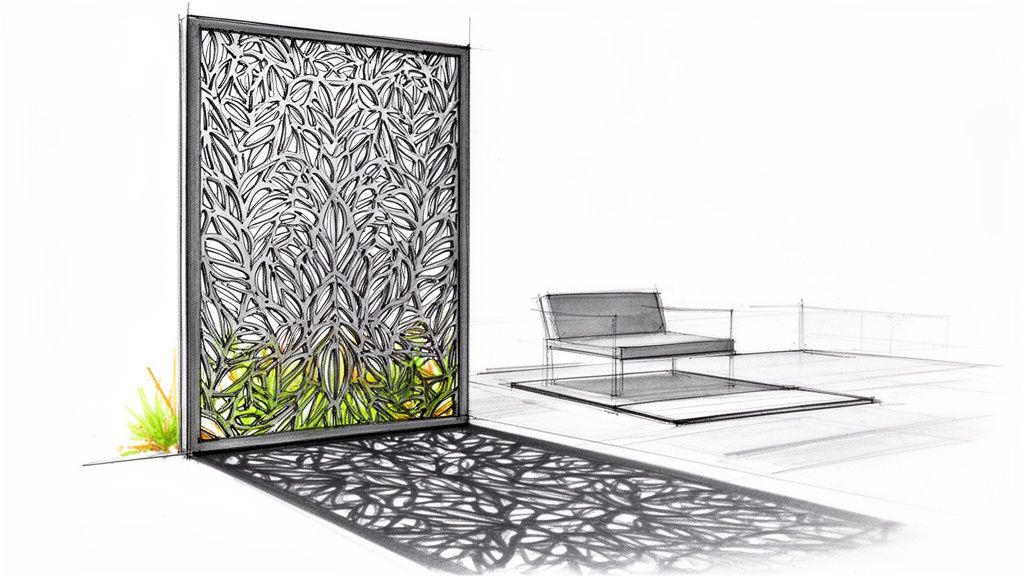
This method seamlessly blends form and function, providing semi-privacy without completely blocking light or air. For example, contemporary Los Angeles homes often use corten steel screens with leaf patterns to create a warm, rustic-modern feel, while luxury Miami properties might integrate powder-coated aluminum panels with backlighting for a dramatic, high-end resort ambiance. The result is one of the most stylish and durable backyard privacy screening ideas available.
Implementation & Best Practices
To successfully integrate these artistic features, precision in planning and placement is essential. Consider these actionable tips for a flawless installation:
Material Choice: Select corten steel for a beautiful, rust-like patina that evolves over time. Choose powder-coated aluminum for a specific, permanent color that resists corrosion, making it ideal for coastal or humid climates.
Strategic Placement: Position screens to catch morning or evening sun. This maximizes the visual impact of the light and shadow patterns cast by the laser-cut designs across your patio or garden.
Combine with Greenery: Soften the industrial look of metal by planting climbers or placing potted plants near the base. The contrast between the rigid structure and soft foliage creates a rich, layered aesthetic.
Plan for Lighting: Install LED backlighting to transform the screen into a dramatic focal point at night. This highlights the intricate patterns and adds ambient light to your outdoor living space.
Pro Tip: Think of your screen as an art installation. Integrate it with other hardscape materials like stone or concrete to create a cohesive design narrative, and use it to frame a specific view or define an outdoor "room."
Visualize Before You Build with AI
The pattern of a laser-cut screen has a significant impact on your backyard's feel. You can apply AI Landscape Design to visualize your ideas using photos of your own yard before commissioning a piece. Upload a picture of your space to an app like DreamzAR and overlay various metal screen designs. This allows you to experiment with patterns, colors, and placement, helping you see how the shadows will play in your yard and ensuring you choose a design that provides the perfect balance of privacy and artistry.
Backyard Privacy: 10 Screening Options Compared
Option | Implementation Complexity 🔄 | Resource Requirements ⚡ | Expected Outcomes 📊 | Speed / Time to Privacy ⚡ | Ideal Use Cases 💡 | Key Advantages ⭐ |
|---|---|---|---|---|---|---|
Living Green Walls & Vertical Gardens | High — structural support, irrigation, planting expertise | High — modular systems, irrigation, ongoing maintenance (est. $3k–$15k) | Lush vertical coverage; air quality & noise reduction (~5–10 dB); strong aesthetic impact | Moderate — 6–18 months to mature | Small urban yards, feature walls, ecological design | High visual impact; biodiversity; cooling benefits |
Horizontal Slatted Wood Fences & Screens | Low–Moderate — carpentry skills, possible HOA permits | Moderate — lumber or composite ($20–$50/ft); periodic sealing | Contemporary solid/semi-solid privacy; partial light penetration; durable 15–20+ yrs | Immediate | Modern/suburban homes seeking clean lines and adjustable privacy | Cost-effective; customizable spacing; immediate privacy |
Bamboo Privacy Screens & Fencing | Moderate — planting technique, rhizome barriers required | Moderate — live plants or panels ($15–$40/ft); barrier installation | Very fast dense screening; tropical aesthetic; moderate noise reduction | Fast — 1–2 years for full privacy | Tropical/Zen gardens, quick screening needs | Fastest living screen; renewable; lower long‑term cost |
Composite & Metal Privacy Panels | Low — straightforward install, may need pro for expansion joints | High — materials & fabrication ($40–$80/ft) but low ongoing costs | Immediate, maintenance‑free privacy; long lifespan (25–30+ yrs) | Immediate | Low‑maintenance modern yards, urban terraces | Durable; virtually no upkeep; sleek contemporary look |
Hedging with Fast‑Growing Shrubs | Low–Moderate — planting, routine pruning, horticultural knowledge | Low–Moderate — plants, irrigation ($10–$25/ft); recurring maintenance | Dense living barrier; strong noise reduction (~10–15 dB); year‑round greenery | Moderate — 2–3 years to establish full privacy | Formal landscapes, wildlife‑friendly yards, classic homes | Cost‑effective long term; flexible shaping; ecological benefits |
Mixed Border Plantings with Staggered Heights | High — requires design expertise and plant compatibility planning | Moderate — multiple species, irrigation ($15–$35/ft); higher design time | Natural, multilayered privacy; superior biodiversity and seasonal interest | Slow — 3–5 years for full effect | Ecological gardens, large properties prioritizing habitat | Best natural appearance; biodiversity; microclimate improvement |
Water Features & Water Walls for Privacy | High — plumbing, electrical, structural work; winterization | High — installation cost ($5k–$20k+), ongoing water/electric expenses | Immediate auditory masking (10–20 dB), strong visual focal point, cooling effect | Immediate | Luxury urban yards, small spaces needing sound masking | Excellent noise masking; creates ambiance and focal point |
Living Vine‑Covered Trellises & Pergolas | Moderate — build sturdy framework, train and prune vines | Moderate — structure + plants ($30–$60/ft); annual upkeep | Semi‑transparent screen with dappled shade; seasonal variation if deciduous | Moderate — 2–3 years for dense coverage | Outdoor rooms, seating areas, romantic/entertaining spaces | Architectural interest; shading; flexible and incremental planting |
Gabion Walls & Stone‑Filled Wire Baskets | Moderate–High — groundwork, heavy materials, possible engineering | Moderate — stone and wire ($25–$50/ft); equipment for installation | Instant full privacy; very durable (30–50+ yrs); permeable drainage | Immediate | Modern/rustic designs, sloped terrain, long‑lasting barriers | Instant privacy; low maintenance; sculptural, durable solution |
Decorative Metal & Laser‑Cut Privacy Screens | High — custom design, fabrication, professional install | Very High — custom panels ($50–$150+/ft); lead times for fabrication | Immediate artistic privacy; variable opacity depending on pattern; dramatic shadows | Immediate | High‑end contemporary homes, statement installations | Customizable art‑quality screens; durable; striking light/shadow effects |
Design Your Privacy: From Idea to Reality with AI
Throughout this guide, we've navigated the diverse and creative world of backyard privacy screening ideas. We moved beyond simple fences to explore ten distinct solutions, each with its own unique character, maintenance requirements, and aesthetic appeal. Your journey to a secluded outdoor oasis doesn't end with choosing just one idea; it begins with understanding how these elements can work together to reflect your personal style and meet your specific needs.
We've seen how living green walls can introduce a touch of lush, vertical drama and how fast-growing hedges offer a classic, natural boundary. We explored the modern, clean lines of horizontal slatted wood and the intricate, artistic patterns of laser-cut metal panels. From the rustic, enduring strength of gabion walls to the gentle, sound-masking qualities of a water feature, the possibilities are as varied as the yards they enhance.
Key Takeaways for Crafting Your Private Sanctuary
The most crucial insight is that effective privacy screening is not a one-size-fits-all solution. It's a thoughtful process of layering, combining textures, and considering both immediate impact and long-term growth.
Function Meets Form: Your choice should solve a practical problem (blocking a view, muffling noise) while also contributing positively to your landscape's overall design. A bamboo screen can feel tropical and relaxing, while a stone-filled gabion wall adds an industrial-chic, permanent feel.
Maintenance Matters: Be realistic about the time and effort you are willing to invest. A living vine-covered trellis requires regular pruning and care, whereas composite panels offer a "set it and forget it" advantage. Honesty about your lifestyle will lead to a more sustainable and enjoyable choice.
Beyond the Boundary Line: True privacy is about creating a feeling of seclusion, not just a physical barrier. A mixed border with staggered heights creates visual depth and interest, making the space feel more like a garden retreat than a walled-in compound.
Your Actionable Next Step: Visualize Before You Build
The most significant hurdle between a great idea and a successful project is uncertainty. How tall will that hedge actually feel? Will a horizontal fence clash with your home's exterior? This is where modern technology transforms the design process, eliminating guesswork and preventing costly mistakes. You can apply AI Landscape Design to visualize your ideas using photos of your own yard. The power to visualize is the ultimate tool in your design arsenal.
Instead of trying to imagine how these backyard privacy screening ideas will look, you can see them in your actual space. This crucial step bridges the gap between inspiration found online and the reality of your property. It allows you to experiment with different materials, scales, and placements risk-free, ensuring the final result is exactly what you envisioned. By seeing a digital mockup, you gain the confidence to invest your time and money, knowing the outcome will be a perfect fit for your home. Your private, beautiful backyard is no longer a dream; it’s a design waiting to be confirmed.
Ready to stop guessing and start designing? Bring your favorite backyard privacy screening ideas to life with DreamzAR AI Landscape Design. Upload a photo of your yard to instantly visualize how different screens, fences, and plantings will look in your space before you commit. Download the app today and design with confidence: DreamzAR AI Landscape Design.